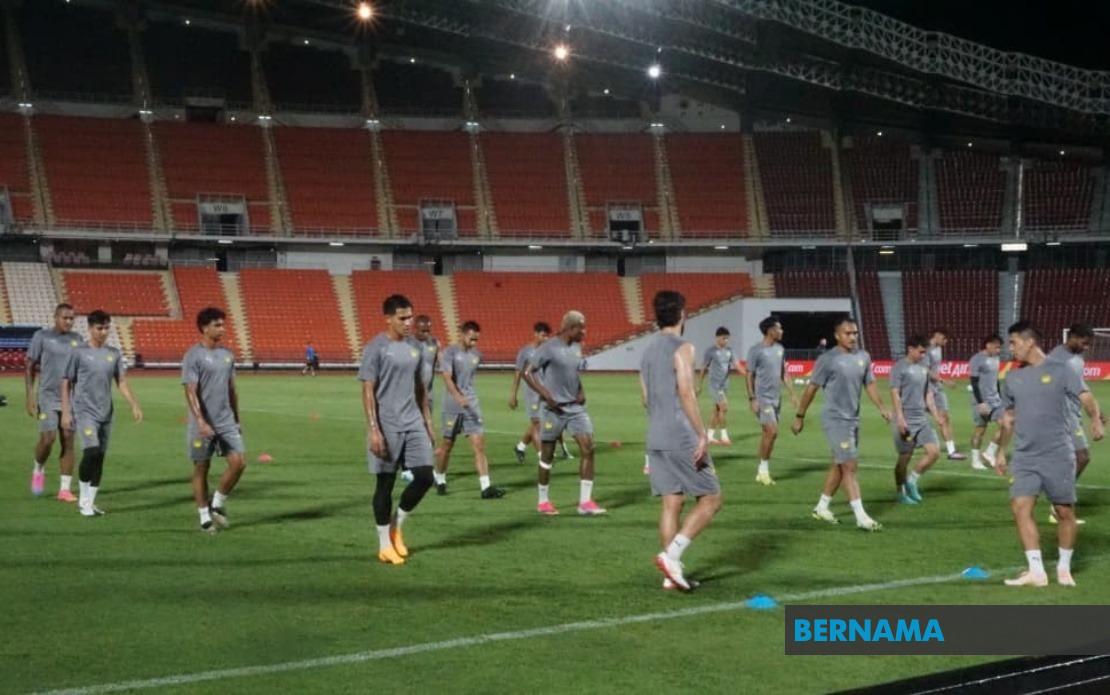
Malaysia's Harimau Malaya squad will take to the pitch in Indonesia from September 24 to October 3 for the inaugural 2026 ASEAN FIFA Cup, a tournament many observers believe could serve as a crucial turning point for a national football programme facing significant reputational challenges. The competition arrives at a pivotal moment for Malaysian football, offering the national team a platform to rebuild supporter confidence and demonstrate renewed commitment to sporting integrity following months of institutional turbulence.
The squad has been drawn into Division 1 Group A with Indonesia, Singapore and India—a grouping that presents considerable difficulty but also carries symbolic significance for Malaysian football's resurgence. Football analyst Zakaria Rahim emphasised that while the fixture list presents formidable opponents, the current environment demands extraordinary commitment from both players and administrators. Beyond the technical demands of competing against stronger regional sides, Rahim stressed that success in this tournament carries deeper meaning for a supporter base that has grown weary of the sport's recent controversies.
The backdrop to Malaysia's participation reflects a crisis that has shaken the football establishment. FIFA imposed severe sanctions after discovering that Malaysia had fielded seven ineligible heritage players—Facundo Garces, Rodrigo Holgado, Imanol Machuca, Joao Figueiredo, Gabriel Palmero, Jon Irazabal and Hector Hevel—in international fixtures. The global governing body subsequently annulled results from three friendly matches against Cape Verde, Singapore and Palestine, awarding 3-0 victories to the opposing teams and dealing a serious blow to Malaysia's competitive record.
The ramifications extended beyond FIFA's jurisdiction. The Asian Football Confederation launched its own investigation and discovered that the same ineligible players had featured in two Group F matches of the 2027 AFC Asian Cup Qualifiers against Vietnam and Nepal. The AFC's decision to award 3-0 defeats in those matches not only damaged Malaysia's FIFA ranking but, more significantly, confirmed that Harimau Malaya would not participate in the 2027 AFC Asian Cup in Saudi Arabia. This outcome represents a substantial setback for a national programme that had harboured ambitions of competing on Asia's grandest stage.
The governance crisis deepened when every member of the Football Association of Malaysia's Executive Committee for the 2025-2029 term announced collective resignation in January. The unified decision reflected acknowledgement that the organisation bore responsibility for the heritage player debacle, regardless of individual culpability. Observers interpreted the move as recognition that FAM's institutional credibility had suffered damage that required decisive action and symbolic renewal, suggesting that senior leadership understood the depth of the trust deficit that needed addressing.
Analysts note that the timing of the 2026 ASEAN FIFA Cup carries particular strategic importance because it occurs shortly after FAM is scheduled to elect new leadership at a congress on September 17. This compressed timeline means that incoming administrators will have minimal opportunity to implement structural reforms or strategic adjustments before the national team competes. Zakaria highlighted that the new FAM leadership carries substantial responsibility for charting Malaysian football's future trajectory, suggesting that tournament performance might influence how the incoming administration approaches institutional reconstruction and talent development initiatives.
Interim head coach Tan Cheng Hoe stands positioned to benefit from improving circumstances as the Malaysia League season commences on August 21. Coach Irfan Bakti Abu Salim observed that domestic competition would allow Cheng Hoe to conduct comprehensive assessments across a broader player pool, with squad members regaining match sharpness through club fixtures. This development matters considerably because Cheng Hoe will require maximum tactical flexibility and depth if Malaysia is to mount a credible challenge against seasoned opponents, particularly Indonesia, which historically dominates ASEAN football competitions.
The tournament structure itself offers dual pathways for advancement. Division 1 Group B comprises Vietnam, Pakistan, Thailand and the Philippines, creating two separate competitive hierarchies. Each group winner advances directly to the final—a match that carries a substantial prize purse of USD1 million (RM4.09 million)—while runners-up will contest a third-place playoff. This format means that Malaysia need not necessarily top its group to remain in contention for silverware, though finishing first would represent a significant psychological victory given the strength of surrounding opponents.
Zakaria's commentary reveals that Malaysian supporters harbour genuine desire to witness national football success, even as institutional failings have generated frustration and scepticism. A victory over Indonesia would carry symbolic weight beyond mere tournament points, potentially signalling that Malaysian football retains capacity for competitive achievement despite recent governance misadventures. The analyst framed the broader challenge as one of dignity restoration rather than simple results accumulation, suggesting that how Harimau Malaya competes—demonstrating commitment, organisation and technical quality—might ultimately matter more than the specific tally of wins and losses.
The confluence of circumstances surrounding the 2026 ASEAN FIFA Cup creates conditions ripe for narrative transformation. Malaysia enters with recent sanctions still fresh in regional consciousness, with governance structures in transition, and with supporter sentiment at a notably fragile juncture. Yet these same pressures create opportunity for meaningful redemption. A campaign characterised by disciplined football and organisational professionalism would signal that Malaysian football has genuinely absorbed lessons from the heritage player scandal and possesses mechanisms for accountability and improvement.
For regional observers monitoring Southeast Asian football development, Malaysia's performance will carry broader implications. The FAM's ability to field a genuinely competitive squad while simultaneously reforming governance structures will test whether Malaysian football can successfully compartmentalise institutional crisis from on-field performance. Success would demonstrate that administrative turbulence need not inevitably translate into competitive decline, a lesson with relevance across the region as multiple football associations navigate complex governance challenges and shifting global regulatory frameworks.

