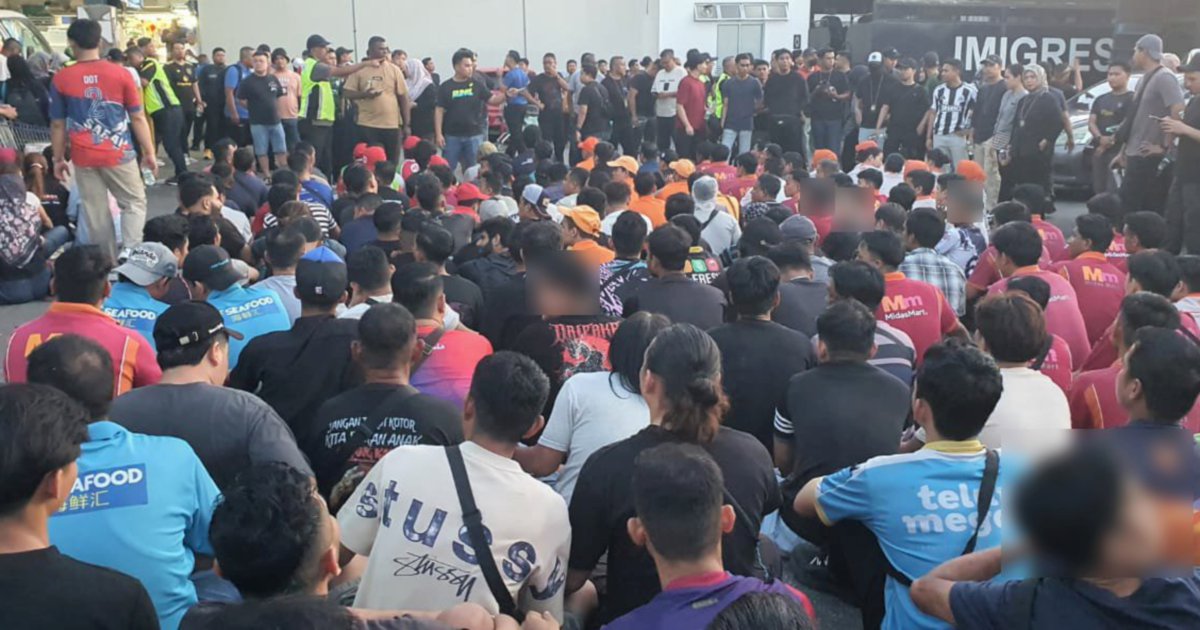
Immigration authorities in Johor Baru have detained 226 migrants following a substantial enforcement operation that has exposed an entrenched system of passport fraud spanning the Malaysian-Indonesian border. The raids have illuminated how undocumented workers maintained a veneer of legality through systematic manipulation of immigration records—a practice that persisted largely undetected for years while fuelling Malaysia's underground labour economy.
At the heart of the investigation lies the case of an Indonesian fishmonger whose routine became emblematic of a wider problem: monthly border crossings ostensibly to have his passport stamped, followed by a swift return to illegal employment in Malaysia. What appeared to authorities as legitimate travel concealed four years of continuous unlawful work within Malaysian territory. This pattern—repeated across hundreds of individuals—suggests an operation requiring complicity or negligence at multiple checkpoints, raising uncomfortable questions about enforcement capacity and corruption at border control facilities.
The sophistication of the smuggling network indicates that isolated agents cannot have orchestrated such a widespread scheme. Regular passage through official channels while simultaneously engaging in illegal work suggests either systematic bribery of immigration officials or a coordinated exploitation of administrative gaps in how stamp systems are monitored. For a worker to cross monthly over four years without detection speaks to a troubling normalisation of the practice among both migrants and those facilitating their movement.
Johor's geography makes it particularly vulnerable to such schemes. As Malaysia's primary land entry point from Indonesia and the gateway to Singapore, the state sees enormous daily traffic that can facilitate concealment. The porosity of the border has long been exploited by migrant networks, but this operation suggests the scale has grown considerably. The involvement of 226 individuals in a single raid indicates not a handful of rogue operators but an established industry servicing demand for cheap labour across manufacturing, agriculture, and service sectors.
The discovery carries significant implications for Malaysia's immigration enforcement strategy. The persistence of the scheme suggests that current monitoring systems inadequately track repeat border crossings or flag suspicious patterns in passport stamping. Migrant workers who maintain legal entry documents but work illegally occupy an enforcement grey zone—they are neither fully undocumented nor properly authorised, making them difficult to identify without sophisticated data analysis linking travel records to employment verification.
From an economic perspective, the network's longevity points to substantial demand for migrant workers willing to operate outside formal channels. Employers benefit from workers lacking recourse to labour standards, while workers themselves accept the risk for wages exceeding opportunities in Indonesia. This underground labour market represents a significant economic activity operating parallel to official statistics, likely depressing wages for Malaysian citizens in lower-skilled sectors while enriching employers and smugglers alike.
The enforcement action also highlights persistent challenges in regional cooperation. The Malaysia-Indonesia border requires coordinated action given the continuous flow of people in both directions. Border facilities cannot operate in isolation—intelligence sharing about known smuggling routes and repeat offenders is essential. That the scheme operated for years suggests inadequate information exchange or insufficient resources dedicated to pattern analysis across the bilateral boundary.
Among detained migrants, many face deportation and potential prosecution, yet their circumstances remain complex. Many have been working in Malaysia for extended periods, establishing social connections and family ties. Instant removal, while consistent with immigration law, disrupts lives and labour markets alike. The humanitarian dimension cannot be divorced from enforcement considerations, particularly when workers are economically vulnerable and often exploited by both smugglers and employers.
The raid's timing may also reflect increased political pressure on immigration authorities. Public concern about undocumented migration has grown, particularly regarding its perceived impact on employment and public services. Enforcement operations serve both practical immigration control and political messaging—demonstrating tangible action against illegal migration to constituencies concerned about border security and job competition.
For Malaysian employers reliant on foreign labour, the operation introduces uncertainty. Those utilising the illegal workforce must now reckon with enforcement activity that previously remained sporadic. Some may shift toward formal hiring to reduce legal exposure, potentially increasing labour costs for sectors already operating on thin margins. Others may turn toward smuggling networks offering greater concealment, driving the practice further underground rather than eliminating it entirely.
The uncovered passport scheme ultimately reflects systemic vulnerabilities in how Southeast Asia manages migration across increasingly porous borders. Technology enables more sophisticated document forgery while economic disparities drive migration pressure. Administrative systems struggle to keep pace, and enforcement agencies juggle competing demands with limited resources. Until underlying economic and governance challenges are addressed, dismantling individual networks offers only temporary relief. The 226 detained represent a visible manifestation of a vastly larger phenomenon reshaping labour markets and societies across the region.

