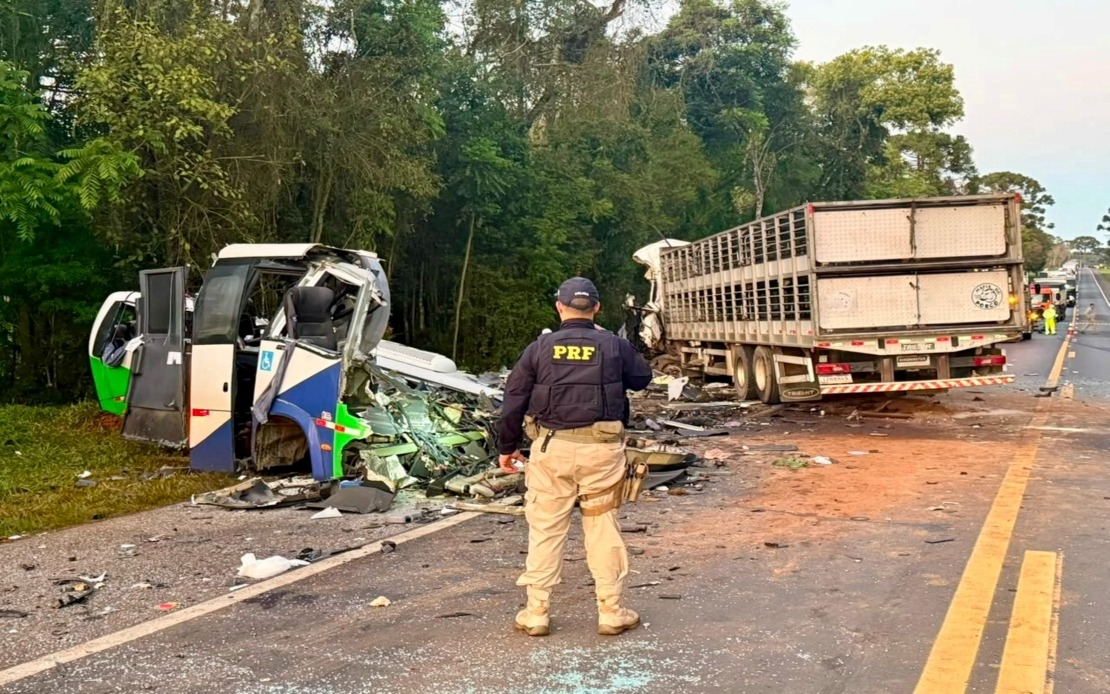
A devastating road accident in Brazil's Paraná state has claimed the lives of 23 people, among them patients being transported for medical treatment and two children. The collision occurred early Wednesday morning near Ipiranga in the Campos Gerais region when a minibus operated by the health service crashed head-on with a heavy lorry on a national highway. The impact of the collision was catastrophic, with preliminary investigations suggesting that the lorry may have crossed into the oncoming traffic lane moments before impact.
The victims comprised 13 women, eight men, and two children, with the toll including the lorry driver. Five additional people sustained injuries and were rushed to nearby hospitals for treatment. The minibus had been carrying patients destined for medical facilities in the greater Curitiba metropolitan area, approximately 200 kilometres from the accident site. The transportation service was part of routine hospital referral operations common across Brazil's healthcare system, where patients in smaller towns and rural areas are regularly transferred to larger medical centres for specialised treatment.
The exact sequence of events leading to the collision remains under investigation by local authorities and the Paraná State Secretariat for Public Security. While preliminary findings point toward the lorry driver losing control and veering across the centre line, officials have not ruled out other contributing factors such as mechanical failure, adverse weather conditions, or visibility issues at the time of the incident. The investigation will be crucial in determining whether safety protocols were being followed and whether road infrastructure played any role in the tragedy.
The accident site, located on a section of the national highway that connects several key regions in southern Brazil, was sealed off for several hours following the collision. In certain stretches, the highway operates as a two-lane road with traffic moving in both directions, a configuration that considerably increases the risk of head-on collisions when vehicles lose control or drivers misjudge their positioning. The geometry and design standards of this particular stretch of roadway may form part of the ongoing investigation, especially regarding whether warning systems or physical barriers could have prevented or mitigated the impact.
This tragedy highlights ongoing concerns about road safety across Brazil's extensive highway network, particularly on rural and regional routes that connect smaller towns to major urban centres. The incident underscores the vulnerability of patients being transported between medical facilities, who are often in compromised health conditions and therefore less able to survive high-impact collisions. For Malaysia and Southeast Asia, where similar inter-city medical transport operations occur routinely, the incident serves as a reminder of the critical importance of vehicle safety standards, driver training protocols, and highway design standards for transportation services carrying vulnerable populations.
The Paraná state government responded swiftly to the tragedy by declaring three days of official mourning, acknowledging the scale of the loss and its impact on local communities. Families of the victims will require significant support services, including emergency counselling and financial assistance, as investigations proceed and responsibility for the incident is determined. The minibus operator and any other potentially responsible parties may face legal consequences depending on findings regarding vehicle maintenance, driver fatigue, or operational procedures.
Brazil's healthcare transport system, like those in many developing and emerging economies, faces considerable challenges in balancing the need to transfer patients with the safety risks inherent in road transportation. This accident will likely prompt reviews of transport protocols, vehicle specifications, and driver requirements across similar services in Paraná and potentially other Brazilian states. Stakeholders including the health ministry, transport regulators, and hospital administrators may establish new safety guidelines or invest in improved vehicles equipped with advanced collision avoidance technology.
The incident also raises questions about the adequacy of emergency response systems along Brazil's highway network. The prompt hospitalisation of the five survivors depended on proximity to medical facilities and efficient emergency services coordination. Enhanced emergency protocols and strategically positioned medical response units along major highways could improve survival rates in future accidents, though such infrastructure investments require substantial public funding commitments.
For regional observers, this tragedy serves as a cautionary example of how transport infrastructure, vehicle safety standards, and driver behaviour intersect to determine outcomes in road accidents. Southeast Asian nations, which experience comparable volumes of inter-city transport and similar highway conditions, should examine their own protocols for medical transport and consider whether enhanced safety measures could reduce fatalities. The Brazilian authorities' decision to immediately launch investigations and implement mourning periods demonstrates appropriate institutional responses, though the fundamental challenge of preventing such accidents remains rooted in systemic road safety improvements rather than reactive measures alone.

