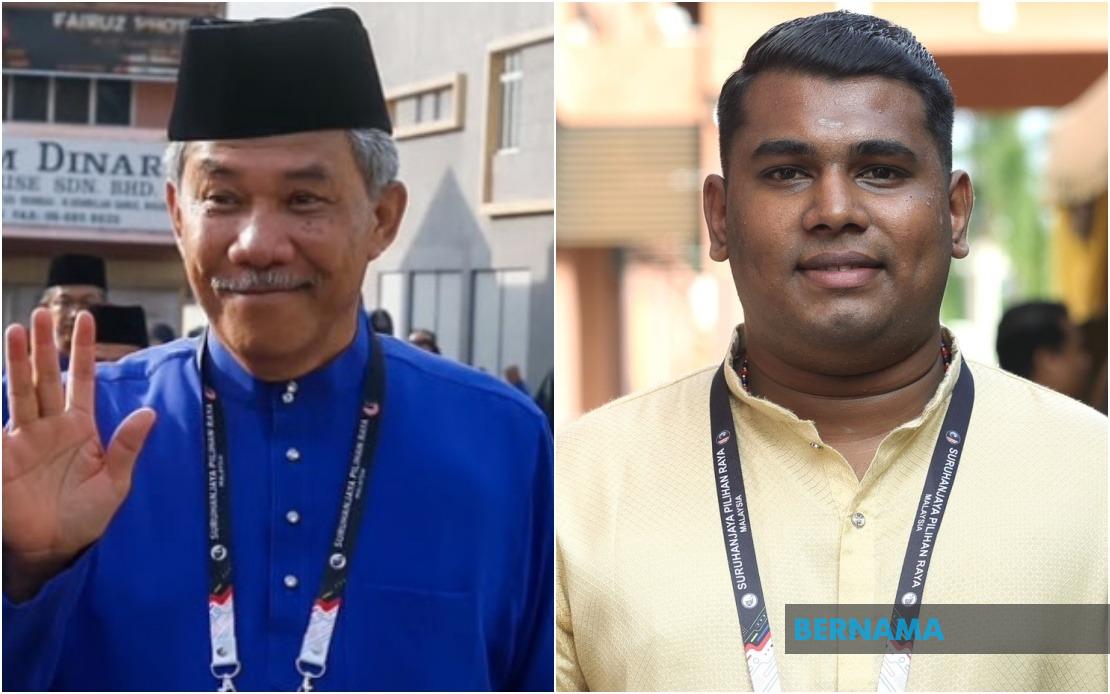
The 16th Negeri Sembilan state election has introduced a notable generational divide in its candidate slate, with M. Leevineshwaraan emerging as the youngest contender at just 23 years old. The Bersatu representative has taken on the challenge of contesting the Sri Tanjung state seat, marking a significant moment for youthful political participation in the state. His candidacy signals an attempt by the coalition to inject fresh energy into its campaign, though he faces substantial headwinds in a competitive constituency.
Leevineshwaraan's path to the ballot places him in a challenging position within Sri Tanjung, where five candidates are vying for a single seat. His principal obstacle emerges in the form of Datuk Dr G. Rajasekaran, the incumbent representing Pakatan Harapan, who retained the seat in the previous election with a commanding majority of 3,996 votes. This considerable cushion suggests that Leevineshwaraan, despite his youth and potential appeal to younger voters, must overcome significant ground-level obstacles to claim victory. The contest illustrates how age alone does not guarantee electoral success in Malaysian politics, particularly when facing an experienced incumbent with demonstrated voter loyalty.
The milestone of youth candidacy continues to shift in recent Malaysian state elections. During the 15th Negeri Sembilan polls in 2023, Muhammad Syakir Fitri Sadri held the distinction of being the youngest contestant at 25 years old, running as an Independent for the Paroi seat. That record has now fallen to Leevineshwaraan, underscoring a gradual trend of younger individuals stepping into electoral politics. Whether this reflects genuine organisational shifts toward generational renewal or simply represents occasional candidacies remains an open question worth monitoring across future electoral cycles.
Sri Tanjung's electoral context provides important demographic detail for understanding the scale of political competition. The seat lies within the Port Dickson parliamentary constituency, which encompasses five state seats and maintains a registered voter base of 19,590 people. This moderate electorate size means that ground-level organisation and personal networking can meaningfully influence outcomes. Leevineshwaraan's youth could theoretically resonate with younger voters who comprise a portion of this electorate, though traditional voting patterns and incumbency advantage typically carry substantial weight in Malaysian state elections.
At the opposite end of the age spectrum, two prominent political figures embody the experience and longevity of Malaysia's political establishment. Barisan Nasional deputy chairman Datuk Seri Mohamad Hasan and Pakatan Harapan's Abd Latif A Tambi both entered the race at 70 years old, representing the senior-most contestants in this electoral cycle. Mohamad seeks to retain the Rantau seat, where he faces a direct two-way confrontation, while Abd Latif contests the Gemencheh seat under similar circumstances. Both candidates carry decades of political experience and established networks within their respective areas.
The contrast with the previous electoral cycle underscores changing dynamics in candidate demographics. In 2023, the oldest candidate was Bujang Abu, who stood as an Independent in his quest at 72 years old. Despite his precedent as the eldest contender, Bujang has not secured nomination this time around, having failed to provide the necessary documentation required by the Election Commission. This administrative barrier reveals how procedural requirements can systematically reshape candidate pools, regardless of an individual's prior standing or experience.
The two senior candidates contest in constituencies with notably different voter profiles. Rantau, nested within the Rembau parliamentary area, contains 34,831 eligible voters, representing a significantly larger electorate than Sri Tanjung. Mohamad's defence of this seat therefore involves mobilising substantially more voters. Gemencheh, by contrast, situated within the Tampin parliamentary constituency, maintains 24,916 eligible voters. Abd Latif's challenge requires securing support from a moderate-sized electorate, though the exact competitive dynamics remain to be determined through campaign activity and local political conditions.
Female representation in this electoral cycle demonstrates marginal improvement, though remains limited in absolute terms. Only nine of the 103 total candidates are women, representing roughly eight percent of the candidate pool. However, this figure represents a slight increase from the previous state election, when eight of 83 candidates were women. Pakatan Harapan has fielded the highest number of female candidates with four representatives, suggesting differing approaches among coalitions toward gender representation in electoral competition. The slow growth in female candidacies reflects broader patterns across Malaysian politics, where structural and cultural barriers continue to constrain women's participation in electoral contests.
The composition of the candidate slate across the 103 positions reveals how coalition strategies translate into practical electoral mathematics. Bersatu's fielding of Leevineshwaraan alongside other candidates reflects its positioning within this state contest, while Pakatan Harapan's strategy of supporting incumbent Rajasekaran and fielding female candidates indicates its coalition priorities. Barisan Nasional's approach centres on incumbency retention and competitive positioning in key constituencies. These strategic choices will shape campaign dynamics and ultimately influence voting behaviour across the state.
Electoral logistics will structure the voting process across two distinct phases. The Election Commission has scheduled early voting for July 28, allowing eligible voters who anticipate unavailability on polling day to cast ballots in advance. Polling day itself is fixed for August 1, providing a clear timeline for campaign activity and candidate engagement across all constituencies. This compressed calendar means that campaign intensity will concentrate within a relatively narrow window, rewarding candidates with established ground networks and active volunteer bases.
The Negeri Sembilan contest arrives amid broader patterns of Malaysian state electoral competition, where incumbent advantages, coalition dynamics, and local constituency factors typically determine outcomes more decisively than generational or demographic markers alone. While Leevineshwaraan's youth may attract media attention and symbolic significance as the youngest candidate, his electoral prospects ultimately depend upon conventional political machinery: effective campaigning, voter mobilisation, party resources, and local sentiment. Similarly, Mohamad and Abd Latif's experience and established positions provide structural advantages that transcend mere age considerations.
Looking forward, this election cycle provides a natural testing ground for observing whether Malaysian political parties are genuinely transitioning toward younger leadership or whether such candidacies remain isolated experiments. Tracking Leevineshwaraan's performance relative to other Bersatu candidates will offer insight into whether youthful candidates generate comparative advantage in voter appeal. Simultaneously, monitoring whether the marginal increase in female candidacy continues or stagnates will indicate whether Malaysian coalitions are implementing genuine strategic commitments to gender representation or merely adjusting candidate selection on an ad-hoc basis.

