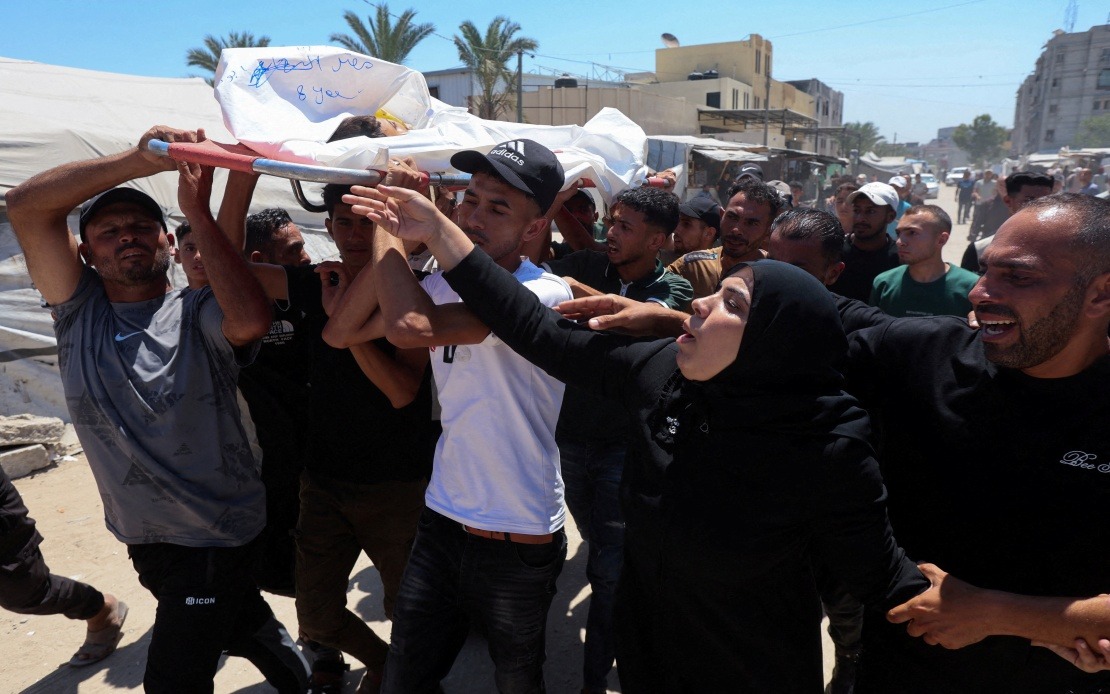
The humanitarian toll on Gaza's youngest residents continues to mount despite international ceasefire efforts, with UNICEF reporting that at least 300 children have been killed in the 300 days since a ceasefire was formally announced in October 2025. The grim statistic—averaging roughly one child death per day—underscores the persistent violence and humanitarian catastrophe gripping the Palestinian territory, raising serious questions about the effectiveness of agreements meant to bring peace and protect civilians.
Edouard Beigbeder, UNICEF's Regional Director for the West Asia and North Africa, delivered a stark assessment of the situation, emphasizing that the current trajectory represents a fundamental failure to safeguard children's lives. His statement that "a ceasefire that leaves an average of one child dead each and every day is failing children" captures the bitter irony of a conflict where formal peace arrangements have failed to translate into genuine protection for vulnerable populations. Beyond the fatalities, hundreds more children have sustained severe injuries, compounding the trauma and physical disabilities affecting Gaza's youth demographic.
The spatial concentration of survivors and displaced families has created additional vulnerabilities within the already fragile enclave. With roughly two-thirds of Gaza rendered uninhabitable or unsafe, displaced populations have been compressed into approximately one-third of the territory. These makeshift settlements and temporary housing arrangements lack basic security, surrounded by destroyed infrastructure, collapsed buildings, and hazardous debris fields that pose constant dangers to children attempting to navigate daily life in war-affected communities.
The humanitarian crisis extending beyond immediate violence has created multiple, intersecting threats to child survival and development. Acute malnutrition rates have climbed as food supplies remain inadequate, while disease outbreaks spread through populations weakened by malnutrition and poor sanitation. Access to clean drinking water remains severely restricted due to damaged water infrastructure, and the breakdown of sanitation systems has created public health emergencies that disproportionately affect children whose developing immune systems are more vulnerable to waterborne and communicable diseases.
Recent diplomatic developments have introduced tentative optimism, with new ceasefire proposals encompassing expanded phases designed to achieve complete cessation of hostilities and substantially increase humanitarian assistance flows into Gaza. These announcements have generated cautious hope among international observers and humanitarian organizations that conditions might finally begin improving. However, UNICEF's statement reflects deep skepticism about whether rhetoric will convert into concrete improvements for civilian populations who have endured prolonged suffering.
The organization articulated a straightforward accountability framework by which to measure progress: whether violence genuinely ceases, whether humanitarian aid reaches populations at meaningful scale, whether medical facilities can resume functioning with adequate supplies and personnel, and whether children can safely return to educational institutions by September. These benchmarks represent basic prerequisites for childhood development and survival rather than aspirational goals, yet their non-fulfillment throughout the ceasefire period demonstrates how far current conditions fall short of acceptable humanitarian standards.
Bigbeder's cautionary reminder that "children have heard promises before" reflects accumulated disappointment with failed commitments and unfulfilled agreements that have marked the conflict's trajectory. The population's justified cynicism, rooted in repeated broken assurances, underscores the credibility gap that international negotiators must overcome. For agreements to gain meaningful traction and demonstrate sincerity, they must manifest through visible, measurable improvements in the daily lived experiences of civilian populations, particularly the most vulnerable children.
UNICEF has explicitly called upon all conflict parties to comply with international humanitarian law and human rights obligations, particularly those provisions mandating protection of children and ensuring access to essential services including healthcare, education, adequate nutrition, and safe water supplies. These legal frameworks establish minimum standards that remain systematically violated throughout the territory, suggesting that enforcement mechanisms require strengthening or that political will to implement existing obligations remains insufficient.
The agency further emphasized that authorities must establish and maintain "safe, rapid and unimpeded" humanitarian corridors enabling aid organizations to reach vulnerable families and children throughout Gaza. Current restrictions on aid delivery, whether through deliberate obstruction or inadequate logistical capacity, have prevented humanitarian organizations from addressing massive needs. Removing barriers to humanitarian access represents perhaps the most immediate action that could alleviate acute suffering without requiring broader political settlements.
For Malaysian and Southeast Asian observers, Gaza's humanitarian trajectory offers sobering lessons about the limitations of ceasefire agreements unsupported by genuine political commitment to civilian protection and reconstruction. Regional conflicts in Southeast Asia require vigilant attention to establishing credible implementation mechanisms and accountability frameworks that extend beyond ceremonial declarations of peace. The international community's failure to protect Gaza's children despite formal ceasefire arrangements suggests that agreements demand rigorous oversight, transparent monitoring, and consequences for violations to effectively transition from war to genuine peace.

