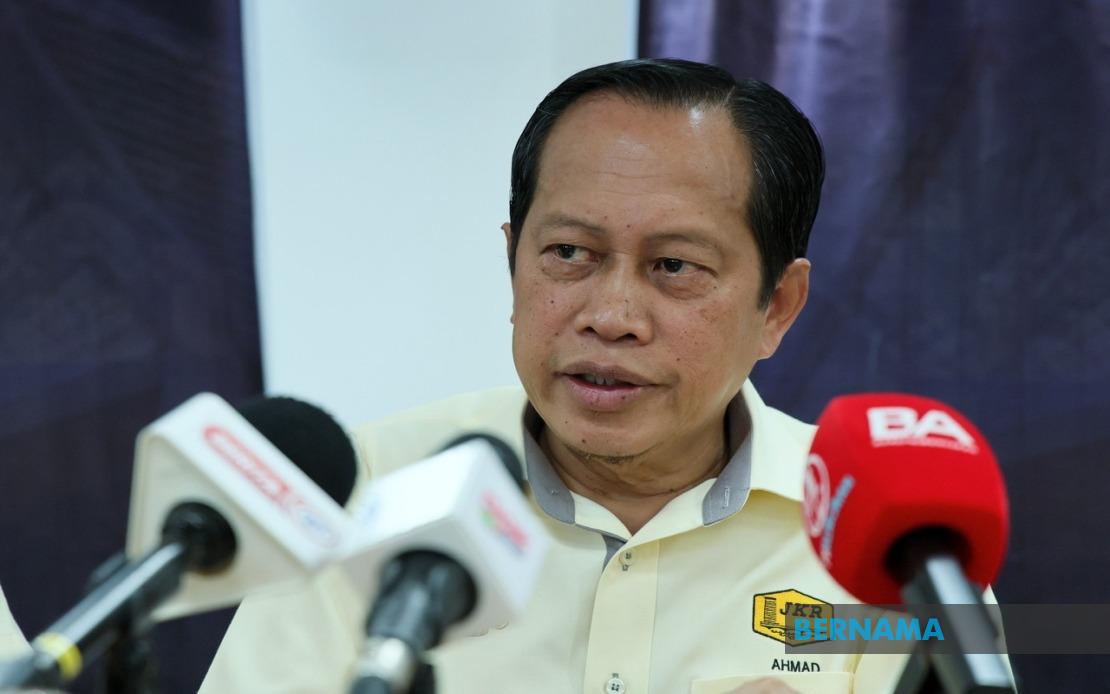
The Malaysian government is accelerating a substantial infrastructure push to expand classroom capacity across the nation, with 524 projects worth RM668 million currently underway to accommodate primary school intake in the 2027 academic session. Deputy Works Minister Datuk Seri Dr Ahmad Maslan announced the initiative at a handover ceremony in Terengganu, where the first completed project was transferred to the Education Ministry ahead of schedule, signalling progress in executing the ambitious construction programme.
Of the 524 projects in the pipeline, 517 have secured Letters of Acceptance, demonstrating advanced planning and regulatory approval across state boundaries. Three facilities have already been delivered, offering early validation of the construction methodology being employed. These figures suggest a well-coordinated national effort to address anticipated enrolment pressures, though the gap between approved projects and those completed underscores the logistical complexities involved in scaling educational infrastructure simultaneously across multiple jurisdictions.
The construction programme spans 459 schools and will deliver 1,780 additional classrooms in total. The composition reveals targeted provision for mainstream education and specialised needs: 1,255 classrooms are designed for standard primary curricula, while 525 have been designated specifically for the Special Education Integration Programme (PPKI). This dual-track approach reflects Malaysia's policy commitment to inclusive education, ensuring that expansion plans accommodate both typical and diverse learner populations.
The projects employ contemporary construction techniques rather than traditional methods. Both modular construction and the Industrialised Building System are being utilised, approaches that typically accelerate timelines, reduce on-site waste, and can improve quality consistency. For Malaysia's education sector, which has faced chronic classroom shortages in high-growth areas, these methodologies represent a pragmatic response to delivery timescales. The fact that the Terengganu project was completed ahead of the original timeline suggests these techniques are delivering tangible benefits in real-world application.
Regional distribution of projects reveals significant variation in capacity requirements across Malaysia. Selangor dominates the programme with 143 projects, all receiving formal approval, reflecting the massive demographic pressures in the nation's wealthiest and most densely populated state. Kedah follows with 93 projects—92 approved—while Johor contributes 47, with 45 greenlit. These three states alone account for approximately 283 of the 524 projects, or roughly 54 percent of the total programme investment, indicating that expansion is heavily concentrated in Peninsular Malaysia's economic heartland.
Terengganu and Penang each have 45 and 30 projects respectively, all with Letters of Acceptance, demonstrating comprehensive planning in these states. Perak has committed 22 projects with 18 approved, while the southern states of Pahang and Melaka contribute 50 and 69 projects respectively, both fully approved. The eastern states of Kelantan (10 projects) and Perlis (8 projects) have smaller allocations, reflecting lower population growth or differing demographic profiles. Federal territories and smaller states round out the programme: Labuan (3 projects), Kuala Lumpur (2), and Negeri Sembilan (2), all with formal approval.
This spatial distribution maps closely onto Malaysia's urbanisation patterns and internal migration trends. The concentration in Selangor, Johor, and Kedah reflects economic magnetism in these regions, drawing working-age migrants and young families seeking employment and better living standards. For policymakers, the implication is clear: classroom expansion must remain dynamic and responsive to demographic flows, particularly as rural-to-urban movement continues and certain regions experience faster natural population growth than others.
The 2027 intake target carries forward existing education policy timelines. In Malaysia's system, primary school entry at Year One typically occurs around age seven, and projecting infrastructure needs five years in advance requires sophisticated population forecasting. The scale of investment—RM668 million—underscores government prioritisation of education infrastructure, though when distributed across 524 projects and 1,780 classrooms, the per-classroom cost averages approximately RM375,000, a figure that must cover land, building, fixtures, and compliance with safety and pedagogical standards.
The handover ceremony at Sekolah Menengah Kebangsaan Tok Jembal in Terengganu, officiated by Education Minister Fadhlina Sidek, symbolised cross-ministry coordination essential for such programmes. The involvement of both the Public Works Department and the Education Ministry reflects the infrastructure governance structure underpinning Malaysian development. For observers monitoring implementation capacity, the on-time completion of the first project offers modest reassurance, though the broader question remains whether 521 remaining projects can maintain momentum or whether typical delays—common in infrastructure programmes regionally—will compress timelines and compromise quality.
For Malaysian parents and educators, the programme signals acknowledgement of persistent classroom overcrowding in many urban and suburban schools. Yet success depends not merely on construction pace but on parallel investments in teacher recruitment, curriculum materials, and facilities maintenance. The industrialised building methods, while efficient, still require skilled workforce coordination and supply chain reliability—challenges that Malaysia's construction sector has managed with variable results in recent years.
Regionally, Malaysia's approach offers a model worth monitoring for neighbouring countries facing similar demographic and urbanisation pressures. Vietnam, Thailand, and Indonesia all grapple with uneven educational infrastructure distribution. The use of modular and industrialised methods, combined with phased national rollout, represents scalable thinking that other Southeast Asian education systems may eventually adopt or adapt.
The programme's ultimate success will be measured not by handover ceremonies or approval statistics, but by whether 524 new classrooms are actually functioning with adequate staffing and resources when the 2027 academic year begins. Interim tracking will be essential, and given Malaysia's track record with large infrastructure programmes, stakeholders should monitor quarterly progress reports carefully. The RM668 million investment represents significant public commitment to educational capacity; ensuring effective deployment remains paramount.

