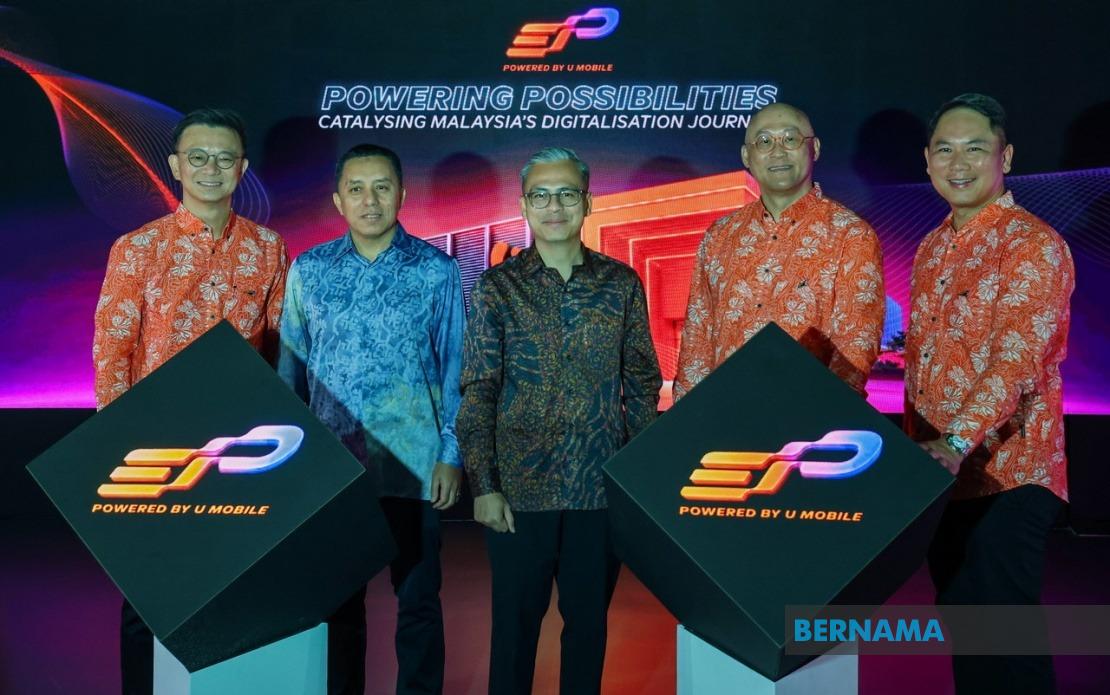
Communications Minister Datuk Seri Fahmi Fadzil has identified 5G Advanced technology, also termed Ultra 5G, as a critical enabler for sectoral transformation across Malaysia's economy, with particular applications in healthcare, agriculture, retail and national security. Speaking following the launch of the U Mobile Enterprise Innovation Platform Hub in Kuala Lumpur on August 6, Fahmi underscored the broad-based potential this emerging network infrastructure holds for Malaysian businesses and government agencies seeking to modernise operations and enhance service delivery.
5G Advanced represents the latest evolution of fifth-generation mobile network technology, operating on a 5G Standalone architecture that fundamentally distinguishes it from earlier 5G deployments. The platform delivers enterprise-grade connectivity characterised by ultra-low latency—the minimal delay in data transmission that proves essential for time-sensitive applications—alongside network slicing capabilities that allow operators to create dedicated virtual networks for specific use cases. Compared with standard 5G networks, Ultra 5G doubles network capacity and incorporates enhanced artificial intelligence-powered security features, making it substantially more capable for demanding industrial and government applications.
In the healthcare sector, Fahmi identified immediate opportunities for operational relief and efficiency improvement. The technology's ability to support robotics and remote monitoring could meaningfully reduce the workload burden on nursing staff in hospital wards, a persistent challenge within Malaysia's healthcare system where staffing shortages frequently constrain service capacity. By enabling real-time patient monitoring, medication administration support, and logistical assistance through robotic systems, hospitals could redeploy human resources toward higher-value clinical decision-making while improving overall patient care standards. The ultra-low latency characteristics prove particularly valuable in telemedicine and remote surgical applications, where communication delays could compromise patient safety.
Agriculture, a sector increasingly central to Malaysia's food security agenda and rural economic development, stands to benefit substantially from Ultra 5G deployment. At oil palm plantations specifically, the technology could support automated monitoring systems, precision irrigation networks, and robotic harvesting assistance that would collectively enhance productivity while reducing labour constraints. The integration of artificial intelligence with 5G connectivity enables predictive analytics for crop health monitoring, pest detection, and yield optimization—capabilities that could position Malaysian agricultural producers as efficiency leaders within the Southeast Asian region. Smaller-scale farming operations, which constitute a significant portion of Malaysia's agricultural base, could access these productivity gains through service platforms delivered across 5G networks.
Retail represents another sector where Ultra 5G's data analytics capabilities would generate competitive advantage. The technology enables sophisticated inventory management systems that operate in real-time across multiple store locations, reducing overstocking and stockouts that diminish profitability and customer satisfaction alike. Advanced data analytics powered by 5G networks allow retailers to identify emerging consumer trends with greater precision, enabling more responsive procurement decisions and targeted marketing initiatives. For Malaysian retailers competing against increasingly sophisticated e-commerce platforms, these capabilities represent meaningful differentiation opportunities that could strengthen their market positions.
Beyond commercial applications, Fahmi highlighted the strategic importance of 5G-enabled drone technology for national security purposes. Surveillance drones powered by 5G networks offer significant advantages over traditional monitoring approaches, particularly in geographically challenging border regions where infrastructure remains sparse. The ultra-reliable, low-latency connectivity that Ultra 5G provides ensures that drone feeds transmit with minimal interruption, enabling real-time threat detection and response. Fahmi indicated that 5G-enabled drone operations are already operational in select locations across Malaysia, suggesting that border agencies have begun recognising the technology's practical security applications.
The Communications Minister stressed that the Malaysian Border Control and Protection Agency and the Royal Malaysia Police should undertake formal assessments of Ultra 5G suitability for expanded border surveillance deployment. Such evaluations would need to consider geographic coverage challenges, integration with existing security infrastructure, and operational training requirements. Fahmi positioned these assessments as preliminary steps toward systematic technology adoption rather than immediate rollouts, reflecting the practical complexities involved in security technology implementation across Malaysia's extensive and topographically diverse border regions.
Infrastructural challenges related to internet coverage in border areas represent a significant constraint on surveillance technology deployment. Fahmi confirmed that the Malaysian Communications and Multimedia Commission stands prepared to collaborate with the Home Ministry and other relevant government bodies to expand broadband connectivity specifically in border regions. This commitment to infrastructure investment acknowledges that technological capability alone proves insufficient without underlying network infrastructure—a reality that demands coordinated multisectoral effort. The MCMC's readiness to engage with security agencies demonstrates recognition that border security capabilities increasingly depend on telecommunications investment decisions.
The timing of Fahmi's statements reflects Malaysia's broader digital transformation ambitions and the critical role that next-generation network infrastructure plays in achieving economic modernisation targets. As regional competitors including Singapore, South Korea, and increasingly Thailand and Vietnam advance their 5G deployments, Malaysia faces competitive pressure to ensure that its digital infrastructure matches or exceeds these standards. The ability to leverage emerging technologies across multiple economic sectors directly correlates with long-term productivity growth and competitiveness within the global economy.
The U Mobile Enterprise Innovation Platform Hub launch serves as a tangible manifestation of these strategic priorities, providing a physical location for businesses and government agencies to test and develop 5G applications. Such innovation hubs prove essential for de-risking technology adoption among Malaysian enterprises, many of which lack dedicated resources for advanced technology evaluation. By offering access to latest-generation infrastructure and technical expertise, the platform reduces barriers to experimentation and accelerates the practical deployment timeline for transformative technologies.
Moving forward, the extent to which Malaysia realises the transformative potential that Ultra 5G offers will depend not merely on technological capability but on coordinated policy implementation, infrastructure investment, and organisational readiness across both public and private sectors. Fahmi's statements signal government commitment to this modernisation agenda, yet successful outcomes will require sustained engagement from telecommunications operators, equipment manufacturers, regulatory bodies, and individual enterprises willing to invest in capability development and process redesign.

