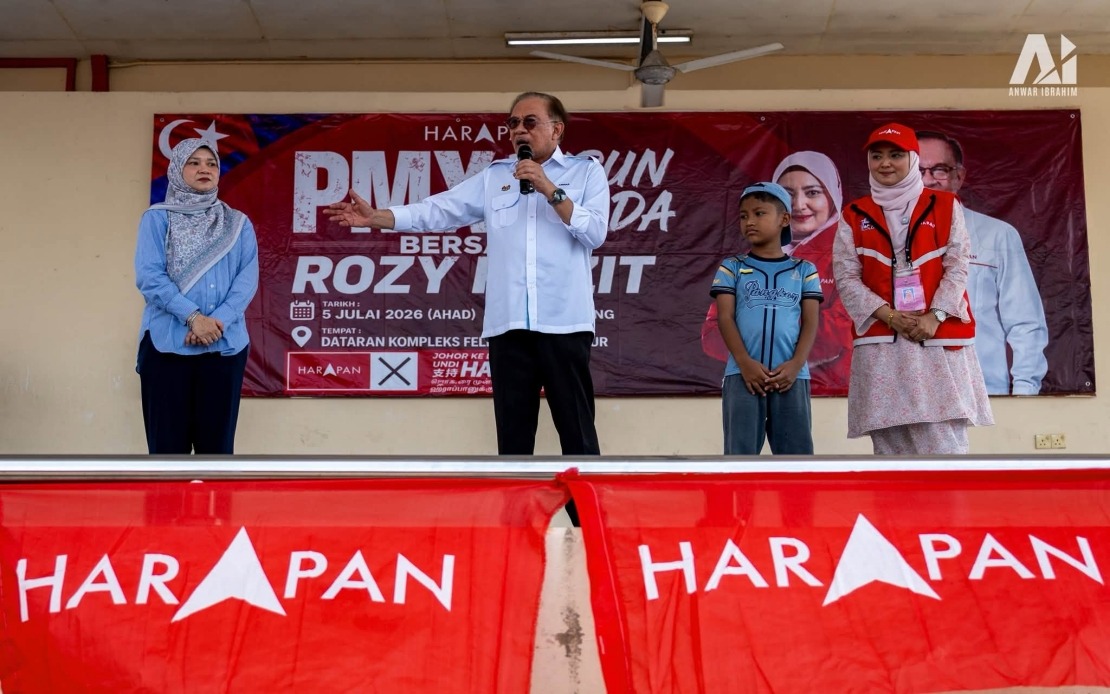
Prime Minister Datuk Seri Anwar Ibrahim has reflected publicly on an encounter that captured his heart: a meeting with nine-year-old Muhammad Afif Ikhwan during a recent programme at Felda Palong Timur in Segamat, Johor. The boy's determination to see the nation's leader, combined with his grandmother's dedication to making the moment possible, left such an impression on Anwar that he decided to follow up with a personal gesture of goodwill.
The story centres on Rosimah Mohammad, a 58-year-old grandmother from Kampung Pudu in Segamat, who undertook a remarkable journey to fulfil her grandson's wish. Rather than relying on conventional transport, she navigated a motorcycle along the dusty tracks winding through oil palm plantations, a landscape that dominates much of Johor's agricultural economy. The effort speaks to the lengths rural families will go to create meaningful moments for their children, regardless of circumstance or inconvenience.
During the event itself, the encounter proved brief but evidently powerful. Muhammad Afif managed to extend his small hand through the crowd to reach the Prime Minister, and the two exchanged a handshake before Anwar brought the boy onto the stage. In his Facebook post reflecting on the moment, Anwar acknowledged that what might seem like a fleeting interaction carried disproportionate significance for the young boy and his grandmother. Such seemingly small gestures of recognition from national leaders can become defining memories for ordinary Malaysians, particularly those in rural communities where opportunities for direct engagement with top officials remain relatively rare.
The Prime Minister's decision to send someone to present Muhammad Afif with a bicycle demonstrates a responsiveness to public sentiment that extends beyond the immediate event. This kind of follow-up gesture transforms a momentary handshake into something more substantive, signalling that the brief encounter was genuinely noted and valued rather than forgotten once the programme concluded. For a nine-year-old in a rural area, a bicycle represents not merely a possession but expanded mobility and opportunity—practical benefits that underscore the sincerity of the gesture.
Anwar's reflections also touched on deeper themes about leadership and compassion during challenging times. He noted that regardless of how demanding the duties of managing national affairs become, and despite the numerous significant challenges confronting the government, leaders must consciously maintain their humanity and their capacity to reach out genuinely to others. This sentiment resonates particularly in the Malaysian context, where rural communities sometimes feel disconnected from or overlooked by the machinery of central government, concentrated as it often is in urban centres.
The narrative also illuminates the realities of life in rural Johor, where agricultural work remains central to the economy and where families navigate their daily lives through landscapes shaped by commodity production. The fact that Rosimah chose to travel through oil palm plantation tracks rather than on main roads speaks to both the geography of rural settlement and the ingenuity required to manage everyday movement in such areas. It is a reminder that for many Malaysians, infrastructure challenges and geographical distance remain persistent features of rural existence.
Anwar's public sharing of this story appears calculated to serve multiple purposes: it humanises his leadership during a period when his government faces various political and economic pressures, it celebrates the aspirations of ordinary Malaysians, and it positions the Prime Minister as someone attuned to the hopes of the nation's youth. By extending this narrative across social media, Anwar ensures the story reaches far beyond those present at Felda Palong Timur, potentially reinforcing his image as a leader who values personal connection and who remembers the people he encounters.
The broader implications of such moments merit consideration in Malaysian political discourse. Voter and citizen engagement often depends partly on whether ordinary people feel that their leaders genuinely acknowledge and value them. Rural communities, particularly, may experience political participation as a one-way process—voting and supporting governments without substantial reciprocal recognition. Stories like Muhammad Afif's, when amplified through official channels and social media, can counteract that perception and reinforce civic engagement.
Looking forward, Anwar indicated his hope that the encounter would become a cherished memory that motivates Muhammad Afif to continue his schooling and eventually contribute meaningfully to his family, community, and country. This framing connects a personal moment to larger questions about national development: the education and aspirations of rural Malaysian children directly influence the nation's future human capital and social cohesion. When a Prime Minister articulates such aspirations publicly, it signals government commitment to youth development across all regions and socioeconomic strata.
The incident ultimately illustrates how unpredictable moments of authentic human connection can carry political and social significance in ways that carefully orchestrated events sometimes cannot. Rosimah's motorcycle journey through palm oil plantations was neither planned nor orchestrated; it emerged from genuine familial motivation. Yet it has become part of the national conversation about leadership, compassion, and the bonds between government and citizens. For Muhammad Afif, the memory of shaking hands with his nation's leader, amplified by a gift that extends his mobility and independence, will likely remain significant long into adulthood, potentially shaping his relationship with civic participation and national identity.

