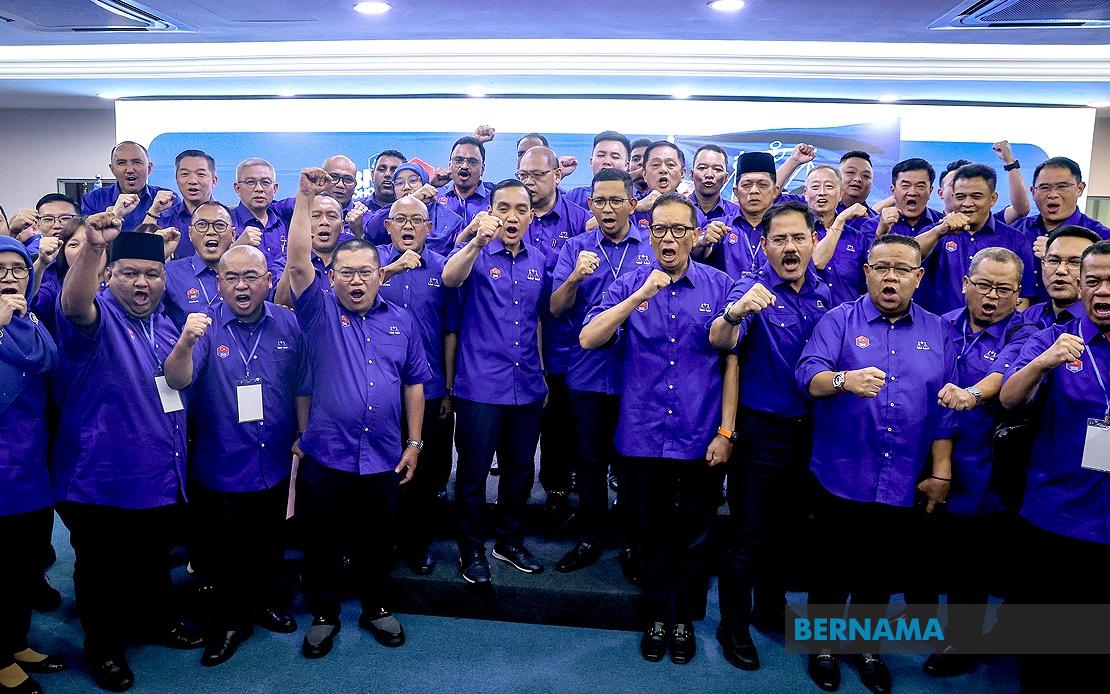
Johor's Barisan Nasional coalition has rolled out its comprehensive slate of candidates for the forthcoming state election, deploying a mix of seasoned political veterans and newcomers to contest all 56 state assembly seats. The announcement, made by coalition chairman Datuk Onn Hafiz Ghazi at a formal ceremony in Johor Bahru, reflects the coalition's strategy to balance continuity with renewal as it seeks to maintain its stronghold in Malaysia's southern heartland ahead of what is expected to be a keenly contested electoral battle.
The candidate distribution reveals the traditional power-sharing arrangement within the BN machinery in Johor. UMNO will field 37 candidates, commanding the largest share of seats, while component parties MCA and MIC contribute 15 and four candidates respectively. The selection process carried the formal endorsement of BN national chairman Datuk Seri Dr Ahmad Zahid Hamidi, underscoring the federal leadership's investment in the Johor campaign. This approval structure demonstrates how national-level party machinery coordinates with state-level coalitions to ensure alignment across Malaysia's political landscape, a practice that has remained consistent across multiple electoral cycles in the peninsula.
Among the most significant returns announced is that of Datuk Seri Dr Adham Baba, the former health minister whose political career has spanned multiple terms in both state and federal office. Adham will contest Pasir Raja, a constituency where he previously held sway for two consecutive terms between 2008 and 2018. His federal parliamentary credentials are equally substantial, having represented the Tenggara seat for four years spanning 2004 to 2008 and again from 2018 to 2022. Beyond his legislative experience, Adham's position as chief of the Tenggara UMNO division grants him organizational influence within party structures, potentially positioning him to play a role in post-election coalition dynamics. His return to state-level competition after a period of federal focus represents a recalibration in Johor's political hierarchy and may signal BN's intent to leverage his ministerial experience and administrative credentials in consolidating the southern state.
Menteri Besar Onn Hafiz Ghazi will personally contest the Machap seat, which he successfully defended in the 2022 state election. His direct participation in electoral competition, rather than relying solely on party machinery, reinforces his standing within Johor's political establishment and provides voters with a clear focal point for assessing the incumbent administration's performance. The decision to have the state chief executive stand for re-election carries symbolic weight, signaling confidence in the government's track record while providing continuity in leadership should the coalition prevail. Machap has become a politically sensitive barometer for measuring grassroots support in Johor, making Onn Hafiz's personal candidacy a matter of considerable strategic importance.
Notable among the electoral changes announced is the non-nomination of Datuk Seri Hasni Mohammad in Benut, where he had served as the incumbent assemblyman. This represents a significant personnel shift, as Hasni carries the distinction of former Menteri Besar and thus occupies senior standing within Johor's political hierarchy. His replacement by Datuk Mohd Sumali Reduan, the UMNO working secretary, suggests a deliberate recalibration of candidate selection in the constituency. Such moves in competitive politics often reflect evolving assessments of electoral viability or broader internal reshuffling within party ranks. The transition from an established figure to a party functionary may indicate either confidence in UMNO's organizational machinery in that division or a strategic repositioning ahead of anticipated campaign challenges.
Continuity characterizes the treatment of most previous office-holders, however. Nine of the ten former executive councillors who stood in the 2022 election have been reselected as candidates, providing substantial institutional memory and demonstrable administrative experience across the coalition's proposed cabinet-level representatives. The single exception is Khairin-Nisa Ismail @ Md On, who previously chaired the State Women, Family and Community Development Committee and will not defend the Serom seat. Her non-nomination stands out precisely because of the overwhelming retention of her peers, potentially indicating either organizational changes within portfolio structures or evolving political calculations within specific constituencies.
Onn Hafiz used the announcement ceremony to reinforce the philosophical framework underlying BN's candidacy approach, cautioning that nomination represents neither reward nor privilege but rather a trust requiring rigorous discharge with integrity. This framing serves multiple functions within Malaysian political discourse. It attempts to elevate the campaign narrative beyond transactional patronage, appealing to voters' aspirational values while simultaneously reminding candidates of accountability beyond immediate party interests. The emphasis on courteous, respectful, and prudent campaigning, aligned with Johor's stated values, acknowledges the electoral environment's competitive intensity while establishing baseline expectations for campaign conduct. Such exhortations, while rhetorically important, also reflect awareness that electoral competition in Johor has grown increasingly robust, with opposition parties mounting substantially stronger challenges than in previous cycles.
The geographic distribution of candidates across 56 seats encompasses several constituencies of particular political significance within Johor's electoral topography. Seats such as Bukit Pasir, Bukit Naning, Parit Yaani, and Bukit Permai have featured prominently in recent electoral contests, often serving as indicators of broader voting pattern shifts. UMNO's continued dominance in candidate allocation, commanding two-thirds of contested seats, reflects the party's organizational infrastructure in Johor and its historical electoral performance in the state. However, this concentration also suggests potential vulnerability if organizational momentum falters or if opposition coalitions successfully mobilize anti-BN sentiment in concentrated geographic zones.
For Malaysian observers and regional analysts, the composition of this candidate slate offers insights into BN's confidence levels and strategic priorities across Johor's diverse demographic landscape. The inclusion of ministerial-level figures like Adham Baba suggests the coalition perceives several constituencies as winnable but requiring elevated political firepower. Conversely, the elevation of working-level party officials into more prominent contests may indicate either confidence in grassroots organizational capacity or tactical decisions to preserve resources. The candidate selection process itself reflects how Malaysia's federal political system distributes authority between national party machinery and state-level coalitions, with ultimate approval residing with national leadership despite ostensible state-level autonomy.
The election campaign ahead will test whether BN's candidate selections translate into electoral victories sufficient to maintain governance in Johor. The state's political significance extends beyond its own borders, as Johor historically serves as a political bellwether reflecting broader sentiment across peninsular Malaysia. Opposition parties' counter-nominations and campaign strategies will substantially influence whether BN's carefully balanced slate of incumbents and newcomers can retain the state. The inclusion of figures with federal-level experience alongside state-focused candidates suggests BN is preparing for a more nationally-oriented campaign, potentially linking state-level performance to broader assessments of federal governance.
For Malaysian readers and Southeast Asian observers tracking regional political developments, the Johor election represents a crucial test of BN's capacity to maintain electoral dominance following the 2022 general election's competitive outcome. The candidate slate reflects institutional continuity combined with measured renewal, positioning the coalition to leverage experience while attempting to appear responsive to electoral dynamics. How these candidates perform during the campaign period and, ultimately, on polling day will inform understanding of Malaysian electoral trends and the relative strength of competing political coalitions as the nation progresses toward subsequent elections at state and federal levels.