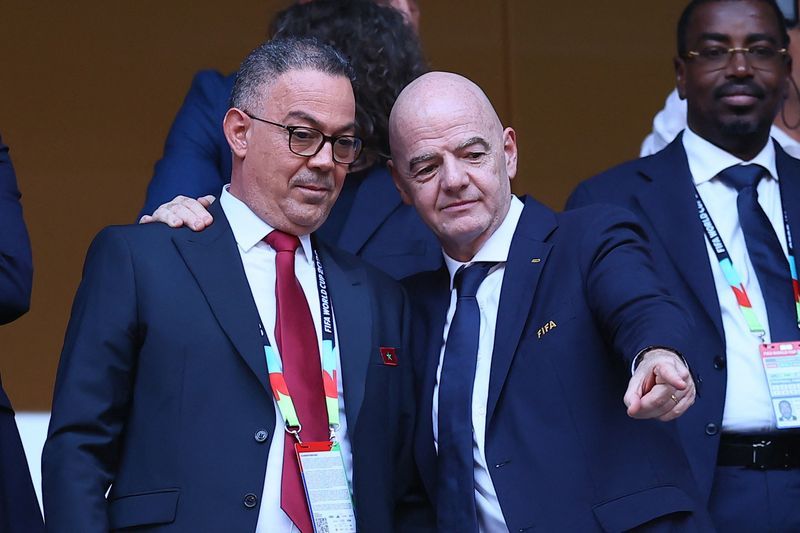
Gianni Infantino's grip on the FIFA presidency faces significant turbulence in the coming months, but he has found an unlikely stronghold in African football leadership. As the embattled FIFA chief navigates a leadership crisis following the collapse of his controversial FIFA Forward Enterprise initiative, senior officials from Africa's dominant football confederation have stepped forward with explicit endorsements, signalling that Infantino may retain the backing of the continent's 54 member nations in his bid to secure another term at next March's presidential election.
The timing of African support proved strategic and consequential. While confederations across Asia, Europe, and North and Central America swiftly withdrawn their confidence in Infantino's leadership in the wake of his failed World Cup monetisation scheme, the Confederation of African Football maintained calculated silence before its executive committee meeting on Thursday. This restraint proved advantageous to the FIFA president, who urgently required reassurance from at least one major continental bloc as three other global confederations publicly distanced themselves from his leadership. Several prominent African football administrators, including CAF Vice President Fouzi Lekjaa of Morocco, Egyptian FIFA Council member Hany Abo Rida, Niger's Hamidou Djibrilla, Mauritania's Ahmed Yhaya, and Veron Mosengo-Omba, the newly elected president of the Democratic Republic of Congo's football federation, issued remarkably similar statements that both welcomed Infantino's decision to shelve the revenue-sharing scheme and reaffirmed their personal confidence in his continued leadership.
The African position reflects a complex reality within global football governance. Unlike their counterparts in wealthier continents, many African nations maintain precarious financial positions within their football administrations, creating a distinct vulnerability to FIFA's financial incentives. The baseline funding mechanism that guarantees each of FIFA's 211 member associations eight million dollars across a four-year cycle has become essential infrastructure for African football development. Infantino's predecessor, Sepp Blatter, pioneered this model in 1998, securing African backing with promises of direct financial support—a revolutionary concept at the time when African nations had never previously received systematic funding from world football's governing body. Infantino substantially expanded this model under the banner of FIFA Forward, exponentially increasing disbursements to member associations and transforming the financial relationship between continental confederations and the FIFA presidency.
This financial dependency creates a structural advantage for Infantino within African football politics that transcends the controversy surrounding his failed commercial initiative. Presidents of smaller African football federations have articulated their predicament with striking candour. Saïd Ali Athouman, president of the Comoros Football Federation, articulated the fundamental challenge facing resource-constrained African nations: without independent sponsorship revenue or substantial government allocation, African federations struggle to establish the infrastructure, training facilities, and equipment that wealthier nations take for granted. Fleetwood Haiya, president of Malawi's Football Association, illustrated this disparity even more starkly, noting that national governments unable to adequately fund essential services like healthcare cannot simultaneously invest in football development. This structural inequality within global football has become self-perpetuating, with wealthy nations' superior resources translating directly into competitive advantage, creating a vicious cycle that FIFA funding attempts to address but cannot fundamentally resolve.
Infantino's decision to abandon the FIFA Forward Enterprise initiative—which sought to raise 4.2 billion dollars through commercialising future World Cup broadcasting and sponsorship rights—came following intense international pressure applied simultaneously across multiple confederations. The scheme represented an extraordinary attempt to monetise FIFA's most valuable commercial asset, but it triggered unprecedented coordinated opposition from football administrators outside Africa. CAF's measured response, which involved announcing the confederation would study the initiative before Infantino abruptly terminated it, positioned African football leadership as pragmatic stakeholders rather than ideological opponents. This positioning enabled African administrators to claim credit for Infantino's reversal while simultaneously avoiding the appearance of disloyalty that public criticism might have suggested.
The personal dimension of African support for Infantino cannot be entirely separated from the financial calculation. Veron Mosengo-Omba, the Democratic Republic of Congo's newly elevated football federation president, studied university in Switzerland alongside Infantino, creating an personal relationship that transcends administrative formality. This biographical detail, referenced in Mosengo-Omba's statement of support, underscores how FIFA governance functions within networks of personal relationships that predate formal institutional positions. Thamsanqa Motsepe, the South African who chairs CAF's African Club Confederation, issued particularly effusive praise for Infantino immediately preceding the World Cup revenue scandal, describing him as a loyal friend to Africa and emphasising the importance of reciprocal loyalty within relationships—language that suggests Motsepe views Infantino's FIFA Forward expansion as a demonstration of loyalty deserving reciprocal political support.
The historical precedent established by Blatter's 1998 election victory demonstrates that African football federation allegiance can decisively influence FIFA presidential contests. Blatter defeated Lennart Johansson, then UEFA president, by securing overwhelming support from African nations who had never previously received systematic financial support from FIFA's headquarters. Although CAF formally endorsed the Swedish candidate, the tangible promise of direct funding proved more persuasive to individual African federation presidents than confederation-level endorsements. Infantino effectively replicated and magnified this model, transforming direct payments to member associations into a central feature of his leadership platform. The success of this strategy in securing his initial election in 2016 established a template he continues to employ, understanding that African confederations represent a proportionally larger constituency within global FIFA governance than their economic or footballing prominence would suggest based solely on competitive performance metrics.
The forthcoming CAF executive committee meeting carries symbolic rather than determinative significance. Although the controversial World Cup monetisation scheme remains formally on the agenda, few expect African football leadership to adopt any explicit position on Infantino's suitability for continued presidency. The silence itself constitutes a form of tacit approval, providing Infantino crucial political cover during a period when three other continental confederations have publicly declared their loss of confidence in his leadership. African football administrators have calculated that maintaining financial relationships and access to FIFA resources under Infantino's continued leadership outweighs the political costs of supporting a president whose major commercial initiative failed so spectacularly that it required abandonment within days of announcement.
The broader implications of African support extend beyond the immediate question of Infantino's March 2024 re-election prospects. Should he successfully navigate this leadership challenge through African backing, it would reinforce a governance dynamic in which financial dependency translates directly into political support. This pattern suggests that FIFA's hierarchical relationship with developing football nations, mediated through targeted financial transfers, has become sufficiently entrenched that even significant governance controversies cannot dislodge it. For Southeast Asian nations that occupy an intermediate position between wealthy European and impoverished African confederations, the African position provides a cautionary indicator that financial incentives wield outsized influence in FIFA governance relative to concerns about institutional accountability or ethical standards in presidential leadership.

