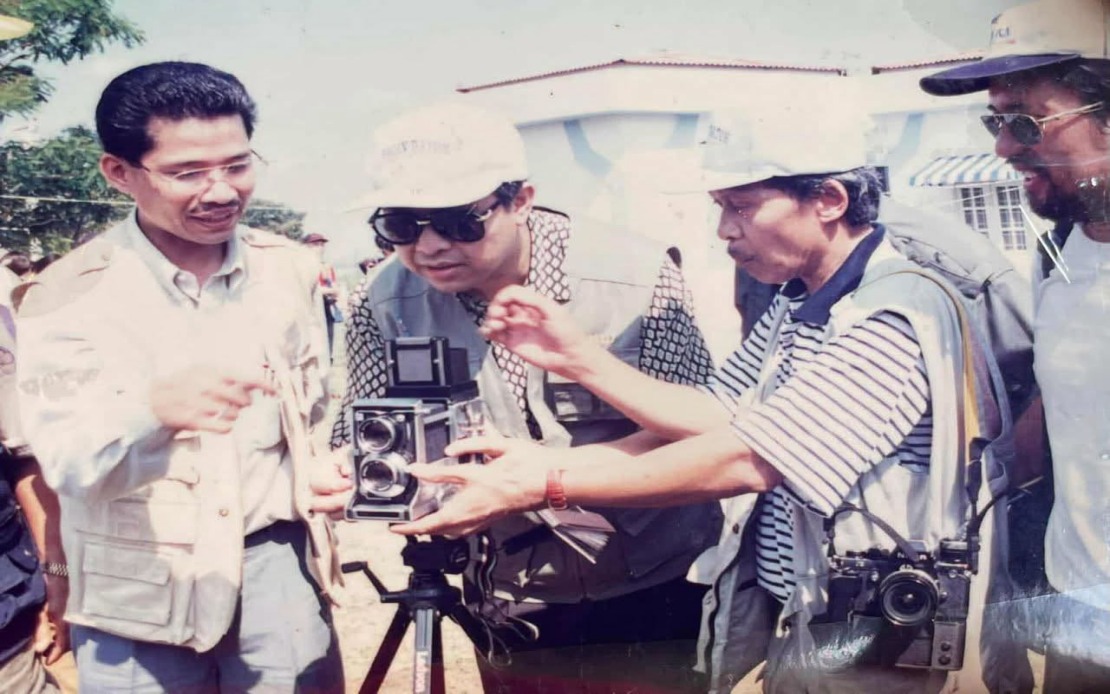
Deputy Prime Minister Datuk Seri Dr Ahmad Zahid Hamidi has extended his recognition to photographers across all disciplines in conjunction with World Photography Day 2026, emphasising the profound impact that visual documentation has on how societies preserve and understand their histories. The tribute, shared through his social media platform, underscores the growing appreciation within Malaysia's political leadership for the work of visual storytellers who capture defining moments both in public life and private spheres.
Ahmad Zahid's acknowledgement encompasses a remarkably broad spectrum of photography practitioners, from those who work professionally in news and media organisations to specialists in event documentation, as well as the casual photographers who assume the informal role of family historian during celebrations and gatherings. This inclusive approach reflects a deepening understanding that photography in the modern era transcends the boundaries of professional practice, with millions of ordinary citizens now wielding sophisticated imaging tools that previous generations reserved for trained professionals. The Deputy Prime Minister's recognition of these varied contributors signals an appreciation for how visual culture has become democratised across Malaysian society.
At the heart of Ahmad Zahid's message lies a meditation on the relationship between the fleeting moment and lasting legacy. He articulated the paradox inherent in photography: that despite the apparent instantaneity of capturing an image—sometimes achieved in mere fractions of a second—the resulting photograph can endure across decades, carrying narratives and emotional resonance far beyond the moment of its creation. This observation carries particular relevance in Southeast Asia, where rapid social and economic transformation often renders photographs invaluable as windows into worlds that may no longer exist.
The Deputy Prime Minister noted the diverse destinations of photographs once they leave the photographer's hands. Some are preserved as intimate treasures, kept in personal collections or digital archives where they serve primarily as conduits to private memory and nostalgia. Others receive public display, framed and mounted in homes and offices as daily reminders of significant moments or cherished individuals. Yet a third category transcends both private and immediate public function, eventually assuming the status of historical documentation and archival reference material. This trajectory from momentary capture to historical artifact underscores photography's unique capacity to bridge individual experience and collective memory.
The significance of Ahmad Zahid's tribute extends beyond ceremonial recognition of a profession. In Malaysia's context, where rapid urbanisation and digital transformation continuously reshape the visual landscape, photographers serve as essential documentarians of social change. Professional journalists and photojournalists particularly bear responsibility for providing visual accounts of significant events, from political developments to natural disasters, ensuring that future generations possess authentic records of their era's defining moments. The work of these practitioners has particular importance in a media environment where competing narratives and digital manipulation increasingly complicate the relationship between image and truth.
Family photographers and amateur documentation practitioners similarly occupy an underappreciated role in preserving social history. The informal photographs taken at weddings, festivals, and everyday gatherings collectively constitute an invaluable archive of how ordinary Malaysians lived, celebrated, and organised their communities. As Malaysia continues to evolve economically and socially, these visual records become progressively more valuable as cultural heritage, providing future researchers with authentic glimpses into the texture of contemporary life that official histories and institutional records often fail to capture.
The Deputy Prime Minister's message also implicitly acknowledges the technical and artistic challenges inherent in photography. Behind the finished image lies the photographer's discipline of observation—the capacity to perceive a scene with both technical understanding and creative vision, then wait for the precise moment when elements align in aesthetically and narratively compelling configurations. This skill set combines mechanical and technical knowledge with artistic sensibility and, frequently, considerable patience. The investment required to develop such competency deserves recognition and appreciation.
For Malaysia, where tourism and cultural promotion represent significant economic sectors, photography maintains outsized importance. The visual representation of Malaysian destinations, cultural practices, and experiences shapes international perception and domestic pride. Photographers working across tourism, cultural documentation, and fine art photography thereby contribute substantially to how Malaysia positions itself regionally and globally. Their work influences everything from tourism marketing to international understanding of Malaysian society and heritage.
Ahmad Zahid's recognition arrives at a moment when photography's role in society faces transformation through artificial intelligence and digital technology. As computational tools increasingly enable automated image capture and manipulation, the human photographer's role—rooted in observation, intention, and authentic witnessing—becomes perhaps even more valuable as a guarantor of authenticity and human perspective. The Deputy Prime Minister's tribute therefore carries contemporary relevance, affirming the enduring importance of human photographers even as technological disruption reshapes visual culture.

