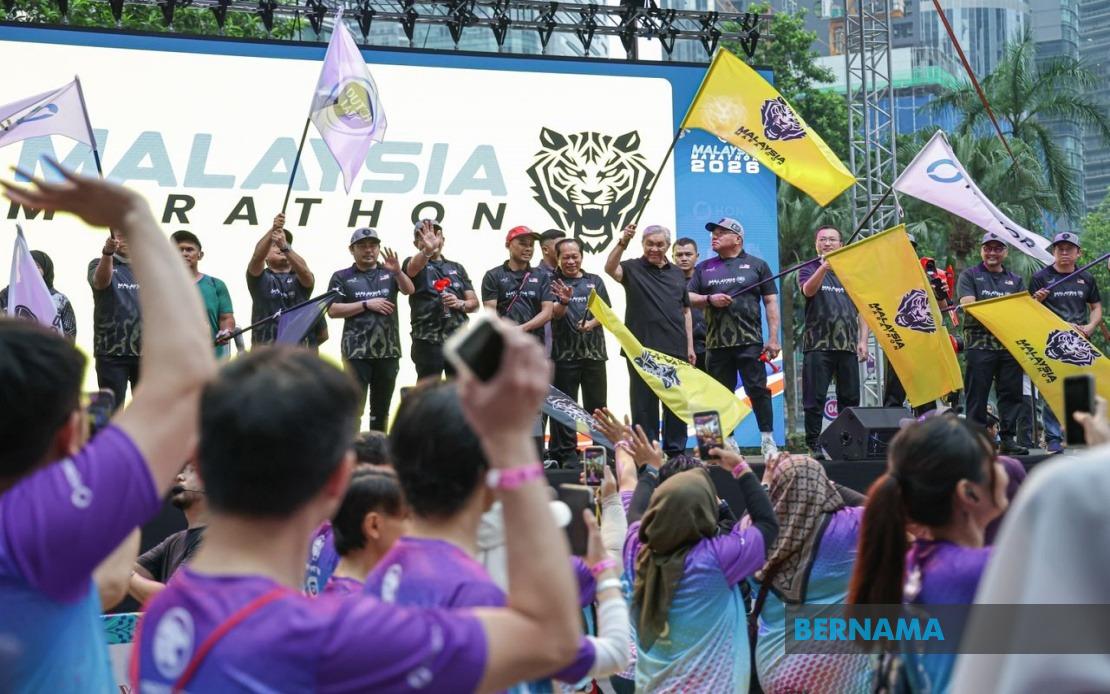
Deputy Prime Minister Datuk Seri Dr Ahmad Zahid Hamidi presided over the launch of Malaysia Marathon 2026 on Friday, sending off more than 10,000 participants in the 5-kilometre Fun Run segment from the Kuala Lumpur City Centre grounds. The event, integrated with the nation's 2026 National Day commemoration, represents a substantial endorsement of athletics as a vehicle for national celebration and community engagement at the highest levels of government.
The inaugural marathon attracted a combined field of 25,000 runners from across Malaysia and overseas, competing in four distinct race categories structured to accommodate varying fitness levels and competitive ambitions. The full marathon stretched 42 kilometres, with intermediate options of 21 kilometres and 10 kilometres, alongside the accessible 5-kilometre fun run component. This tiered approach reflects a growing global trend toward inclusive mass participation events that appeal to serious athletes and recreational participants alike, potentially broadening the appeal of endurance sports beyond traditional running enthusiast circles.
Tourism, Arts and Culture Minister Datuk Seri Tiong King Sing officially flagged off the 42-kilometre full marathon cohort of 2,000 runners from Pavilion Kuala Lumpur, while earlier morning starts saw the 21-kilometre and 10-kilometre categories commence with 8,000 and 5,000 participants respectively. The staggered start times reflect standard marathon logistical practices designed to manage crowd flow and ensure participant safety across different route segments. Ahmad Zahid's subsequent ceremonial launch of the fun run underscores government investment in grassroots fitness initiatives and public health promotion.
A notable feature of the day's proceedings involved the Malaysian Armed Forces band providing musical accompaniment following the national anthem performance, setting a patriotic tone for the enterprise. The inclusion of uniformed services in sporting events carries symbolic weight in Malaysia's context, reinforcing connections between physical discipline, national service, and civic pride. Deputy Works Minister Datuk Seri Ahmad Maslan's attendance alongside tourism and culture leadership suggests coordination across multiple government portfolios in delivering the event.
One of the marathon's most visually distinctive elements was a one-kilometre flag parade featuring 1,000 students from Kolej Poly-tech MARA Bangi, who carried the Malaysian flag throughout the route. This incorporation of educational institutions into the event creates opportunities for youth engagement with national symbols and commemorative occasions, potentially fostering stronger connections between younger generations and state-sponsored initiatives. The involvement of polytechnic students also demonstrates deliberate efforts to include vocational education representatives in high-profile national functions.
The Kuala Lumpur City Centre grounds served as the unified finish line for all four race categories, representing a significant departure from established marathon protocols in Malaysia. Traditionally, Dataran Merdeka has hosted the finish line for major running events in the capital, but the decision to centralise the conclusion at KLCC reflects evolving urban planning considerations and venue management preferences. The iconic shopping and entertainment complex offers modern infrastructure, climate-controlled facilities, and extensive retail and hospitality services that can enhance participant experience beyond the competitive elements of the race itself.
World Athletics, the international governing body for track and field sports, formally recognised Malaysia Marathon 2026, granting it official status within the global athletics calendar. This endorsement carries significant implications for event legitimacy and may facilitate participation by international professional athletes seeking officially sanctioned competition records. Recognition from world athletics bodies can also attract sponsorship interest from multinational corporations seeking association with internationally credible sporting properties.
The timing of Malaysia Marathon 2026's inaugural running as a component of National Day celebrations strategically links physical fitness and athletic achievement with patriotic observance. By embedding the marathon within a broader national commemoration framework, organisers position endurance sports as a legitimate expression of national identity and collective pride. This approach mirrors initiatives in other Southeast Asian nations that have increasingly incorporated sporting events into national day programming.
The successful assembly of such substantial participant numbers—particularly the international component—suggests growing recognition of Malaysia as a credible destination for organised athletic events. This capability could position the country competitively within Southeast Asia's sporting tourism sector, potentially attracting additional international marathons and distance running championships. The infrastructure investments and event management expertise demonstrated through Malaysia Marathon 2026 indicate institutional capacity that may attract future global sporting enterprises to Malaysian venues.
For Malaysian runners, the multi-category structure of Malaysia Marathon 2026 democratises access to officially sanctioned long-distance running opportunities. Rather than requiring participation in a single competitive format, aspiring athletes at various experience levels can engage with the same event ecosystem, potentially nurturing a broader running culture and creating pathways for recreational participants to develop into more serious competitors over time. This inclusive structure aligns with international best practices in developing sustainable athletic communities.

