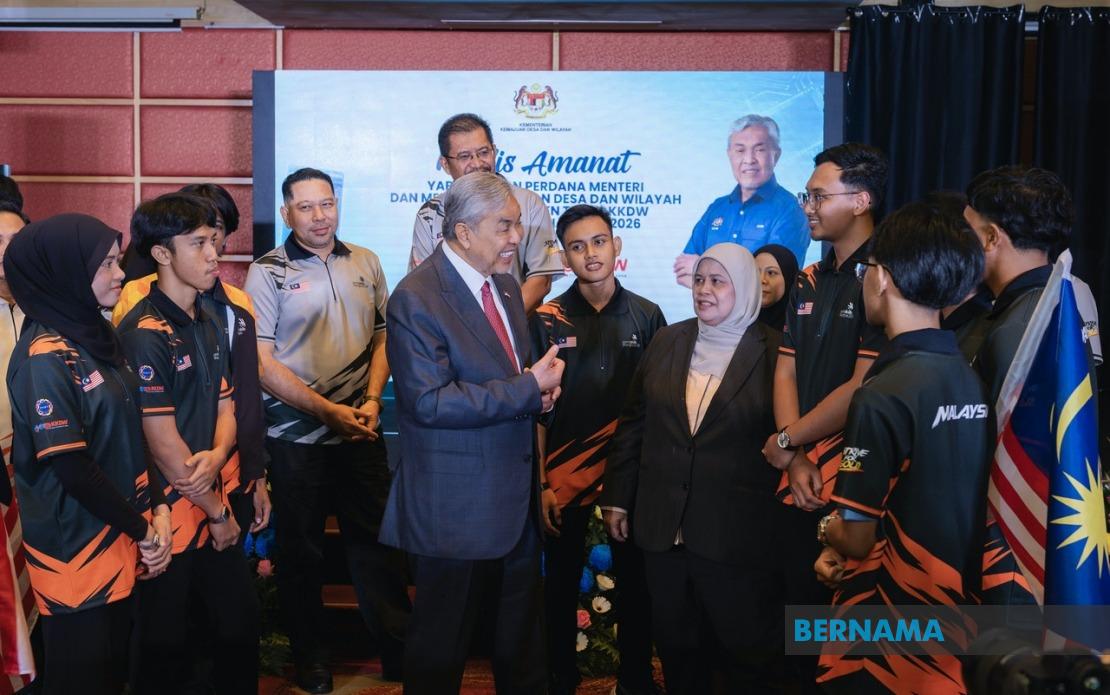
Deputy Prime Minister Datuk Seri Dr Ahmad Zahid Hamidi has made a significant personal pledge to support Malaysia's technical and vocational education sector, announcing that he will fully sponsor umrah pilgrimages for any participants from TVET institutions who secure gold medals at the WorldSkills Competition 2026. The commitment, made during an address to the TVET@KKDW contingent here in Kuala Lumpur, extends beyond individual achievers to include their families, underscoring the government's recognition of vocational excellence as a national priority.
The competition will be held in Shanghai, China, from September 22 to 27 next year, bringing together skilled competitors from around the world to showcase their expertise across diverse technical disciplines. Ahmad Zahid, who holds the additional portfolio of Rural and Regional Development Minister, framed the umrah sponsorship as a personal gesture of appreciation rather than an official government programme, deliberately funding the initiative from his own resources to emphasize the depth of his commitment to recognising vocational achievement.
Under the proposed arrangement, not only will gold-winning participants receive sponsored umrah travel, but their parents will also benefit from the same arrangement. This dual sponsorship approach reflects a cultural understanding within Malaysian society of the family-centred nature of achievement, where parental support and sacrifice are integral to a young person's success. Ahmad Zahid's explicit statement that all nine Malaysian participants could theoretically receive the benefit—along with their parents—demonstrates his confidence in the contingent's competitive capacity.
The nine Malaysian competitors have been carefully selected to represent the country across a range of technical skill categories. The roster includes Nadratulliyana Ab Malek in Fashion Technology, Haziq Syahmi Nazri competing in Automobile Painting, and Amirul Sharif Sharifudin in Electronics. Additional competitors include Mohammad Ezaly Iman Ramli representing Cyber Security and Wan Hamiz Ozai Wan Hamidzi in Rail Vehicle Technology, demonstrating Malaysia's breadth of technical expertise.
The remaining four participants showcase further diversity in vocational disciplines. Khairul Idham Bahari will compete in Cabinetmaking, while Muhamad Nashrul Zulkifli enters the Digital Construction category. Muhammad Haziq Lailla Zamri represents the Electrical Installations field, and Muhammad Huzairy Mohamad Thes competes in Mechanical Engineering CAD. This cross-section of skills reflects the modern economy's demand for professionals across traditional crafts, digital disciplines, and emerging technological fields.
WorldSkills International is widely recognized as one of the most prestigious platforms for showcasing vocational talent globally, with competitors from dozens of nations vying for recognition and medals. For Malaysia, participation in such competitions serves multiple strategic purposes beyond individual recognition. Success at WorldSkills enhances the nation's international reputation for technical education, demonstrates the calibre of graduates emerging from TVET institutions, and provides valuable exposure for vocational pathways to young Malaysians who may otherwise gravitate towards purely academic trajectories.
The Ministry of Rural and Regional Development's oversight of the TVET@KKDW contingent reflects the government's integration of skills development with rural development objectives. Technical and vocational training has long been positioned as crucial to economic diversification and regional development across Malaysia, enabling communities beyond major urban centres to develop expertise in demand across various sectors. Ahmad Zahid's emphasis on this contingent suggests a strategic view of TVET as foundational to broader rural prosperity goals.
The timing of this announcement, several months before the competition, serves to motivate participants during their preparation phase. Public pledges of recognition from senior government figures can significantly boost morale among competing athletes and students, creating an additional psychological incentive beyond the inherent motivation to excel. The specificity of Ahmad Zahid's promise—naming the umrah reward and explicitly addressing the possibility of all nine participants winning gold—sends a powerful signal about state-level expectations and support.
From a regional perspective, Malaysia's participation in WorldSkills 2026 positions the nation within a competitive landscape where other Southeast Asian countries similarly invest in vocational excellence. Thailand, Vietnam, and Indonesia maintain active presences at such international competitions, making Malaysian performance a reflection of broader regional standing in skills development. Ahmad Zahid's personal investment in recognizing gold medallists elevates the stakes and visibility of the competition within domestic discourse.
The umrah sponsorship component carries particular cultural resonance in Malaysia's Muslim-majority context, where the pilgrimage holds profound spiritual significance. By linking vocational achievement to this religious journey, Ahmad Zahid creates a narrative in which professional excellence and spiritual fulfillment are mutually reinforcing values. This framing may also serve to elevate the status of TVET pathways among Muslim families, countering historical perceptions that vocational training represents a less desirable educational route compared to academic progression.
The presence of Deputy Rural and Regional Development Minister Datuk Rubiah Wang at the announcement reinforces the institutional weight behind the initiative. Her attendance signals that the motivation extends beyond individual ministerial preference to reflect broader ministry commitment towards supporting TVET excellence. This multi-level support structure enhances the likelihood that participants will receive sustained backing throughout their preparation and competition phases.
Looking forward, Ahmad Zahid's pledge creates a template that other government officials might follow in supporting vocational competitors. Should any of the nine Malaysian participants succeed in capturing gold medals, the implementation of the umrah sponsorship will serve as a high-profile case study demonstrating the tangible rewards available to vocational achievers. Conversely, the announcement itself communicates to Malaysian society that technical excellence warrants recognition and celebration comparable to traditional academic or sporting achievements, potentially reshaping perceptions around vocational education's place within Malaysia's educational hierarchy.

