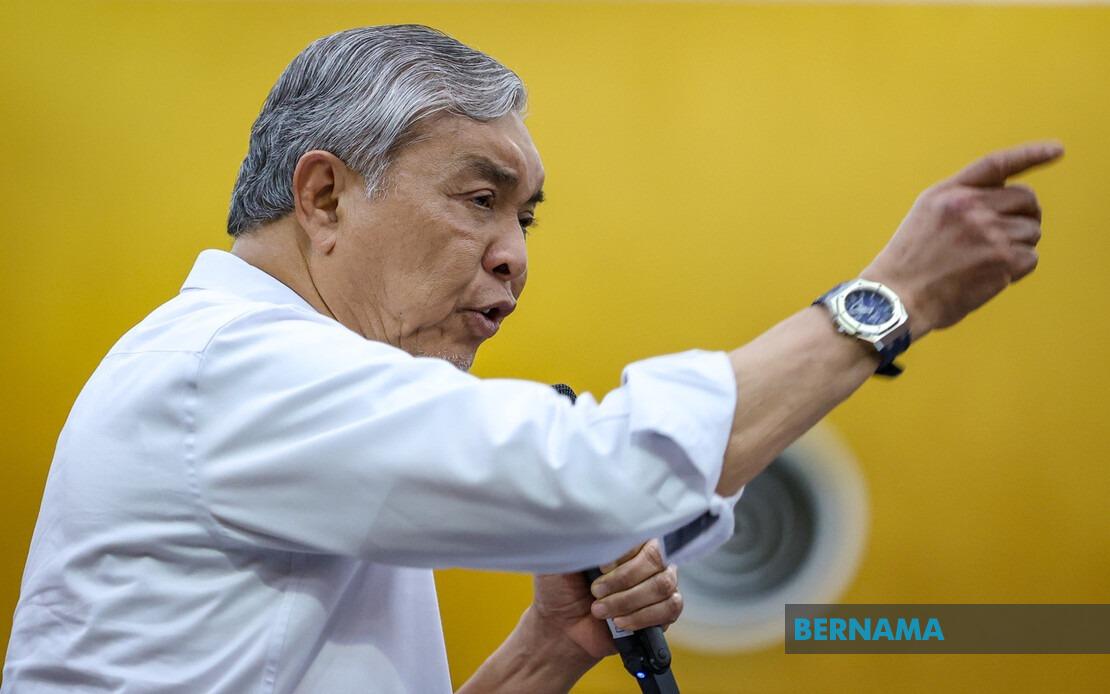
Deputy Prime Minister Datuk Seri Dr Ahmad Zahid Hamidi has unveiled a proposal to introduce mandatory leadership and political education courses for Student Representative Councils (MPP) across Malaysia's higher education institutions. Speaking in Johor Bahru on July 9, the senior government official argued that such programmes would deepen student leaders' comprehension of democratic processes and equip them with practical knowledge about the nation's complex political landscape. The initiative reflects growing official concern about ensuring that the country's upcoming generation of voters and potential political actors possess sufficient grounding in civic affairs.
Ahmad Zahid, who simultaneously holds the position of Barisan Nasional chairman, framed the proposal as an investment in developing politically mature young leaders capable of grasping contemporary national challenges. He stressed that such exposure would benefit students even if they never pursue formal involvement in party politics, arguing that informed citizenship requires at minimum a functional understanding of how Malaysia's political system operates. This distinction between passive awareness and active participation runs through his reasoning about the appropriate relationship between young people and politics.
The government has signalled willingness to finance these courses should student councils across the country submit requests, contingent on approval from Higher Education Minister Datuk Seri Dr Zambry Abd Kadir. This funding commitment suggests the proposal enjoys backing at senior cabinet levels and reflects a strategic pivot towards equipping youth with structured political education rather than leaving such knowledge acquisition to chance or informal channels. The specificity of the financing offer indicates this is not merely a rhetorical exercise but a concrete policy initiative under development.
Ahmad Zahid drew on his own university experience to illustrate his point about youth political engagement. He recounted how he became politically active during his time as a student leader at Universiti Malaya, though he emphasised that such direct involvement remains a choice rather than an obligation. His personal trajectory—from campus activism to the highest echelons of government—provides an implicit model for how structured political education might shape future leaders. However, he carefully separated this biographical narrative from any suggestion that young Malaysians must follow similar paths.
The deputy prime minister articulated a nuanced position on youth political participation that distinguishes between informed citizenship and partisan activism. He acknowledged that 18-year-old first-time voters need not commit themselves to political causes, yet contended that understanding political dynamics represents a baseline expectation for responsible democratic participation. This framework attempts to address concerns about youth disengagement from civic affairs while respecting their autonomy to choose their level of involvement.
Critically, Ahmad Zahid stressed the weight individual votes carry in determining both leadership selection and the ideological direction of political organisations. By emphasising how electoral choices cascade into consequential outcomes, he sought to motivate young voters to treat their ballots seriously rather than approach voting as a procedural formality. This messaging appears designed to counter patterns of youth apathy or casual approaches to electoral participation that previous elections may have revealed.
The timing of this announcement warrants attention, as Johor was preparing for its state election scheduled for the Saturday following Ahmad Zahid's remarks. With 56 state seats contested and significant political stakes involved, the proposal can be read partly as an effort to mobilise student constituencies and signal the government's investment in youth engagement. This context does not invalidate the policy's merits but does suggest it emerged from a politically conscious calculation about appealing to younger voters.
For Malaysian universities, which have historically maintained complex relationships with student political activism, such a formalised approach to political education could reshape campus dynamics. Institutionalising political knowledge through structured courses differs substantially from the informal mentorship and peer learning that traditionally characterised student leader development. Whether universities will embrace government-designed curricula for such sensitive content remains an open question, given academic institutions' general preference for autonomy in pedagogical matters.
The proposal also carries implications for how Malaysia's political establishment views the role of youth in democratic governance. Rather than restricting student political activity through regulations, the government here positions itself as a facilitator of political literacy. This approach potentially broadens the base of voters and future leaders who possess substantive understanding of democratic processes, though implementation quality will determine whether courses amount to genuine civic education or become vehicles for partisan messaging.
Regional context matters here as well. Across Southeast Asia, youth political disengagement has emerged as a significant democratic challenge, with voting rates among younger cohorts declining in several countries. Malaysia's initiative to channel government resources into formal political education for student leaders suggests an attempt to reverse these trends through structural intervention. Whether similar programmes might be adopted elsewhere in the region could influence how neighbouring democracies approach youth political participation.
The proposal's success will ultimately depend on execution details not yet fully specified. Curriculum design, instructor selection, institutional autonomy in course delivery, and mechanisms for evaluating whether programmes actually enhance political understanding all remain unclear. These operational questions will prove decisive in determining whether Ahmad Zahid's vision translates into meaningful enhancement of civic knowledge among Malaysia's student leaders or becomes merely another government initiative that fails to alter substantive outcomes.

