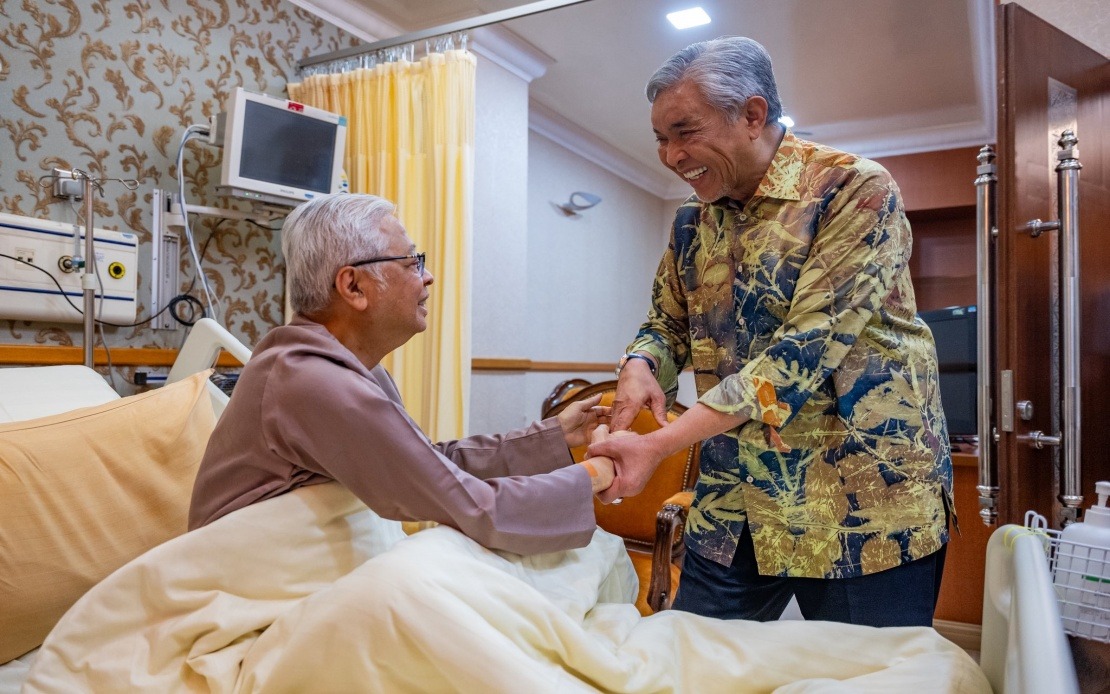
Deputy Prime Minister Datuk Seri Dr Ahmad Zahid Hamidi made a courtesy visit to former Prime Minister Datuk Seri Ismail Sabri Yaakob at Kuala Lumpur's National Heart Institute on Friday, extending well-wishes to the Bera Member of Parliament as he recovers from recent cardiac treatment. The gesture underscores the tradition of parliamentary civility in Malaysian politics, where senior figures publicly acknowledge the health challenges facing their peers regardless of political affiliation or former office.
Ismail Sabri's hospitalisation stems from a medical incident that occurred on August 6, when he experienced acute health complications while attending a recording session at the Malaysian Anti-Corruption Commission headquarters. The unexpected nature of the episode prompted emergency admission to the National Heart Institute, where medical specialists diagnosed an abnormal heart condition requiring intervention. The seriousness of his presentation necessitated a procedure to implant a wireless pacemaker, a device designed to regulate the heart's electrical impulses and restore normal rhythm.
Ahmad Zahid's visit represents a moment of institutional harmony within Malaysia's political establishment. Through a statement posted on social media, the Deputy Prime Minister articulated his hopes for Ismail Sabri's complete recovery, expressing the sentiment that he would regain sufficient strength to resume his responsibilities and routine activities without impediment. Such expressions carry symbolic weight in Malaysian parliamentary culture, reflecting both personal concern and acknowledgment of the public service contributions made by senior politicians during their tenure.
The former Prime Minister's hospitalisation carries particular resonance given his ongoing engagement with the anti-corruption apparatus. Ismail Sabri had been cooperating with the Malaysian Anti-Corruption Commission in providing statements relating to official investigations, a process that was interrupted by his health emergency. His condition thus intersects with Malaysia's broader concerns about governance, accountability, and the mechanisms through which the state addresses allegations of impropriety among its political leadership.
Wireless pacemakers represent a significant advancement in cardiac management technology, offering patients enhanced mobility and reducing complications associated with traditional devices that require surgical leads tunnelled through veins. The choice of this treatment modality suggests that Ismail Sabri's cardiologists determined it appropriate for his specific condition, potentially indicating a defect in heart rhythm conduction rather than structural damage. Recovery timelines for such procedures typically involve several weeks of monitoring and gradual resumption of normal activities under medical supervision.
The incident highlights the unpredictable nature of health crises affecting Malaysia's political leadership. Previous instances have demonstrated how sudden medical events can impact parliamentary continuity and create vacancies in critical government functions. Ismail Sabri's position as a Member of Parliament and his prominence within his political coalition meant that his incapacity carried implications extending beyond personal welfare to broader questions of legislative representation and institutional functioning.
Public figures undergoing cardiac procedures often face extended periods away from their duties as they complete rehabilitation protocols. The demands of parliamentary work, constituent engagement, and party responsibilities can complicate recovery by creating pressures to resume activities prematurely. Ahmad Zahid's emphasis on ensuring that Ismail Sabri would be granted adequate time to recuperate reflects awareness of these pressures and an implicit acknowledgment that recovery cannot be rushed regardless of political obligations.
The National Heart Institute, as Malaysia's premier cardiovascular treatment facility, maintains the expertise and technological infrastructure necessary for managing complex cardiac conditions. Its selection for Ismail Sabri's care reflects the institution's standing within Malaysia's healthcare hierarchy and its role in serving patients with serious heart-related medical needs. The availability of advanced treatments such as wireless pacemakers within the Malaysian healthcare system demonstrates the country's capacity to provide sophisticated interventional cardiology services.
Ismail Sabri's tenure as Prime Minister from August 2021 to September 2022 was marked by substantial political turbulence, including navigating COVID-19 pandemic management while leading a fractious coalition government. His subsequent return to parliamentary backbench status allowed some respite from the intensive demands of executive office, though his involvement in parliamentary committees and party affairs continued to occupy significant time and energy. The health event punctuates a transitional phase in his political career and raises questions about his future level of engagement in parliamentary and party activities.
The incident also underscores broader public health concerns within Malaysia regarding cardiovascular disease prevalence and the importance of preventive medical screening. Heart conditions affect senior citizens disproportionately, and the stress associated with high-level political engagement may constitute a contributory factor to cardiac complications among Malaysia's political class. The public nature of Ismail Sabri's health emergency has inadvertently highlighted these issues for the broader Malaysian population.
Court proceedings and regulatory investigations in Malaysia typically continue regardless of the health status of individuals under investigation, though accommodations may be granted for medical reasons. The timing of Ismail Sabri's health episode during an anti-corruption commission session raises procedural questions about how investigations balance institutional requirements with humanitarian considerations regarding the wellbeing of individuals providing statements. These questions reflect ongoing tensions within Malaysia's accountability frameworks.
As Ismail Sabri embarks on his recovery trajectory, the support extended by Ahmad Zahid and other parliamentary colleagues signals institutional acknowledgment of his service and concern for his welfare. The coming weeks will determine the pace at which he can resume his parliamentary and party duties, potentially affecting his involvement in ongoing investigations and parliamentary business. His recovery trajectory will also be observed closely as an indicator of the National Heart Institute's post-operative care protocols and patient outcomes.

