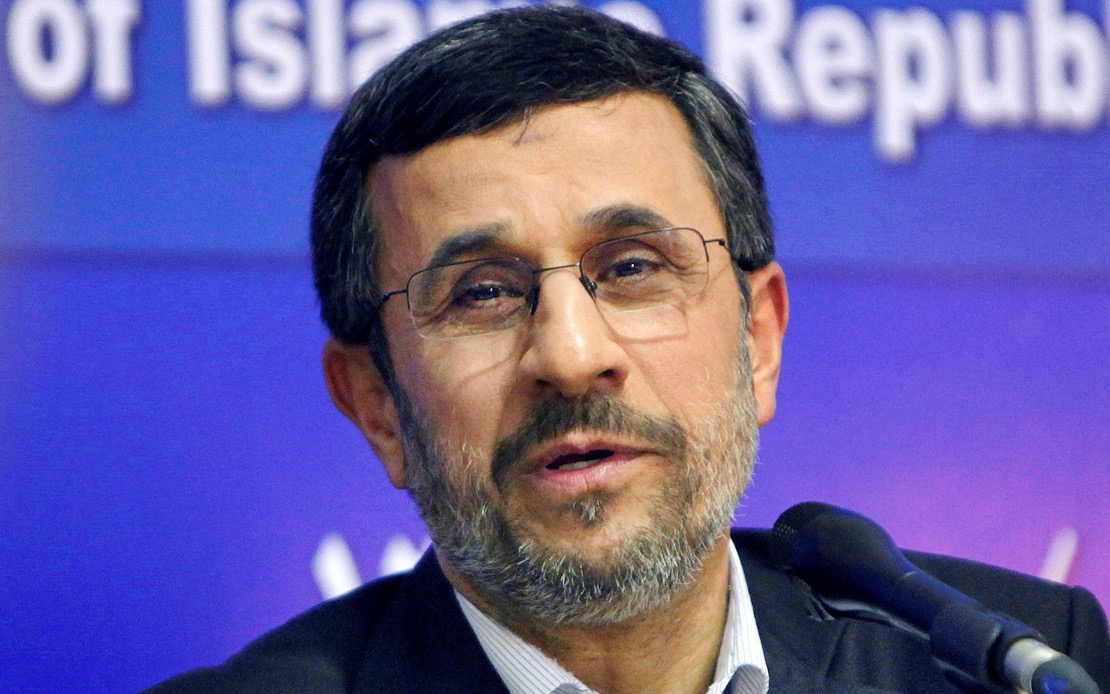
Former Iranian President Mahmoud Ahmadinejad has mounted a forceful public denial of allegations published by The New York Times, which reported that Israel's Mossad intelligence agency attempted to recruit him in recent years and that he currently remains under house arrest. Speaking through his office on Tuesday, Ahmadinejad characterized the newspaper's claims as "completely false" and accused the publication of deliberately spreading fabricated narratives to manipulate public opinion and create internal rifts within Iran.
The statement issued by Ahmadinejad's office rejected the house arrest claim with particular emphasis, arguing that the allegation formed part of what his representatives described as an "absurd" broader narrative that The New York Times had constructed. The former president's team made clear their view that the American newspaper was engaged in a coordinated effort to mislead audiences rather than report factual information. This sharp rebuke underscores the escalating information warfare between various actors involved in Middle Eastern geopolitical competition, where competing narratives about Iranian leadership and the Iranian government's stability have become central to regional power calculations.
The Times had reported on Monday that Mossad viewed Ahmadinejad as a potential candidate to lead Iran and had pursued contact with him over several years. According to the newspaper's account, sourced from American officials, Israeli intelligence secretly provided funds for his housing and travel arrangements, and Israeli operatives had met with him during visits to Budapest and other locations abroad. These alleged interactions, the report suggested, were part of a systematic effort by Israel to identify and cultivate potential alternative leadership within Iran that might be sympathetic to Israeli interests.
Most provocatively, The New York Times alleged that Israeli efforts reached a critical juncture in late February during the opening phases of the latest US-Israeli conflict with Iran. The newspaper claimed that Israeli intelligence operatives attempted to extract Ahmadinejad from Tehran as part of a broader operation designed to facilitate regime change in the Islamic Republic and position him as a replacement leader. According to the account, an Israeli airstrike on February 28 targeted Ahmadinejad's residential compound, destroying a building housing his security detail and damaging his armoured vehicle. The report then cited four unnamed senior Iranian officials who described a black Peugeot arriving after the strike, collecting Ahmadinejad from the attack site, and transporting him to a clandestine safe house within Iranian territory, with the vehicle allegedly being driven by Mossad operatives.
The allegations themselves carry significant implications for understanding Israeli strategy in the region and the extent to which external powers have sought to manipulate Iran's internal political dynamics. If the claims were accurate, they would represent an extraordinary intervention into Iranian affairs, involving not merely intelligence gathering or conventional espionage but active cultivation of a successor leadership figure. Such operations would reflect sophisticated long-term planning to engineer political transformation in a country considered a primary strategic competitor by Israel and its allies.
Ahmadinejad's categorical rejection of these allegations must be understood within the context of his unique position in Iranian politics and international affairs. The former president, who served from 2005 to 2013, has long been a controversial and divisive figure, both domestically in Iran and internationally. His fiercely anti-Western rhetoric, particularly regarding Israel and the United States, has made him a polarizing figure whose credibility varies dramatically depending on one's perspective on Iranian politics and regional power dynamics. Any suggestion of collaboration with Mossad would represent an extraordinary contradiction to his established political identity and public positioning.
Significantly, Ahmadinejad made a public appearance last week at the funeral of Supreme Leader Ali Khamenei, marking his first public visibility since the outbreak of the US-Israeli conflict with Iran. This funeral attendance itself demonstrates that despite any house arrest claims, the former president retained sufficient freedom of movement to participate in a significant state ceremony attended by numerous senior officials and observers. The funeral appearance thereby lends some credibility to his denial that he is under official detention or confinement by Iranian authorities.
The broader strategic context involves ongoing Israeli operations targeting senior Iranian leadership and military assets. In this environment, any allegations concerning Israeli recruitment efforts or attempted extractions of Iranian political figures must be evaluated as part of a larger campaign of coercive diplomacy and intelligence warfare. The New York Times report, whether accurate or exaggerated, reflects genuine international concerns about Iranian governance and potential instability within Iran's leadership structure, even as it remains contested by Ahmadinejad and his representatives.
For Malaysian and Southeast Asian observers, the episode illustrates how Middle Eastern geopolitical competition increasingly plays out through information operations and competing narratives about political reliability and alignment. The dispute between Ahmadinejad and The New York Times demonstrates the challenge of establishing credible information in a conflict environment where all major parties have strong incentives to shape international understanding of events. Regional governments in Southeast Asia, which maintain complex relationships with both Iran and Israeli-aligned powers, must navigate increasingly murky information landscapes where distinguishing propaganda from reportage becomes increasingly difficult.
The accusation that The New York Times fabricated claims for political effect also reflects broader Iranian skepticism toward Western media institutions, rooted in decades of perceived bias in international coverage of Iranian affairs. Whether or not the specific allegations prove accurate, the dispute itself contributes to an environment of profound mutual distrust between Iran and external powers that shows little sign of abating. Ahmadinejad's emphatic denial, combined with his recent public reappearance, suggests that whatever constraints may exist on his movement, Iranian authorities have determined that his public visibility serves their interests during this turbulent period.

