The future of software development belongs to what one startup founder calls "lazy people in a smart way"—experienced programmers who leverage artificial intelligence tools to dramatically accelerate their output rather than manually writing every line of code. This evolving workforce philosophy, emerging across Silicon Valley and beyond, represents a seismic shift in how technology companies build products and hire talent. Yet it comes at a steep cost for the generation of young developers hoping to gain foundational experience in their first roles.
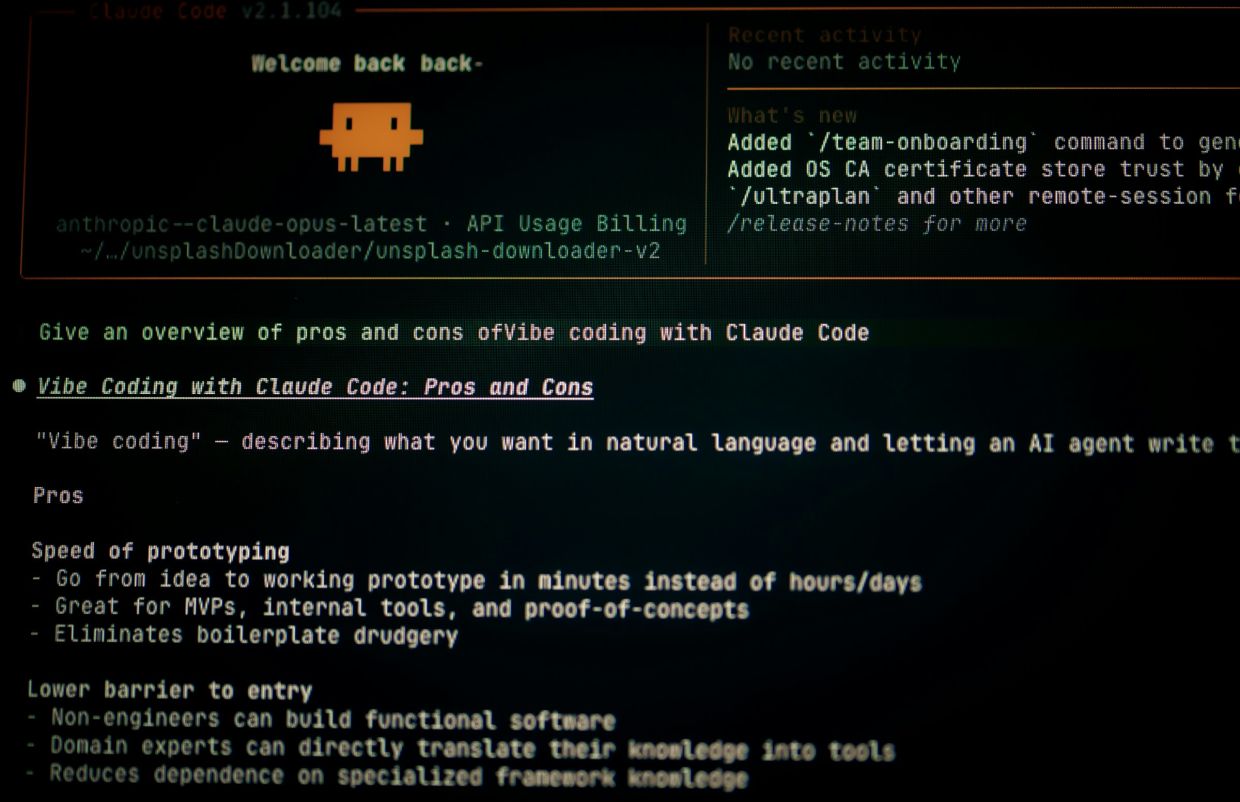
The transformation is driven by a new breed of AI-powered coding assistants that fundamentally alter the relationship between developer and machine. Tools such as Anthropic's Claude Code and OpenAI's Codex have converted programming from a craft requiring meticulous line-by-line composition into something closer to intelligent project management. Developers now input text prompts describing what they want to build, and the AI instantly generates, tests, and debugs functional code. This shift extends far beyond incremental productivity gains—it redefines the skill set required to succeed in software engineering.
The adoption rate among startups is remarkable. During Y Combinator's Winter 2025 batch, nearly a quarter of participating companies built products using code that was 95 percent artificially generated. For individual developers at small startups, the picture is even more dramatic, with surveys showing widespread reliance on these tools. The economic logic is compelling: a software startup can now deploy a lean team equipped with premium AI subscriptions costing around US$200 (RM816) monthly—arguably insignificant compared to the average US$100,000 (RM408,130) annual salary for each hired engineer. This calculation has made overseas outsourcing economically unattractive by comparison, since the efficiency gains from AI are available regardless of location.
Companies are taking deliberate steps to optimize their workforce around these new capabilities. Giftory, a gift-experience platform, runs its entire ~30-person operation leveraging premium AI subscriptions as a core operating practice. Similarly, Stems Labs adopted the philosophy of accomplishing more with the existing talent already on its payroll, ensuring its engineers could multiply their individual contributions. At Espresa, a software company focused on customer success, leadership estimates the AI integration is generating savings worth millions of dollars annually. This efficiency is becoming a cultural norm—some executives now expect teams requesting additional headcount to first demonstrate how they are maximizing AI capabilities before any hiring approval materializes.
Yet these productivity miracles for established companies mask a troubling reality for the profession's future workforce. Research from Stanford Digital Economy Lab examining payroll data spanning millions of United States workers found that employment among 22- to 25-year-olds in AI-exposed occupations, particularly software development, plummeted nearly 20 percent from its late 2022 peak. Harvard researchers analyzing resume and job posting data across 62 million US workers and 285,000 firms discovered that junior employment at companies adopting generative AI dropped approximately nine percent relative to non-adopters within six quarters. Meanwhile, senior employment at these same companies continued climbing, revealing a stark bifurcation in hiring patterns.
This divergence reflects a harsh economic reality: companies see limited reason to invest in training junior developers when experienced architects can now accomplish similar work faster with AI augmentation. Hiring managers report widespread hesitation about junior positions, with many companies actively interviewing candidates but declining to extend offers. Some blame broader economic caution; others acknowledge that the productivity equation simply no longer favors entry-level hiring. For young professionals trying to build programming experience, the door is closing at precisely the moment when AI tools should theoretically democratize technical capability.
The career development crisis this creates is structural rather than cyclical. Programming has traditionally followed an apprenticeship model where junior developers learned under senior mentorship, gradually building the domain knowledge and architectural thinking required for advanced work. But if companies can now hire experienced architects alone and have them multiply their output through AI, the pipeline supplying those future architects starts to drain. Entry-level positions that once served as training grounds for the next generation are being eliminated not due to recession but by deliberate business optimization.
Some industry leaders recognize the danger. Matt Garman, chief executive of Amazon Web Services, has publicly denounced the strategy of replacing junior developers with AI as "one of the dumbest things I ever heard," warning that the technology industry risks destroying the pathway that develops tomorrow's engineering leadership. His concerns are already manifesting in enrollment data. Computer science participation dropped six percent across the University of California system alone, with two-thirds of computing programs nationwide reporting declines. Students considering their career prospects understandably hesitate when the entry-level opportunities they need are vanishing.
The economic pressures driving this transformation show no signs of abating. Startup founders openly acknowledge the calculus: faced with hypergrowth demands and competitive pressure, the choice between adding people or adding AI capacity increasingly favors the latter. A US$200 monthly subscription multiplying one engineer's output by three or four times delivers compelling returns compared to recruiting, onboarding, and retaining new staff who contribute at standard levels. In this environment, the rational startup decision and the profession's long-term health have begun to diverge.
For the Southeast Asian technology ecosystem, these dynamics carry particular relevance. Malaysia, Singapore, and the region's other developing tech hubs have increasingly targeted software development employment as a path to middle-class careers and knowledge economy participation. If global adoption of AI coding tools eliminates junior positions at precisely the moment when these countries are building their technical workforces, the consequence could be a mismatch between available training and actual job opportunities. Companies may demand experienced architects but find themselves unable to source them domestically, forcing continued reliance on expatriate talent. The region's software developers entering the market today face a narrower career ladder than their counterparts of five years ago.
The challenge extends beyond employment statistics to innovation capacity and competitive positioning. Nations that fail to develop deep benches of mid-career engineers may find themselves producing fewer founders, fewer technical leaders, and fewer homegrown solutions adapted to local market needs. The global efficiency gains from AI coding tools could paradoxically concentrate technical leadership in established hubs while extracting the entry-level opportunities that peripheral markets depend upon for development. As startups worldwide optimize toward leaner teams, the profession faces a critical juncture: either discover new pathways for junior developer development, or accept a future where technical expertise increasingly represents scarce, immobile talent concentrated in wealthy regions.
For now, the momentum favors the efficiency logic. Companies continue hiring experienced developers while bypassing juniors, betting that AI productivity gains will sustain their growth. But that bet assumes the supply of experienced architects remains constant—an assumption that becomes increasingly fragile as the pipeline that produces them continues to narrow. The next few years will determine whether the technology industry adapts its hiring and training models, or whether the cost of today's efficiency gains manifests as tomorrow's talent scarcity.

