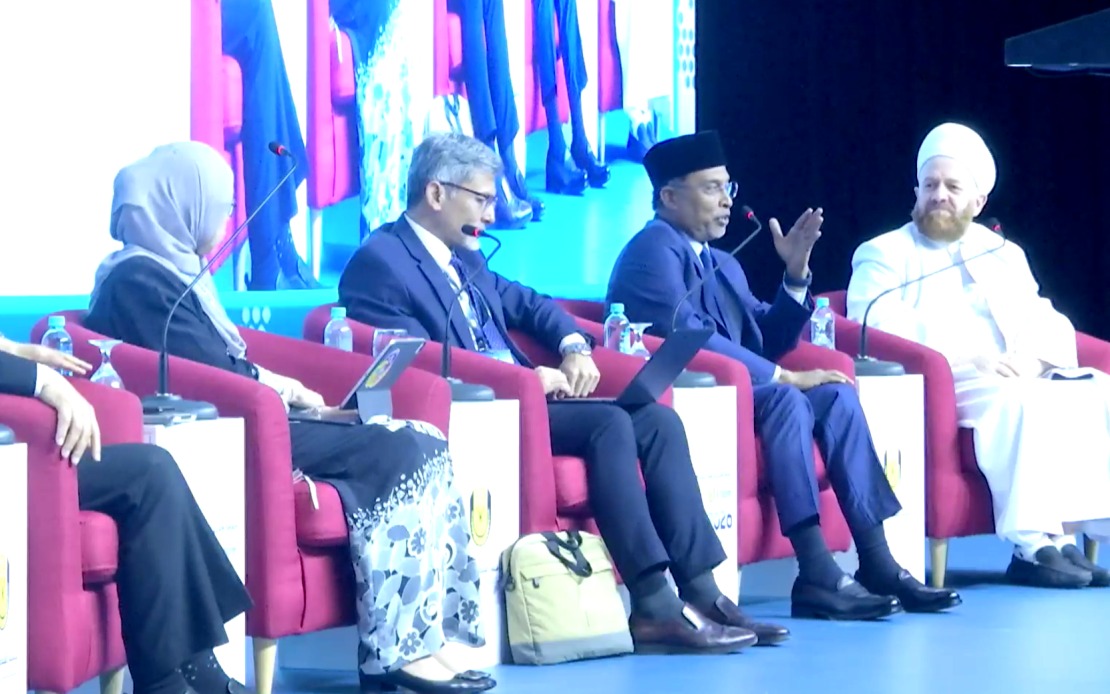
Malaysia must weave artificial intelligence and cutting-edge technologies into its higher education system to strengthen the country's human and intellectual resources while navigating an unpredictable global landscape, according to Higher Education Minister Datuk Seri Dr Zambry Abd Kadir. Speaking at the 8th World Conference on Islamic Thought and Civilisation in Ipoh, Zambry underscored the urgency of equipping students with both technical prowess and ethical grounding as fields like AI, quantum computing and planetary health reshape knowledge across disciplines. The challenge facing Malaysian universities, he argued, extends beyond simply teaching emerging technologies—it demands a fundamental recalibration of how institutions conceive and deliver education in an age where algorithms increasingly mediate human decision-making.
To address this challenge, the Ministry of Higher Education has rolled out an ambitious 10-year roadmap spanning 2026 to 2035, designed to orchestrate coordinated growth across three interconnected dimensions: technological innovation, the cultivation of skilled and adaptable workers, and the reinforcement of moral and ethical foundations. Rather than treating these as competing priorities, the blueprint positions them as mutually reinforcing pillars that together will shape graduates capable of steering through unprecedented complexity. The timeframe itself reflects acknowledgment that systemic change in university structures and curricula cannot happen overnight, yet the window for establishing ethical guardrails around transformative technologies is narrowing rapidly.
Zambry's emphasis on embedding ethics and moral values into academic programmes directly addresses a widespread anxiety among educators and policymakers: that rapid technological advancement might outpace society's ability to manage its consequences responsibly. As AI systems become increasingly sophisticated and autonomous, the algorithmic decisions they make will affect millions of Malaysians in areas ranging from hiring and lending to healthcare and criminal justice. Universities, therefore, bear responsibility for ensuring that graduates entering technology sectors understand not just how AI works, but the ethical implications of building and deploying such systems. This philosophical grounding cannot be grafted onto technical curricula as an afterthought; it must be woven through every module and teaching method.
The shift from traditional STEM frameworks to STEAM—incorporating arts and liberal studies—represents a deliberate pedagogical turn that Zambry presented as essential to developing well-rounded professionals. This evolution reflects international best practices at leading institutions, where engineering students increasingly engage with philosophy, ethics, history and social studies to contextualise their technical work. Zambry cited Universiti Teknologi Petronas as a local exemplar, noting that its integrated engineering programmes deliberately require students to venture beyond their specialisation into courses designed to develop character, interpersonal skills and ethical reasoning. Such cross-disciplinary exposure cultivates not merely competent technicians but thoughtful professionals capable of considering implications and trade-offs inherent in their choices.
The distinction Zambry drew between what artificial intelligence can and cannot accomplish carries profound implications for educational strategy. While AI systems excel at processing data, identifying patterns and generating rapid solutions, they remain fundamentally incapable of moral reasoning or character formation. A machine may optimise a mathematical function or predict a clinical outcome, but it cannot decide whether a particular application serves human flourishing or causes harm. This gap underscores why educational institutions cannot abdicate responsibility to technology; they must remain sites where humans deliberate collectively about values, wrestle with complexity, and develop the judgment necessary to direct technological power toward worthy ends. Malaysian universities, therefore, must position humanities and social sciences not as decorative additions but as essential counterweights to technical training.
The minister's framing also speaks to Malaysia's particular position within global knowledge hierarchies and economic competition. As Southeast Asian nations vie for roles in high-value industries and innovation ecosystems, the quality of human capital—understood not merely as technical skills but as wisdom, integrity and ethical discernment—becomes a competitive differentiator. Countries that produce graduates combining deep technical expertise with strong moral foundations are more likely to attract investment, build trust in their institutions and develop sustainable solutions to complex challenges. Malaysia's advantage lies partly in its multicultural and multireligious society, where ethical pluralism and intercultural dialogue have deeper institutional roots than in many countries. Universities should leverage this heritage to nurture graduates capable of navigating and bridging diverse value systems in an interconnected world.
Zambry's remarks at the conference also reflected broader currents within Islamic intellectual discourse around technology and modernity. The conference theme—'Everyone Matters: Pride and Unity in Islam'—suggests a commitment to inclusive visions of progress that reject false dichotomies between tradition and innovation. Within this framework, integrating AI into higher education becomes not an abandonment of Islamic ethical principles but an extension of them into new domains. The emphasis on character, conscience and moral reasoning aligns with deep commitments within Islamic pedagogy to holistic human development. Malaysian universities, as institutions operating within societies with significant Muslim populations, are well-positioned to develop AI literacy grounded in ethical frameworks that draw on both contemporary secular philosophy and Islamic jurisprudence.
Implementing such a comprehensive vision will require sustained institutional commitment and resource allocation. Universities will need to invest in faculty training, curriculum redesign and new partnerships linking technical departments with humanities scholars and ethicists. Assessment methods must evolve to evaluate not merely technical competence but the ethical maturity and critical thinking of graduates. Industry partnerships should be calibrated to ensure that employers reward not just coding ability or specialised knowledge but the broader capacities for judgment and leadership that a reformed educational approach cultivates. Government support through the Higher Education Ministry will be crucial in enabling institutions to undertake these transformations without compromising academic quality or international competitiveness.
The stakes of getting this right extend well beyond Malaysia's borders. As artificial intelligence reshapes work, governance and social life across Southeast Asia and globally, the quality of thought leadership emerging from Malaysian universities will influence how neighbouring nations approach these challenges. A generation of Malaysian graduates schooled in both technical depth and ethical sophistication can contribute meaningfully to developing regional norms and practices around responsible innovation. Conversely, if Malaysian universities fall behind in integrating ethics with technology education, the country risks producing graduates unprepared for leadership roles in shaping how AI is deployed across critical sectors. The 10-year blueprint therefore represents not merely an internal policy initiative but a strategic investment in Malaysia's capacity to contribute to building a more thoughtful and just technological future.

