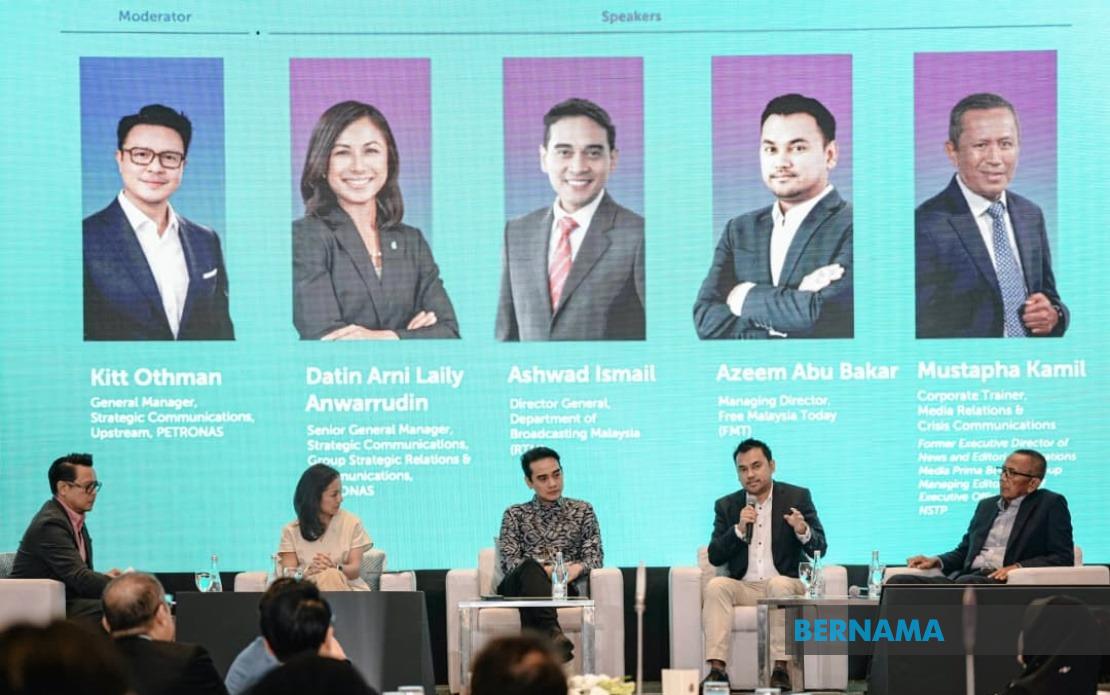
The explosive growth of artificial intelligence and the instantaneous nature of digital information dissemination have upended conventional wisdom about corporate communications and crisis management, according to industry executives and media practitioners gathered in Kuala Lumpur. The transformation is so profound that organisations which cling to outdated playbooks risk losing control of their public narratives entirely, surrendering that authority to unknown voices spreading unverified claims across networks faster than any traditional newsroom can respond.
Datin Arni Laily Anwarrudin, Senior General Manager of Strategic Communications at PETRONAS, articulated the central dilemma facing modern corporations: the velocity at which artificial intelligence and digital platforms amplify information—accurate or otherwise—has fundamentally altered how organisations must protect brand reputation and public trust. The challenge is not merely reactive anymore; it demands a proactive stance where companies themselves become authors of their own stories rather than passive subjects of external commentary. For multinational corporations and major employers in Malaysia, where reputational damage can instantly ripple across stakeholder communities, this represents an existential shift in how communications departments must operate.
Arni Laily stressed that organisations face an uncomfortable choice: take ownership of their narratives through radical transparency, or accept that external parties will fill information vacuums with their own interpretations. This principle carries particular weight in Malaysia's business environment, where family-owned conglomerates, government-linked companies, and foreign investors all operate within different cultural and regulatory contexts. The Malaysian business landscape, characterised by interconnected stakeholder networks and strong oral traditions alongside modern digital connectivity, makes narrative control even more critical. Silence or delayed responses that might have been acceptable a decade ago now signal vulnerability or worse, complicity. The imperative to be transparent is not merely ethical—it is strategic survival.
The collapse of traditional crisis communication timelines represents perhaps the most disorienting shift. The fabled 16-hour window, the breathing room that allowed communications teams to verify facts, consult legal counsel, and craft measured responses before the morning edition went to print, has evaporated entirely. In its place is an environment where news cycles operate in real time, where a trending hashtag can trigger institutional panic within minutes, and where the absence of an official response becomes itself a story. Arni Laily highlighted the danger of reactive speed: organisations that simply respond to every spark risk validating every rumour through their engagement with it. The challenge becomes threading a needle—moving quickly enough to demonstrate awareness and control, yet deliberately enough to establish truth rather than amplify falsehoods.
Mustapha Kamil Mohd Janor, drawing on his extensive experience in newsroom leadership at major Malaysian media organisations, reinforced this assessment with blunt pragmatism. The compressed news cycle is not a temporary phenomenon or a technical problem to be engineered away; it is the permanent condition of modern communications. Organisations that have not yet established structured media crisis communication teams are operating on borrowed time. The consequence is not merely reputational damage from a single incident but systemic vulnerability—each new crisis arrives while the organisation is still managing the last one, while stakeholders grow increasingly cynical about institutional explanations, and while competitors potentially seize advantages in the perception vacuum.
Yet amid these warnings, media professionals articulated a counterintuitive message: the fundamental role of journalism and credible communication remains unchanged, even as the tools and timeframes have transformed utterly. Mustapha Kamil employed the metaphor of journalism as a searchlight, directing public attention toward issues that matter while helping communities navigate toward better decisions. This role becomes more essential, not less, as artificial intelligence floods the information ecosystem with content of dubious provenance. Journalists and corporate communicators who understand this deeper purpose—not merely reporting facts but contextualising them within frameworks that serve the public interest—retain their authority and influence even in an age of algorithmic distribution.
Azeem Abu Bakar of Free Malaysia Today introduced a crucial distinction that reframes how media organisations and corporations should approach technological change. Rather than viewing artificial intelligence as a replacement for human journalists, organisations should recognise that AI excels at handling routine operational tasks—data compilation, basic reporting, logistics—while the irreplaceable value lies in what he termed "SUPER" journalists. This acronym captures the dimensions of professional excellence that technology cannot replicate: sources, understanding, pattern recognition, efficiency, and reputation. A journalist's network of sources, their capacity to understand complex systems and human motivations, their ability to recognise patterns across disparate information, their skill at working efficiently under pressure, and their personal reputation for fairness and accuracy—these constitute the bedrock of credibility in any era.
For Malaysian organisations operating within the regional and global marketplace, this distinction carries strategic importance. The nation's media landscape includes outlets ranging from traditionally government-aligned broadcasters like Radio Televisyen Malaysia to independent publications like Free Malaysia Today, alongside major commercial operations. This diversity means that corporate communications teams must engage with multiple audience segments, each with different levels of media literacy and different frameworks for evaluating credibility. An approach that works with readers of one outlet may backfire with another audience. Understanding the human dimensions that the SUPER journalist framework captures—which sources to trust, which patterns indicate genuine signal versus noise, which reputation-holders command authority—requires nuanced human judgment that no algorithm can substitute.
The implications for Malaysian corporates extend beyond communications departments. Chief executive officers and boards must recognise that credibility and reputation management have become core business functions, not peripheral concerns handled by the marketing team. The Malaysian Press Institute's collaboration with PETRONAS on these issues reflects broader recognition that healthy corporate-media relationships benefit both parties and, ultimately, public discourse. Companies that invest in transparent communication, that build relationships with journalists based on mutual respect and consistent truthfulness, and that maintain clear processes for rapid but accurate response to crises, position themselves to weather reputational storms that could devastate less-prepared competitors.
The panellists' collective testimony suggests that the AI era does not render credibility obsolete; rather, it makes credibility more valuable and more difficult to establish. Traditional markers of authority—institutional affiliation, formal credentials, media gatekeeping—matter less when anyone can broadcast to millions. But the rarity of genuine trustworthiness in an information-saturated environment makes it exponentially more valuable. Organisations that navigate this paradox successfully—moving fast without losing truth, being transparent without oversharing, engaging with external voices without surrendering narrative control—will emerge as winners in the reputational competition that defines modern business. For Malaysia's corporate leaders, that future is not theoretical but imminent.

