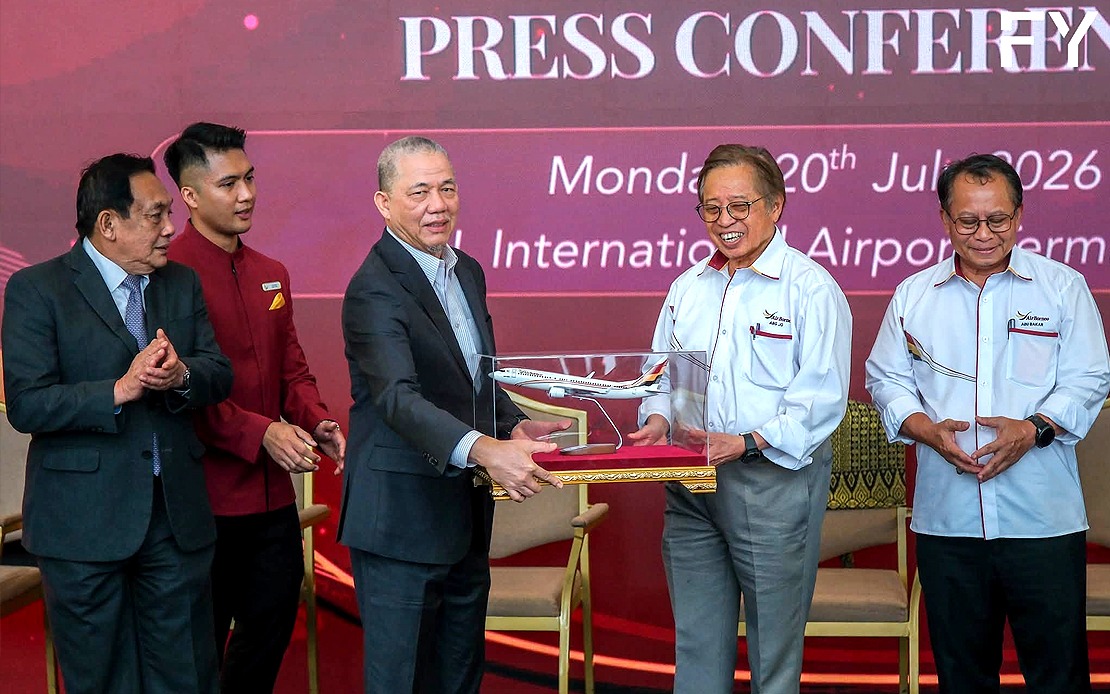
The maiden flight of AirBorneo Airways touched down at Kuala Lumpur International Airport on July 20, marking a pivotal moment in Sarawak's long struggle against inflated airfares that have constrained travel and commerce across the state. The inaugural service from Kuching to KLIA Terminal 1 arrives laden with symbolic weight, arriving just two days before Sarawak Day celebrations on July 22, positioning the airline as a cornerstone of the state's economic ambitions.
Deputy Prime Minister Datuk Seri Fadillah Yusof framed the launch as a direct response to decades of complaints from Sarawak residents regarding flight ticket costs. Speaking through a Facebook post, he articulated a vision centred on delivering air transport that is simultaneously more competitive in pricing, more transparent in operations, and more considerate of passenger needs—all without sacrificing the quality of service that travellers expect. This balancing act represents the core challenge facing the new carrier as it establishes itself within Malaysia's crowded aviation market.
Sarawak Premier Tan Sri Abang Johari Tun Openg characterised AirBorneo as far more than a commercial venture; rather, it represents a strategic manoeuvre to fortify the state's economic trajectory. The airline is positioned as a catalyst for growth across multiple sectors, with planners expecting enhanced air connectivity to unlock opportunities in tourism, facilitate regional trade flows, attract investment capital, and support infrastructure development throughout the state. These broader economic objectives suggest that AirBorneo's success will be measured not merely by passenger numbers or financial returns, but by its capacity to reshape Sarawak's regional positioning.
For Malaysian travellers and businesses, particularly those based outside major urban centres, the implications are substantial. Sarawak's geographic isolation—with vast distances between towns and limited surface transport alternatives—has historically rendered air travel essential rather than discretionary. High ticket prices have thus functioned as a de facto tax on Sarawak's population, suppressing economic activity and tourism potential. A domestically controlled airline capable of operating profitably at lower fares could fundamentally alter these dynamics, making business travel more accessible to small and medium enterprises and encouraging leisure tourism from within Malaysia and Southeast Asia.
Fadillah emphasised that AirBorneo embodies Sarawak's aspiration to exercise greater autonomy over its aviation infrastructure. This control is particularly significant in ensuring that rural and remote communities maintain meaningful access to air services—a concern that private carriers, driven purely by profit considerations, might otherwise deprioritise. The emphasis on rural connectivity reflects recognition that economic equity within Sarawak depends partly on reliable transportation links between peripheral areas and commercial hubs.
The airline's establishment also carries implications for Sarawak's relationship with the federal government and its broader economic independence agenda. State-owned enterprises, when properly managed and capitalised, can serve as tools for regional self-determination while contributing to national development. However, such ventures also carry financial risks; airlines operate in a notoriously capital-intensive, thin-margin industry where operational missteps or market disruptions can rapidly erode initial investments.
Within the Southeast Asian aviation landscape, Sarawak's move aligns with a broader pattern of regional states and nations seeking to develop homegrown carriers. Similar initiatives across the region have produced mixed results, with success dependent largely on strong management, adequate capitalisation, strategic route selection, and discipline in maintaining service standards. The arrival of flight MY5005 carrying Abang Johari and senior state officials at KLIA underscored the political significance attached to AirBorneo's launch, signalling that success carries implications well beyond commercial metrics.
The timing of AirBorneo's commencement is deliberate and symbolically weighted. Launching operations immediately before Sarawak Day connects the airline to broader narratives of state pride, self-reliance, and progress. This messaging strategy suggests that Sarawak's leadership views the venture not as a purely commercial undertaking but as part of a larger project of state building and economic repositioning. Residents of Sarawak will be watching closely to determine whether the airline's premium on passenger friendliness and affordability translates into tangible fare reductions and improved service quality.
The establishment of AirBorneo raises important questions about sustainability and long-term viability. Whether the airline can maintain its commitment to affordable fares while achieving financial sustainability remains uncertain; the gap between aspiration and economic reality in aviation is notoriously wide. The involvement of state capital also introduces accountability concerns, as subsidised operations might eventually burden Sarawak's fiscal position if the airline cannot achieve operational self-sufficiency.
For Malaysian travellers contemplating routes involving Sarawak, the emergence of a new carrier offers potential benefits in terms of competition and price discovery. Incumbent airlines will likely adjust their own pricing and service offerings in response to AirBorneo's presence, particularly on high-traffic routes where the new entrant competes directly. Route expansion plans beyond the initial Kuching-KLIA service will determine how broadly these competitive benefits are distributed across Sarawak and the broader region.
Fadillah's statement that AirBorneo should become "the pride of Sarawak" reflects a nationalistic framing common to state-owned enterprises in the region. The airline carries expectations far exceeding those typically placed on private carriers—it must simultaneously deliver commercial returns, address social equity concerns, support regional development, and embody state aspirations. Meeting these diverse objectives will require exceptional management capability and sustained political and financial commitment from Sarawak's government.

