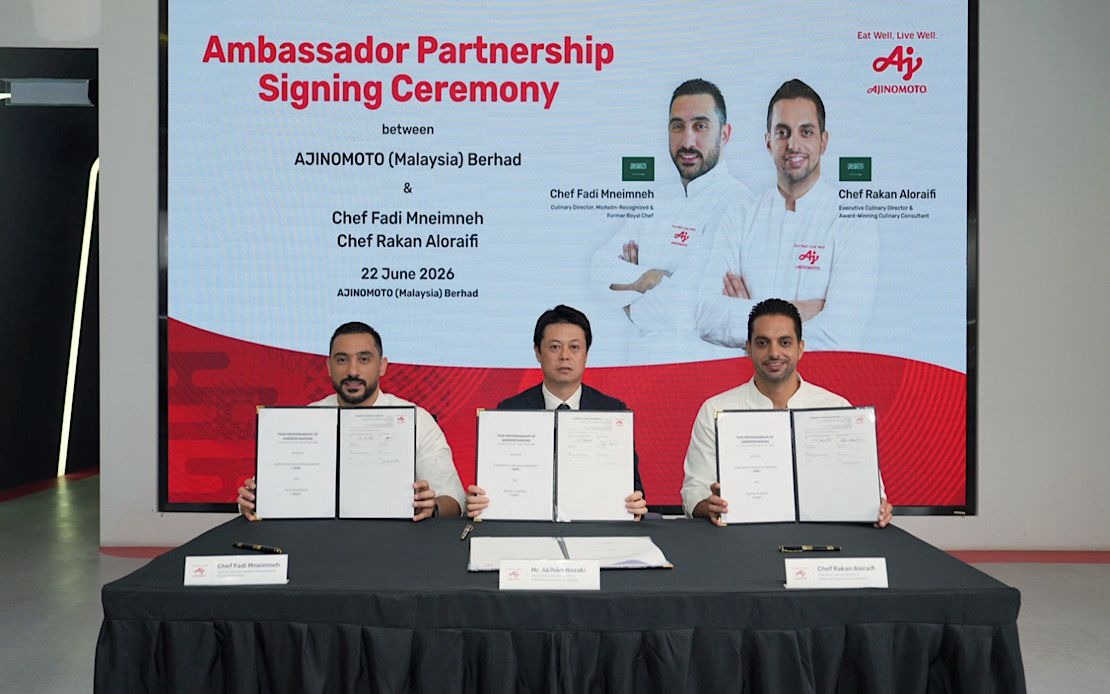
Ajinomoto (Malaysia) Berhad is intensifying its foothold in the Middle Eastern market by joining forces with two of the region's most respected culinary personalities, capitalising on surging demand for premium halal food ingredients and solutions. The collaboration with Chef Fadi Mneimneh, a Michelin-starred culinary director and former royal chef, and Chef Rakan Aloraifi, an award-winning executive director and culinary consultant, represents a strategic shift towards leveraging local culinary influence to build market credibility and consumer trust across Saudi Arabia and beyond.
The partnership underscores a broader recognition within Malaysia's food manufacturing sector that Middle Eastern markets increasingly demand not just compliance with halal standards, but also alignment with regional culinary traditions and expert endorsement. By engaging chefs of such prominence and influence, Ajinomoto is positioning itself as a premium ingredient supplier that understands and respects the nuances of Middle Eastern gastronomy rather than merely selling standardised products to the region.
Recently, both chefs visited Ajinomoto Malaysia's manufacturing facility in Bandar Enstek, Negeri Sembilan, for an immersive experience designed to deepen their understanding of the company's halal certification processes, product range, and the science of umami—a key flavour principle increasingly recognised in Middle Eastern professional kitchens. This factory visit served multiple strategic purposes: it allowed the chefs to personally verify manufacturing standards and halal integrity, provided them with firsthand knowledge to communicate to their peers and followers, and facilitated the kind of relationship-building essential for influencing purchasing decisions among high-level stakeholders in the hospitality and foodservice sectors.
The centrepiece of the initiative involved live culinary demonstrations where Chef Fadi and Chef Rakan prepared authentic Middle Eastern dishes incorporating Ajinomoto products, showcasing how umami enhancement can deepen flavour complexity without altering traditional recipes or compromising cultural authenticity. This approach directly addresses a common concern in conservative culinary markets: that introducing Japanese-inspired ingredients might dilute heritage cuisines. By demonstrating seamless integration, Ajinomoto effectively removes a psychological barrier to product adoption among professional chefs who prioritise culinary tradition.
The timing of this partnership is particularly strategic. The halal food market across the Middle East has expanded dramatically in recent years, driven by rising middle-class consumption, growing tourism, and increased investment in premium hospitality and restaurant sectors. However, the market remains highly competitive and quality-conscious. Middle Eastern consumers and professional chefs are increasingly sophisticated in their ingredient choices and expect both functional benefits and cultural alignment. Ajinomoto's partnership strategy speaks directly to this demand profile by enlisting trusted regional voices rather than relying solely on corporate marketing messaging.
Chef Fadi Mneimneh and Chef Rakan Aloraifi represent not merely individual practitioners but hubs of influence within the Middle Eastern culinary ecosystem. Their endorsement and active promotion of Ajinomoto products reaches networks of other professional chefs, restaurant owners, hotel procurement teams, and food media figures who collectively shape ingredient preferences and purchasing patterns across the region. This multiplier effect—where two key opinion leaders influence dozens or hundreds of downstream decision-makers—represents far greater market penetration than traditional advertising could achieve.
The programme also included participation from Ajinomoto Malaysia's distributor representative in Brunei, reflecting the company's broader Southeast and South Asian strategic approach. This inclusion highlights how manufacturer-distributor-influencer collaborations are becoming integrated regional ecosystems rather than isolated bilateral relationships. By bringing a Brunei-based partner into the Saudi engagement, Ajinomoto creates opportunities for cross-regional learning and reinforces its positioning as a cohesive pan-Asian brand with distributed but coordinated market presence.
Looking ahead, Ajinomoto has committed to further collaboration with both chefs at the Hotel, Restaurant and Café (HORECA) trade event scheduled tentatively for October 2026 in Riyadh and Jeddah. This future engagement signals intent to sustain momentum beyond initial promotional activities, establishing the relationship as ongoing rather than transactional. HORECA events are critical touchpoints for B2B food industry relationships, where procurement professionals, executive chefs, and hospitality decision-makers gather specifically to evaluate suppliers and products. Having Chef Fadi and Chef Rakan lead demonstrations at this venue will position Ajinomoto directly in the consideration set of Middle Eastern hospitality businesses expanding their ingredient sourcing strategies.
For Malaysian manufacturers more broadly, this case illustrates an evolving export playbook: rather than marketing products primarily on technical specifications or price competitiveness, firms are increasingly successful when they invest in cultural translation and local expert endorsement. The Middle East represents a particularly important market given the region's purchasing power, growing urbanisation, and the natural competitive advantage Malaysian companies possess in halal certification and manufacturing expertise. However, that advantage must be leveraged through channels—trusted culinary figures, chef networks, HORECA partnerships—that resonate with how Middle Eastern professionals actually make decisions.
Ajinomoto Malaysia's emphasis on showcasing the intersection of Japanese umami science with Middle Eastern culinary traditions also points to a deeper strategic insight: that global food ingredient companies can succeed in conservative regional markets not by homogenising products or marketing, but by demonstrating respect for local culinary identity while offering genuine functional improvements. This approach requires deeper investment in relationship-building and local market education than mass-market strategies, but it yields more sustainable competitive positioning and higher-value customer relationships.
The partnership also reflects Malaysia's broader commitment to leveraging halal excellence as a soft power and commercial advantage. While numerous countries claim halal credentials, Malaysia has built institutional credibility through certification rigour, manufacturing standards, and international recognition. By partnering with prestigious Saudi chefs, Ajinomoto reinforces the message that Malaysian halal manufacturing represents premium quality and authentic religious compliance, not merely regulatory compliance. This distinction matters significantly in Middle Eastern markets where religious observance and culinary excellence are often intertwined in consumer perceptions.
As Ajinomoto Malaysia executes this multi-stage expansion strategy—from factory visits and live demonstrations to major HORECA events—the company is essentially building a narrative arc that positions its products not as foreign ingredients requiring acceptance, but as complementary partners to Middle Eastern culinary traditions. This narrative approach, when supported by influential regional voices, can significantly accelerate market penetration and premium positioning in one of the world's most valuable food ingredient markets.

