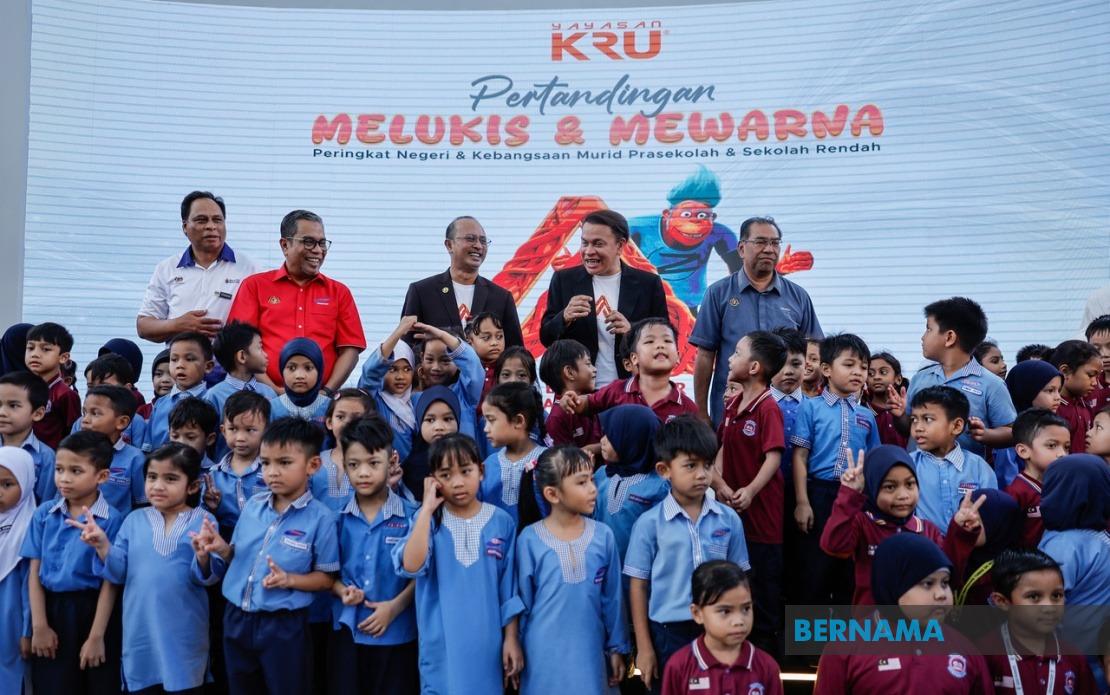
A nationwide creative initiative has etched itself into Malaysia's record books, with the AKAR 2026 colouring competition drawing an unprecedented 153,000 preschool participants and securing official recognition from the Malaysia Book of Records (MBOR) as the largest such event involving young children. The achievement underscores the capacity of coordinated national programmes to engage kindergarten-age learners on a mass scale, while advancing multiple policy objectives spanning education, environmental awareness, and social development.
Organised by Yayasan KRU and executed simultaneously across the country, the competition mobilised children from KEMAS and Unity kindergarten networks. The scale of participation reflects the organisational infrastructure available through these established early-childhood platforms, which collectively reach tens of thousands of facilities. This logistical achievement required seamless coordination between multiple government entities and institutions, demonstrating the potential for cross-agency initiatives to amplify reach when aligned around shared objectives.
The programme drew backing from the National Higher Education Fund Corporation (PTPTN), the Education Ministry (MOE), the Community Development Department (KEMAS), and the Department of National Unity and National Integration (JPNIN). This constellation of partners represents a deliberate integration of education policy, early childhood development, national cohesion, and financial inclusion—signalling how contemporary Malaysian governance increasingly frames children's programmes as vehicles for multiple strategic outcomes rather than isolated activities.
Datuk Norman Abdul Halim, president of Yayasan KRU's Board of Trustees, positioned the record-breaking participation as validation of the foundation's dual mission: nurturing creative expression while embedding environmental stewardship into formative experiences. The programme's theme, "I Love Orangutans," channelled children's artistic participation toward raising awareness of biodiversity conservation, a growing priority in Malaysian environmental policy. By anchoring creativity exercises to conservation messaging, the initiative modelled how early-childhood education can integrate ecological literacy alongside cognitive development.
The competitive structure incentivised excellence while promoting financial literacy and savings behaviour. Winners at state and national levels would see prize money totalling approximately RM100,000 directed into their National Education Savings Scheme (SSPN) accounts rather than distributed as cash. This design choice embedded the competition within Malaysia's broader push to expand education financing tools and cultivate long-term saving habits among families. The top national prize of RM3,000 awaited winners advancing to the finals scheduled for August 29 in Putrajaya, creating a tiered pathway that enabled broad participation while reserving distinction for exceptional performers.
The competitive dimension extended across geographic boundaries, with state-level winners progressing to national finals. This structure acknowledged Malaysia's federal architecture while creating incentives for participation across urban and rural kindergarten networks. Regional variations in resources and reach meant that structured advancement pathways could equalise opportunities for recognition, allowing children from less-resourced communities to compete for national honours on standardised criteria.
Datuk Mohd Hanafiah Man, director-general of KEMAS, framed creativity as foundational to human capital development, arguing that cultivating creative capacities in preschool years positioned children for competitive advantage in an evolving economy. This positioning reflects contemporary educational thinking that prioritises adaptability and divergent thinking over rote memorisation, particularly as Malaysia seeks to transition toward higher-value economic activities requiring innovation and problem-solving.
The competition's simultaneous nationwide execution across kindergarten networks presented substantial logistical coordination challenges. Standardising participation protocols, judging criteria, and timelines across hundreds of facilities required robust administrative frameworks and clear communication channels. The success in managing this complexity suggested that Malaysia's institutional capacity for coordinating large-scale early-childhood initiatives had matured considerably, enabling programmes to scale beyond pilot phases into genuinely national reach.
For Malaysian policymakers, the AKAR 2026 achievement provides empirical validation that mass participation in structured early-childhood programmes remains feasible through existing kindergarten infrastructure. The Malaysia Book of Records recognition elevates the initiative beyond programme implementation into symbolic significance, framing record-breaking participation as evidence of national capability and social mobilisation. This symbolic dimension carries particular weight in Malaysian political culture, where documented achievements serve legitimacy functions and generate momentum for subsequent expansions of similar initiatives.
The competition also illustrated how prize structures targeting education savings accounts align individual incentives with collective policy objectives. By channelling winnings into SSPN rather than alternative uses, the programme reinforced financial planning norms among families while supplementing education financing resources. For families in lower-income brackets, such prizes represented meaningful contributions to education costs, particularly as tertiary education expenses escalate.
Looking forward, the scale achieved by AKAR 2026 creates expectations for future iterations and potential replication across other early-childhood creative domains. The Malaysia Book of Records recognition establishes a benchmark against which subsequent programmes will be measured, while the diverse institutional backing suggests that multiagency coordination models proven successful here could extend to other childhood development objectives spanning health, nutrition, literacy, and numeracy.
The environmental messaging embedded within the competition's creative framework also models how conservation awareness can be cultivated through mainstream educational channels rather than specialised ecology programmes. By exposing 153,000 preschool participants and their families to orangutan conservation themes through artistic engagement, the initiative reached demographic segments that might not encounter environmental messaging through conventional conservation communication channels, potentially expanding the constituency concerned with biodiversity protection.

