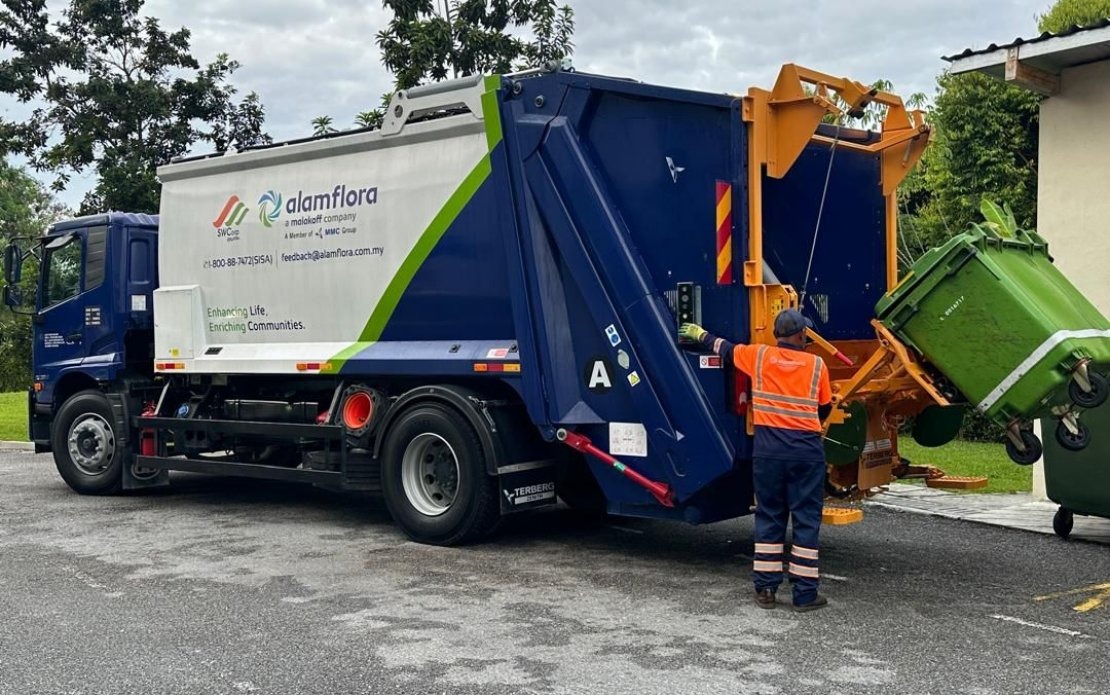
Alam Flora has committed to providing full cooperation with investigators examining the circumstances of a garbage lorry accident that occurred along Jalan Pantai Murni 1 in Pantai Hillpark. The company issued a formal statement yesterday confirming its willingness to assist authorities in determining what caused the incident, which resulted in a compactor vehicle losing control and colliding with a residential condominium's perimeter wall.
The waste management operator has announced that the damaged vehicle will undergo comprehensive technical examination at the Computerised Vehicle Inspection Centre (Puspakom) in accordance with directives issued by the investigating officer. This inspection is intended to establish the precise mechanical or operational factors that contributed to the accident, moving beyond initial assessments of what transpired in the early morning hours.
According to preliminary reports, the lorry driver reported experiencing brake failure moments before the vehicle veered off course. The driver subsequently filed an official report at the Kuala Lumpur Traffic Police Station, providing authorities with an account of the sequence of events. Police conducted a breathalyser test on the driver at the scene, which returned negative results, effectively ruling out alcohol consumption as a contributing factor to the incident.
Alam Flora's statement underscores the company's commitment to prioritising occupational safety, contractor welfare, and public protection across all operational domains. The organisation characterised this investigation as a matter demanding the highest level of seriousness and indicated that any corrective or preventive measures deemed necessary following the technical examination will be promptly implemented. This positions the company as accepting responsibility for ensuring such incidents do not recur through fleet maintenance and operational protocols.
The investigation is proceeding under Section 43(1) of the Road Transport Act 1987, which governs motor vehicle incidents and establishes the legal framework for determining liability and appropriate remedial action. This statutory framework ensures that the investigation will follow established procedures and that findings will carry legal weight should further action be warranted.
The collision's impact on residents of the affected condominium complex prompted Alam Flora to express regret regarding the disruption and concern caused to the community. The company's acknowledgment of the incident's broader effects on neighbouring residents demonstrates awareness that such accidents extend beyond immediate physical damage to include psychological and practical consequences for those in proximity to the crash site.
From a broader operational perspective, this incident raises questions about fleet maintenance standards within Malaysia's waste management sector. Regular brake system inspections and preventive maintenance schedules are fundamental to preventing mechanical failures that could endanger public safety. Lorries operating in urban residential areas face particular scrutiny given the potential for collateral damage and injury, making mechanical reliability non-negotiable.
The involvement of Puspakom in the vehicle inspection adds an independent technical dimension to the investigation. As Malaysia's standardised vehicle inspection agency, Puspakom's examination will provide an objective assessment of whether mechanical failure, inadequate maintenance, or design defect contributed to the brake failure. Such findings could have implications extending beyond this single incident to fleet-wide maintenance protocols.
For waste management contractors and operators throughout Malaysia, this accident serves as a reminder of the operational hazards inherent in managing heavy compactor vehicles in congested urban environments. The early morning timing of the incident—when traffic is typically lighter—suggests that timing alone did not prevent this accident, reinforcing that mechanical integrity and driver training remain paramount regardless of road conditions.
Alam Flora's swift public response and commitment to full cooperation reflects evolving corporate standards around incident transparency and accountability. Rather than minimising the incident or adopting defensive posturing, the company's proactive engagement with the investigation process may influence public and regulatory perception of its management approach.
The case also highlights broader infrastructure and safety considerations for residential areas in Kuala Lumpur that accommodate heavy vehicle traffic, particularly waste collection lorries that necessarily traverse residential neighbourhoods during early morning hours to minimise disruption. The structural resilience of condominium perimeter walls and their capacity to withstand vehicle impact may warrant examination alongside vehicle safety standards.
As the investigation progresses and Puspakom completes its technical examination, findings regarding whether this was an isolated mechanical failure or symptomatic of systemic maintenance deficiencies will likely influence regulatory discussions around heavy vehicle fleet management standards. For residents and property owners in Malaysia's urban areas, the outcome of this investigation may have implications for how waste management companies are held accountable for preventing similar incidents in their communities.

