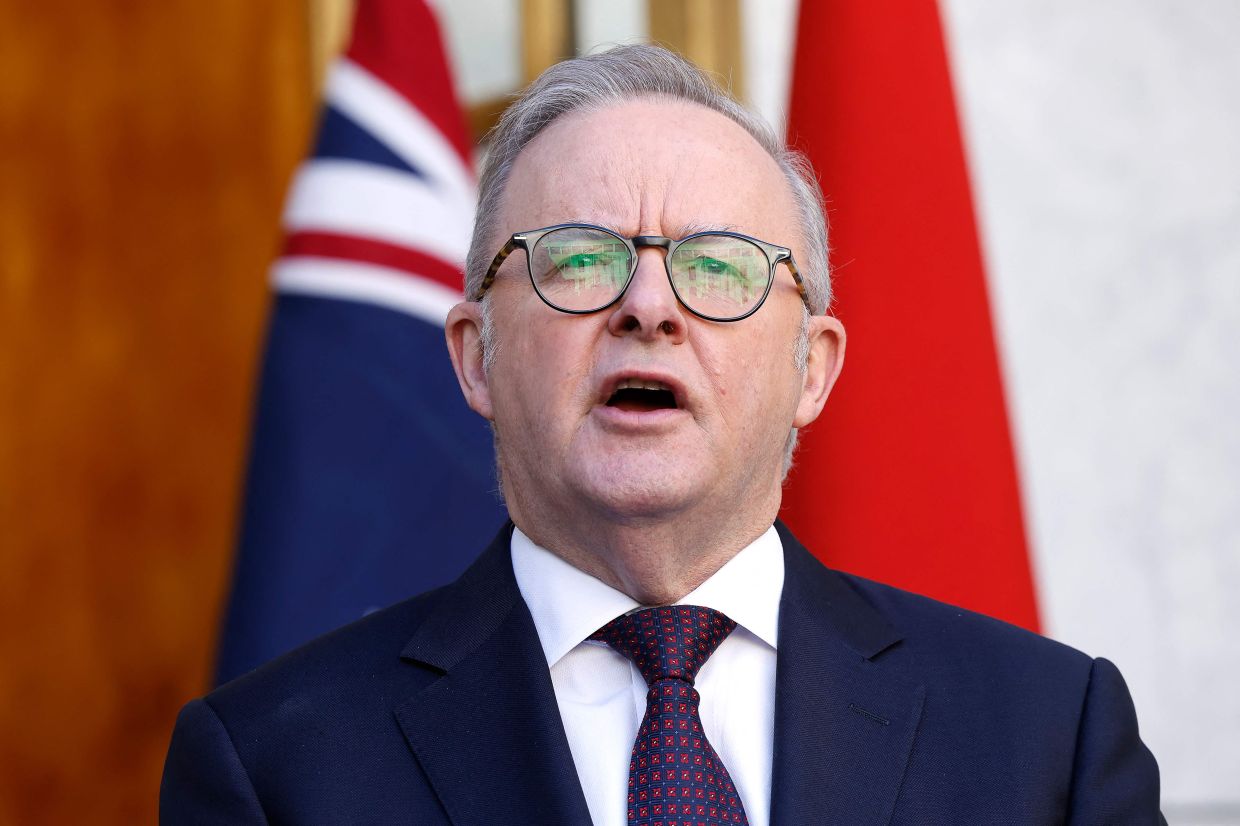
Australian Prime Minister Anthony Albanese has declined to apologise for comments made during a podcast interview that drew criticism from his political opponents and raised eyebrows in diplomatic circles. The controversy centres on crude banter involving a gift of premium Japanese melon that Prime Minister Sanae Takaichi presented to Albanese during her official visit to Australia in May. When confronted in parliament on Tuesday about the remarks, Albanese flatly rejected the notion that he owed an apology, characterising the criticism as a misrepresentation of his intentions.
The incident is the second time in recent weeks that the Australian leader has faced public scrutiny over unguarded comments made during an appearance on the Bush Deep podcast. Earlier, Albanese already tendered an apology after audio emerged of him making crude remarks about Australian singer Kylie Minogue during an interview with host Nikki Osborne at his official residence. That earlier transgression might have been expected to prompt greater caution in subsequent public commentary, yet the melon exchange demonstrates that the podcast appearance generated additional problematic material beyond the initial uproar.
During the podcast conversation, Albanese described the melon presented by his Japanese counterpart as a "strange" gift, setting up what would become an awkward exchange. When Osborne inquired whether Takaichi had managed to bring the fruit through Australian customs without incident, Albanese responded with a quip suggesting he had received multiple melons from the visit. The host then interjected with a comment comparing Takaichi's appearance to actress Pamela Anderson, triggering the broader controversy that has since engulfed the exchange.
The significance of this diplomatic misstep extends beyond mere rudeness or poor judgment. In Japan, premium melons represent far more than ordinary produce; they occupy a special place in the country's gift-giving culture as luxury items commanding extraordinary prices. Japanese outlets and the nation's former ambassador to Australia have noted that these melons can exceed AUS$270 in cost, reflecting their status as prized gifts typically reserved for significant occasions or relationships. Takaichi's decision to present such an item to Albanese underscored the value she placed on strengthening the Australia-Japan relationship during her official visit, making the subsequent joking about the gift particularly ill-considered from a diplomatic perspective.
Australia's opposition leadership has seized upon the matter as evidence of disrespectful behaviour unbecoming a prime minister. Opposition figures have publicly called for Albanese to extend a formal apology, characterising the remarks as insulting to both the Japanese leader and by extension to the bilateral relationship itself. The political weaponisation of the incident reflects broader concerns about Albanese's judgment and whether his conduct meets the standards expected of his office. For a government seeking to strengthen ties with a crucial regional partner in an increasingly uncertain Indo-Pacific environment, such missteps carry real diplomatic consequences.
Albanese's response to the criticism has been notably defiant rather than conciliatory. Rather than acknowledging that his words, regardless of intent, may have caused offence, he has chosen to contest the framing of his comments entirely. His statement in parliament that he "rejects the assertion in the question" represents a fundamental refusal to engage with the substance of the criticism. This approach differs sharply from his earlier willingness to apologise for the Kylie Minogue remarks, suggesting either inconsistency in his judgment about which comments warrant contrition or a calculation that standing firm on this particular matter serves his political interests.
Foreign Minister Penny Wong has moved to contain the diplomatic damage by asserting that Albanese's comments were not intended as an insult and have been misinterpreted by his political opponents. This framing attempts to distinguish between intention and impact, arguing that the opposition has deliberately twisted innocent remarks into something offensive. However, this defence sidesteps a fundamental principle of diplomacy: that the effect of words on international partners matters enormously regardless of the speaker's internal state of mind. When a nation's leader makes light of a carefully chosen diplomatic gift from a counterpart, the damage to the relationship may occur independent of what the leader intended.
The timing of this controversy carries additional significance for Australia-Japan relations. Both nations are navigating complex regional geopolitics involving China's rising assertiveness, renewed defence cooperation frameworks, and efforts to strengthen the Indo-Pacific strategic partnership. Japan has invested considerable diplomatic capital in deepening ties with Australia, viewing the relationship as central to regional stability and prosperity. Against this backdrop, a sitting prime minister joking about his Japanese counterpart's appearance and a gift intended to honour their relationship represents an unnecessary complication to carefully calibrated bilateral engagement.
Albanese's handling of this episode also raises questions about the judgment of his media operations. The decision to appear on the Bush Deep podcast, apparently with minimal preparation or guardrails, has now produced two separate controversies within a single interview. This pattern suggests either inadequate vetting of the platform and host beforehand or insufficient coaching of the prime minister on maintaining appropriate decorum during less formal media appearances. For a leader attempting to project competence and diplomatic sophistication on the international stage, the repeated missteps from this single interview session undermine that objective.
The broader implications of this controversy extend to how Australia projects itself within the region and maintains relationships with key partners. Prime Minister Takaichi represents the first female leader of Japan, a distinction that carries symbolic weight both domestically and internationally. The reduction of her to physical appearance and the characterisation of her gift as something to joke about reflects poorly not only on Albanese personally but on Australia's broader commitment to respectful engagement with international partners. For Malaysian and other Southeast Asian observers watching Australia's approach to regional diplomacy, such incidents provide unflattering glimpses into leadership standards and relational priorities.
Moving forward, the question of whether this matter will be allowed to fade or whether it will accumulate into a broader pattern that affects Australia-Japan cooperation remains uncertain. Much may depend on how the Japanese government itself responds and whether it signals that the incident has caused genuine diplomatic friction or chooses to treat it as an unfortunate but isolated lapse. Albanese's refusal to apologise, however, has eliminated what might have been the simplest path to resolution and suggests the controversy may persist longer than it otherwise would have done.

