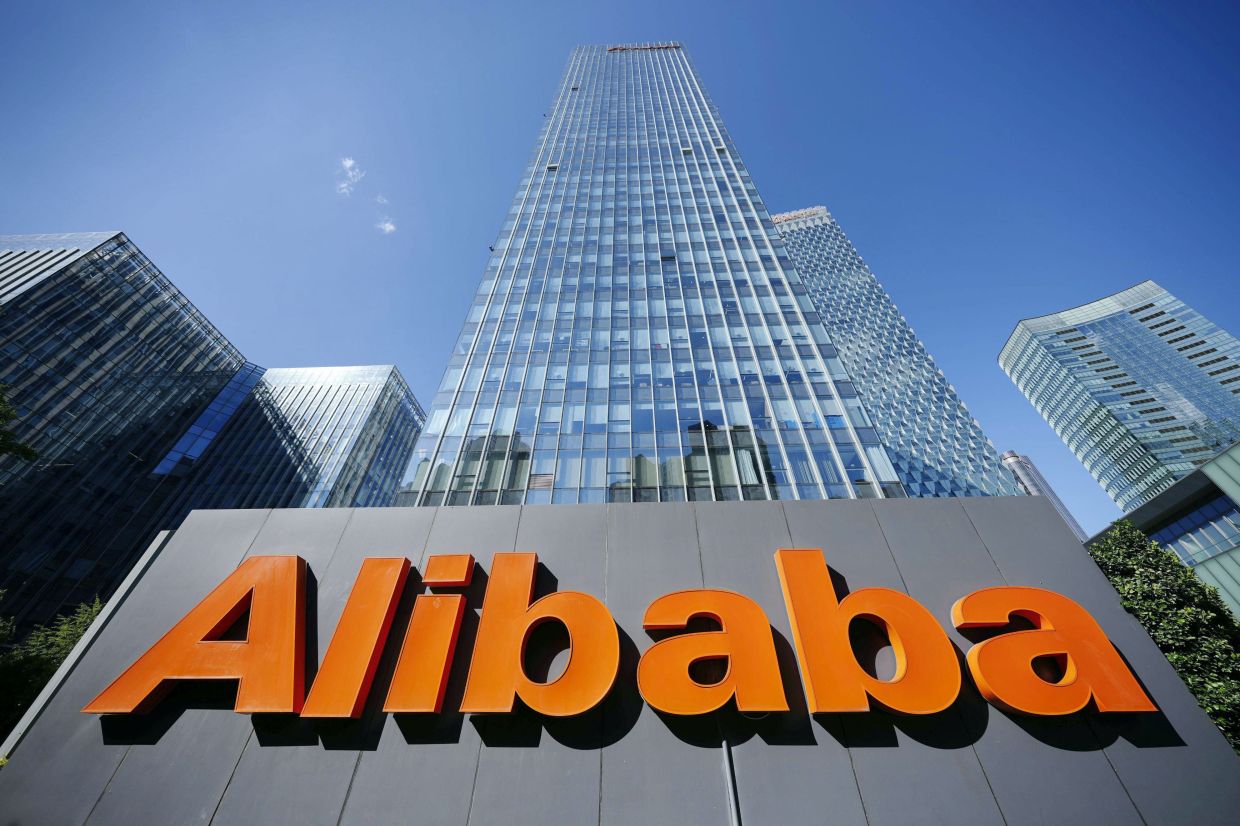
Alibaba Group Holding, the Hangzhou-based technology and e-commerce powerhouse, has escalated its dispute with Washington by filing a lawsuit against the US Department of Defence in a San Jose district court. The company seeks removal from a Pentagon blacklist that designates it as a military-affiliated Chinese enterprise, a classification that Alibaba disputes as unconstitutional and a violation of its rights to due process and free speech.
The Pentagon's June 9 designation placed Alibaba alongside a cohort of prominent Chinese technology firms on what the Defence Department terms a list of "Chinese military companies". The slate of blacklisted entities spans strategically sensitive sectors: electric vehicle manufacturers BYD and Nio, search engine Baidu, robot maker Unitree Robotics, networking equipment specialist TP-Link, and numerous companies in artificial intelligence, biotechnology, and solar energy. The breadth of the listing underscores the underlying geopolitical fault lines between Washington and Beijing, with each sector representing critical frontiers in technological competition between the two superpowers.
The Pentagon's authority to make such designations derives from Section 1260H of the National Defence Authorisation Act, a legislative provision that has become a favoured instrument of American strategic policy toward China. While the blacklist designation itself does not automatically impose direct sanctions, its consequences are nevertheless substantial and far-reaching. Companies on the list face significant impediments in accessing American capital markets, a critical source of funding for technology enterprises, and find themselves effectively barred from competing for US government contracts. For multinational corporations with operations across borders, such restrictions create cascading complications that extend well beyond immediate American business relationships.
In its challenge to the Pentagon, Alibaba fundamentally contests the factual premises underlying its designation. The company specifically rejected the Pentagon's assertion that it maintains indirect affiliation with China's State-owned Assets Supervision and Administration Commission, the body responsible for overseeing state enterprises. Alibaba similarly refuted the Department's claim that it functions as a contributor to military-civil fusion—a Chinese strategic framework that integrates civilian technological capabilities into military development—by virtue of alleged connections to the Ministry of Industry and Information Technology. The company characterised its interactions with MIIT as routine compliance obligations that any foreign technology firm operating within Chinese jurisdiction must observe.
Alibaba's statement emphasised its arms-length distance from military structures and stated unequivocally that "the company is not a Chinese military company nor part of any military-civil fusion strategy". The legal filing presents evidence of engagement with Pentagon officials in January, before the designation took effect, followed by a written submission in March that apparently failed to persuade the Defence Department to reconsider. When the Pentagon proceeded with the blacklist determination in June notwithstanding these efforts at dialogue, Alibaba determined that litigation represented its only viable recourse.
The lawsuit arrives amid an intensifying cycle of bilateral economic retaliation between the United States and China. One day before Alibaba initiated court proceedings, Beijing announced its latest countermeasures, with China's Ministry of Commerce placing ten American companies on its own export control list. The targeted American firms—Aveox, Red Cat Holdings, Teal Drones, IMSAR, Jaia Robotics, Ball Aerospace & Technologies, Oshkosh Defense, L3Harris Maritime Services, MP Materials, and USA Rare Earth—collectively represent critical nodes in American defence industrial capabilities and advanced materials supply chains. A ministry spokesperson characterised the measures as warranted responses to "malicious actions" originating from Washington.
China's retaliation extended beyond export restrictions. The Ministry of Finance simultaneously announced restrictions on government procurement by forty-six American companies, effective immediately, with a carve-out for entities engaged in Sino-American joint ventures operating within China. The list of restricted firms reads as a roster of American defence and aerospace titans: Lockheed Martin, Raytheon Missiles & Defense, General Atomics Aeronautical Systems, Boeing Defense Space & Security, General Dynamics Land Systems, and the Javelin Joint Venture partnership between Lockheed Martin and Raytheon. These procurement restrictions, though less visible than export controls, effectively eliminate opportunities for American companies to supply goods and services to Chinese government entities and state-owned enterprises.
For Malaysian and Southeast Asian enterprises, Alibaba's challenge to the Pentagon blacklist carries significant implications. The case tests the legal and diplomatic boundaries of American efforts to restrict Chinese technological advancement, a contest whose outcome will shape the environment in which regional businesses must operate. Companies in Southeast Asia frequently source technology components, cloud services, and logistics solutions from Chinese firms; blacklist designations that restrict such companies' access to capital and international partnerships necessarily create supply chain uncertainties and raise costs for downstream users across the region. Malaysian corporations that depend upon Alibaba's e-commerce platforms, Alipay payment services, or cloud infrastructure may experience operational complications if the Pentagon designation remains in place.
The broader strategic significance of the Alibaba lawsuit extends to questions of how technology competition between great powers will be managed in coming years. If Alibaba succeeds in overturning its Pentagon designation through American courts, it would establish a precedent that such blacklist determinations require substantive legal justification rather than executive discretion alone. Conversely, if the Pentagon's designation withstands legal challenge, American authorities will have demonstrated that Section 1260H provides broad latitude to restrict Chinese technology firms with minimal procedural constraint. Either outcome will reverberate through global technology markets and investment patterns for years to come.
Several other blacklisted companies, notably Baidu and BYD, have similarly repudiated the Pentagon's findings, and their potential legal challenges may follow Alibaba's example. The Chinese embassy in Washington has formally protested what it characterises as an overextended American conception of national security deployed to discriminate against Chinese enterprises. These escalating tensions highlight the degree to which technology competition between China and the United States has become inseparable from questions of law, diplomacy, and institutional power. As Alibaba's case proceeds through American courts, the outcome will help determine whether such transnational technology disputes can be resolved through legal mechanisms or whether they will instead intensify existing patterns of mutual economic coercion.

