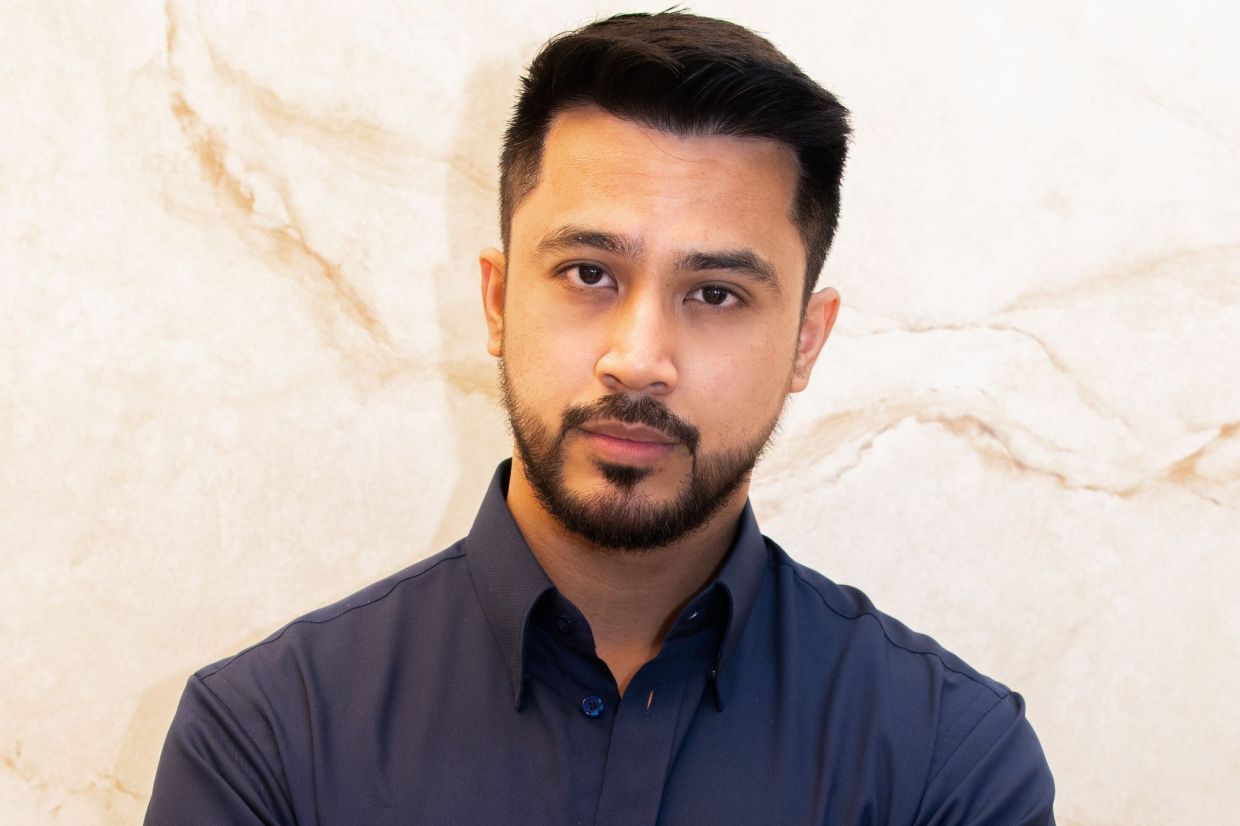
Malaysian actor Aliff Aziz is stepping back into the spotlight with a new role that carries uncomfortable parallels to his recent personal life. In an upcoming iQiyi series, the 35-year-old portrays a character named Adli who engages in distinctly dubious behaviour—including removing his wedding ring to persuade a woman to date him after she explicitly refuses to see married men. The casting choice has generated considerable discussion given the timing and nature of Aliff's departure from public view, though the actor himself maintains his focus remains squarely on the fictional narrative rather than biographical coincidence.
The context surrounding Aliff's return to acting cannot be separated from the events of March 2024, when the performer found himself entangled in a khalwat controversy that ultimately dismantled his marriage to Bella Astillah, the acclaimed Malaysian singer and actress with whom he shares two children. The incident prompted significant media scrutiny and public commentary, elements that would test the resilience of any public figure attempting to resurrect their career. While Aliff maintained a presence on social media platforms during the intervening months, regularly sharing musical content and personal updates, a return to dramatic acting represents a considerably more visible and vulnerable step into the entertainment industry's spotlight.
Acknowledging the elephant in the room, Aliff was candid during the series launch about his apprehensions regarding audience reception. The actor articulated his internal struggle between recognising his professional obligation to embody a fictional creation and confronting the inevitable comparisons audiences might draw between his character's marital transgressions and his own documented missteps. This tension between separating performer from role has become an increasingly pertinent discussion in Southeast Asian entertainment, where the boundary between celebrity persona and scripted character often blurs in public consciousness.
However, Aliff's approach to managing these concerns reflects a philosophical maturation regarding the distinction between personal accountability and artistic interpretation. He emphasised that his responsibility as an actor demands full commitment to bringing Adli authentically to life, regardless of thematic resonance with his own circumstances. The performer acknowledged that intrusive thoughts inevitably arose—questions about viewer perception and potential backlash—yet determined that his energies would be better directed toward delivering a quality performance rather than preemptively defending against criticism. This mindset reveals a strategic recalibration of how entertainers in the region navigate scandal recovery through professional excellence.
Aliff's gratitude toward the production team's faith in his capabilities underscores an important industry dynamic often overlooked in Malaysian entertainment discourse. Director Eyra's decision to cast him was not influenced by the controversy surrounding his personal life but rather by her assessment of his fundamental talents and work ethic. This demonstrates that some industry professionals evaluate performers based on technical merit and dedication rather than tabloid headlines, offering pathways for redemption that extend beyond public opinion. Eyra specifically highlighted Aliff's natural acting ability, commitment to character development, and professional discipline—qualities that reportedly impressed her throughout the production process.
The narrative framework of the series itself appears deliberately constructed to explore moral complexity beyond simplistic judgments about infidelity. Eyra explained that the production's title encompasses all three main characters, each embodying both admirable and destructive qualities in the manner of all human beings. This thematic ambition suggests the writers and producers were consciously engaging with stories about choice, consequence, and moral ambiguity rather than crafting a straightforward morality tale. For Malaysian audiences accustomed to entertainment that frequently presents clear ethical boundaries, this layered approach offers intellectual engagement with nuanced character studies.
The series' central thematic concerns extend well beyond the surface-level depiction of polygamous relationships, which might have been the obvious trajectory given contemporary discussions in Malaysia about marriage and familial structures. Instead, the production positions itself as an examination of human nature's contradictions and the ripple effects of individual decisions across multiple lives. This framework potentially allows audiences to engage with Adli's character as a complex human rather than a straightforward villain, creating space for the kind of empathetic viewing experience that neither condemns nor condones but rather observes and contemplates.
Aliff's reflections on the script itself reveal his approach to character work grounded in technical acting methodology. Upon initial reading, he recognised that the material presented departures from his previous dramatic roles, offering emotional depth and psychological layering that demanded serious interpretive engagement. The challenge of translating Adli from written page to visual performance excited him despite the obvious professional risks, suggesting his artistic appetite for difficulty has not been dampened by recent setbacks. This enthusiasm for substantive dramatic work indicates a performer consciously choosing projects that demand growth rather than retreating into safer, less demanding material.
Beyond the specific production, Aliff's broader statements about moving forward reveal a personal philosophy that prioritises agency and momentum over victimhood narratives. At 35, he articulated a conviction that remaining mired in regret represents an unaffordable waste of finite time, a perspective that resonates across cultural contexts but carries particular weight in Malaysian society where public figures face sustained scrutiny. His acknowledgment that he bears responsibility for his circumstances, coupled with his determination to forgive himself rather than seek external sympathy, presents a counternarrative to the often-defensive responses celebrity scandals typically generate in Southeast Asian entertainment.
The spiritual dimension of Aliff's stated approach, invoking divine strength to carry burdens resulting from his own failings, reflects values deeply embedded in Malaysian culture while simultaneously asserting personal responsibility. This framing distinguishes between seeking forgiveness through religious framework and using religion as an excuse for avoiding accountability—a nuanced distinction that audiences frequently struggle to parse when public figures experience moral crises. His emphasis on continued forward motion, sustained by optimism rather than denial, suggests a recovery trajectory grounded in practical action rather than performative redemption.
For the Malaysian entertainment industry, Aliff's return to acting represents a test case for how the region navigates celebrity scandal and professional rehabilitation. The industry's reception of his work will indicate whether audiences and gatekeepers truly believe in redemption possibilities or whether certain transgressions permanently alter an entertainer's career trajectory. Similarly, the success or reception of this iQiyi series will signal whether production companies view controversial figures as too risky or whether merit-based casting continues to influence major production decisions. The coming months will reveal whether Aliff's philosophical resilience translates into audience acceptance and whether the series itself can deliver the thematic sophistication producers have promised.
The broader significance extends to how Southeast Asian entertainment increasingly engages with stories about fallible characters navigating moral complexity. Malaysian audiences have demonstrated sophisticated media literacy in recent years, capable of distinguishing between actor and role while maintaining critical perspective on both. Aliff's gamble—returning to visible work through a role that uncomfortably mirrors his real-world failures—may ultimately strengthen his position if executed with the professionalism he describes, or it could be perceived as tone-deaf if audiences feel the casting choice exploits rather than explores genuine dramatic territory. The stakes for all involved remain considerable, yet the willingness to attempt such return speaks to evolving cultural attitudes toward failure, redemption, and the compartmentalisation necessary for sustained artistic careers.

