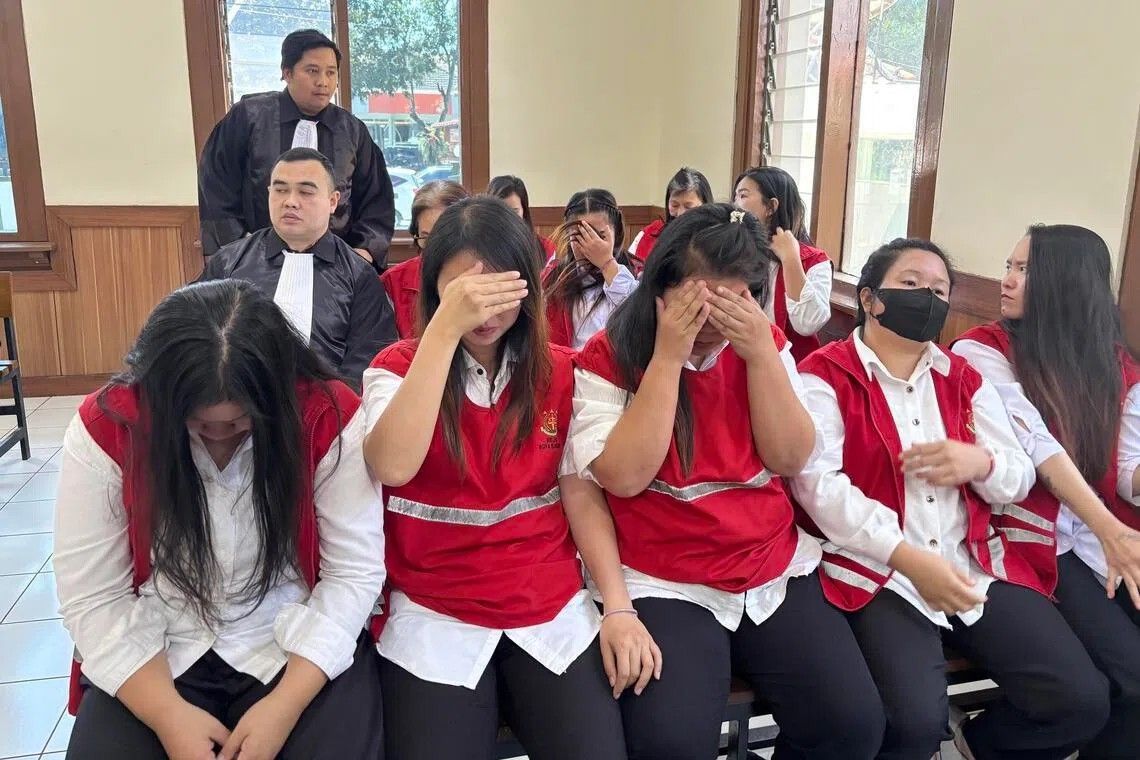
An Indonesian court has concluded its case against a sophisticated baby-smuggling operation, handing down guilty verdicts and custodial sentences to all 19 defendants involved in the transnational human trafficking network. Judge Gatot Ardian Agustriono announced the convictions on July 21 at the Bandung District Court in West Java, bringing to a close a case that has exposed alarming vulnerabilities in child protection across Southeast Asia and highlighted the desperation of impoverished Indonesian families seeking to place their newborns.
Lie Siu Luan, a 70-year-old mastermind operating under the aliases Popo and Lily, stood at the centre of the operation and received a prison sentence of seven years. The court found him guilty of orchestrating multiple aspects of the trafficking pipeline: recruiting infants from vulnerable households, overseeing the creation of fraudulent adoption documentation, and managing the logistics of transferring babies across international borders. The sentence fell short of the prosecution's request for a ten-year term, reflecting judicial discretion in weighing aggravating and mitigating circumstances.
The syndicate's reach extended significantly into Singapore, representing a major regional security concern. Prosecutors established that at least 12 of the babies handled by the ring were transported to the city-state, with each child commanding a market price ranging from 200 to 250 million rupiah, equivalent to approximately S$18,110 per infant. This valuation underscores how the poorest segments of Indonesian society become prey for sophisticated trafficking networks that exploit parental desperation and the desire of families abroad to adopt children.
The investigation and subsequent trial revealed the specialized roles within the criminal hierarchy. Astri Fitrinika, identified as the syndicate's chief recruiter responsible for identifying and acquiring infants from source communities, was sentenced to six years and seven months imprisonment. Two additional recruiters, Djaka Hamdani and Elin Marlina, received identical sentences, suggesting the court viewed recruitment as among the most serious offences given its direct targeting of vulnerable families. Their role placed them at the initial point of exploitation, often making promises to impoverished mothers regarding their children's futures.
Documentation fraud constituted another critical component of the trafficking ecosystem. Lai Su Hua, convicted of falsifying state documents essential to completing adoption transactions and meeting legal requirements, also received six years and seven months. The creation of fraudulent paperwork enabled the syndicate to move babies across borders with apparent legitimacy, obscuring the commercial nature of the transactions and making detection difficult for immigration and child protection authorities in destination countries.
The remaining 14 defendants, predominantly women who functioned as caregivers within the network's infrastructure, received relatively shorter sentences of three years and four months each. These individuals provided the essential operational support that allowed babies to survive and be presented as healthy candidates for adoption while documentation was processed. Their lighter sentences reflect their subordinate positions within the hierarchy, though their participation in harbouring children for exploitative purposes remains culpable under Indonesian human trafficking law.
The operation functioned across a critical time period spanning 2023 to 2025, during which prosecutors documented the trafficking of at least 34 infants. This timeframe is particularly significant as it suggests the syndicate operated with relative impunity for approximately two years before law enforcement disrupted the network, raising questions about the effectiveness of inter-agency coordination and border security protocols in detecting organised child trafficking.
During trial proceedings, the defendants' legal teams adopted a consistent defensive posture. Both Lie Siu Luan and Astri Fitrinika acknowledged participation in most of the criminal acts they were charged with, yet maintained that the infants were not abducted but rather voluntarily relinquished by their biological parents. Furthermore, they contended that all children received appropriate care and suffered no abuse or mistreatment. These claims remain contested and do not alter the fundamental criminality of trafficking minors for profit, irrespective of consent narratives employed by family members in circumstances of severe poverty and limited alternatives.
The conviction of all 19 defendants represents a comprehensive legal victory for Indonesian prosecutors and reflects strengthened enforcement of anti-trafficking legislation. However, the case also illuminates systemic vulnerabilities that trafficking networks exploit. The prevalence of extreme poverty in rural Indonesian communities, combined with limited access to legitimate adoption pathways and social services, creates conditions where organised criminals can persuade desperate parents to surrender infants under false pretences. The Bandung District Court's verdicts address the perpetrators but do not resolve the underlying conditions that generate supply for such criminal enterprises.
Regional implications are substantial given Singapore's involvement as a destination jurisdiction. The case demonstrates that Southeast Asian countries remain integrated into transnational trafficking networks targeting the most vulnerable populations. Enhanced cooperation between Indonesian law enforcement and Singaporean authorities will be essential for identifying babies already placed in the city-state and ensuring adequate follow-up care and investigation of the recipients. Child welfare agencies across the region must strengthen protocols for verifying the legitimacy of cross-border adoptions and investigating irregular placements.
The sentences imposed by the Bandung District Court, while substantial, may not deter future trafficking given the financial incentives. Each child represented approximately S$18,110 in gross proceeds, and a successful operation could generate hundreds of thousands of dollars. The profitability of the enterprise, combined with endemic corruption risks and variable enforcement capacity across borders, suggests that human trafficking of infants will persist unless addressed through comprehensive approaches encompassing poverty reduction, strengthened family support systems, and harmonised regional adoption protocols.
Looking forward, the case underscores the necessity for Indonesian authorities to focus enforcement resources on identifying and assisting infants already placed in destination countries. Many babies trafficked through such networks disappear into irregular adoption arrangements with minimal documentation or ongoing oversight, leaving them vulnerable to exploitation and abuse throughout their childhood. Regional cooperation mechanisms must evolve to enable authorities to trace babies post-placement and ensure their legal status and welfare protections are properly established.

