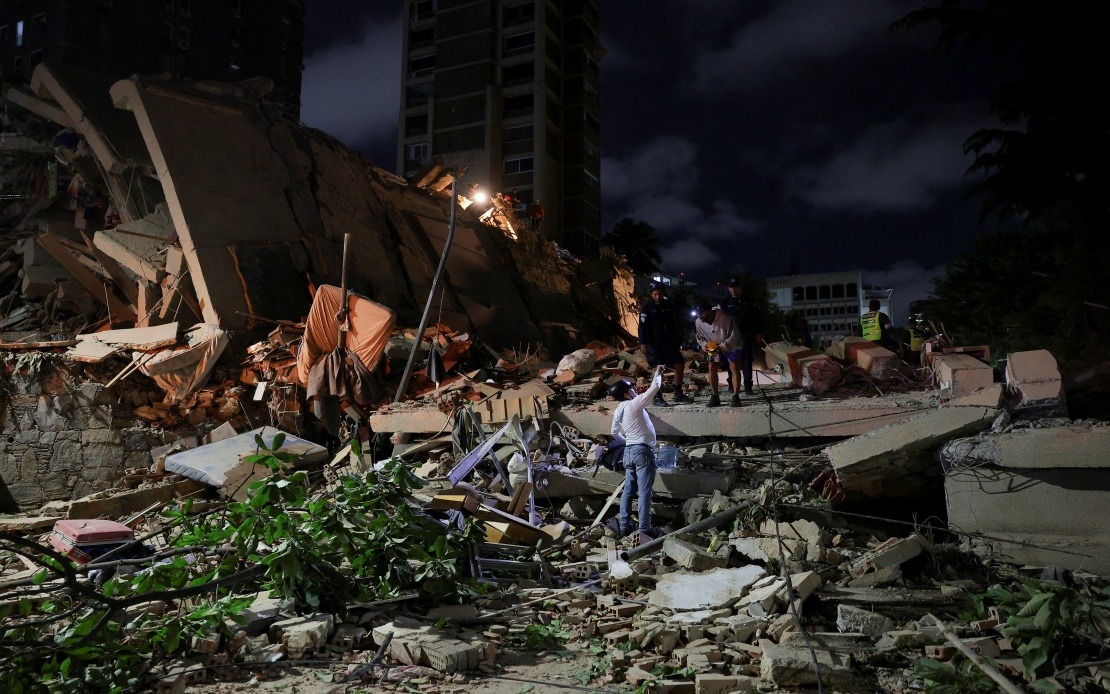
Venezuela's central region was shaken by two consecutive earthquakes on Wednesday, forcing Malaysian authorities to spring into action to account for citizens in the disaster zone. The Foreign Ministry, known locally as Wisma Putra, moved quickly to issue assurances that all registered Malaysian nationals scattered across the country remain safe and accounted for in the aftermath of the tremors.
The seismic events, measuring 7.2 and 7.5 on the Richter scale, struck approximately 21 kilometres from Moron and roughly 168 kilometres west of Venezuela's capital, Caracas. The powerful tremors radiated across much of the country, with residents reporting strong shaking in Caracas and the outlying states of Trujillo, Carabobo, Miranda, and La Guaira. The earthquakes caused widespread structural damage, with reports of buildings collapsing across affected regions, though a full assessment of the devastation was still underway.
Malaysia's diplomatic presence in Venezuela has maintained active communication channels with Venezuelan authorities as search and rescue operations continue. Wisma Putra acknowledged on Thursday that local authorities were still in the early stages of evaluating the earthquakes' full impact, with casualty figures and comprehensive damage assessments pending. The embassy in Caracas remains positioned as the primary point of contact for Malaysian citizens seeking assistance or those with information about fellow nationals.
The ministry's swift response reflects Malaysia's growing diplomatic commitment to supporting its diaspora across the Americas. Venezuela, while not a primary destination for Malaysian migration, does host a small but notable expatriate community engaged in various professional and business endeavours. The quick confirmation of safety provided reassurance to families back in Malaysia who may have been monitoring news reports of the disaster.
Wisma Putra has issued specific guidance for Malaysians in or near the affected zones, emphasizing the importance of exercising caution and following all directives issued by Venezuelan emergency services. The ministry stressed that residents should remain vigilant and prepared for potential aftershocks, which typically follow earthquakes of this magnitude. Such guidance underscores the unpredictable nature of seismic activity in regions near tectonic plate boundaries.
A critical aspect of the ministry's response has been urging Malaysian nationals who have not yet registered their whereabouts to do so immediately through the e-Konsular portal. This online registration system serves as a vital tool for the government to maintain accurate records of its citizens abroad, enabling faster response during emergencies and improving consular services. The public reminder highlights how such natural disasters expose gaps in official knowledge about Malaysian communities operating independently overseas.
For those requiring immediate consular support or wishing to report concerns about other Malaysians, the embassy has activated its emergency hotlines. The Caracas embassy can be reached at (+58-212) 720 4257 or (+58-424) 222 1338, with email support available at [email protected]. These communication channels represent the front-line infrastructure through which the ministry coordinates rescue efforts and provides welfare checks on citizens.
The Venezuela earthquake situation serves as a reminder of the challenges facing Malaysian authorities in maintaining oversight of nationals scattered across distant and sometimes unstable regions. Unlike neighbouring Southeast Asian countries where larger expatriate populations reside, Venezuela's Malaysian community remains relatively small and dispersed, complicating systematic welfare monitoring. Nevertheless, Malaysia's institutional response demonstrates institutional readiness to mobilize diplomatic resources when citizens face natural disasters.
Earthquakes of the magnitude experienced in Venezuela pose significant risks not only to local populations but also to the infrastructure upon which expat communities depend. Disruptions to utilities, transportation networks, and communication systems can isolate foreign nationals and complicate efforts to reach those requiring assistance. The Ministry's commitment to provide regular updates as the situation develops signals an intent to maintain transparency with citizens and their families in Malaysia.
The incident underscores the importance of pre-disaster planning for Malaysians living or working in seismically active regions. While natural disasters cannot be prevented, preparedness measures including emergency fund allocation, communication protocols, and evacuation planning can significantly reduce risks. Malaysian communities in earthquake-prone areas are advised to familiarize themselves with local emergency procedures and maintain updated contact information with their embassy.
As Venezuelan authorities continue assessing damage and casualties from the twin earthquakes, Malaysia's diplomatic mission will maintain heightened vigilance and reporting. The foreign ministry's statement that updates would be provided as necessary signals ongoing engagement with the situation. For Malaysian families with loved ones in Venezuela, this commitment to regular communication provides some measure of assurance during a period of uncertainty affecting the broader Venezuelan population.

