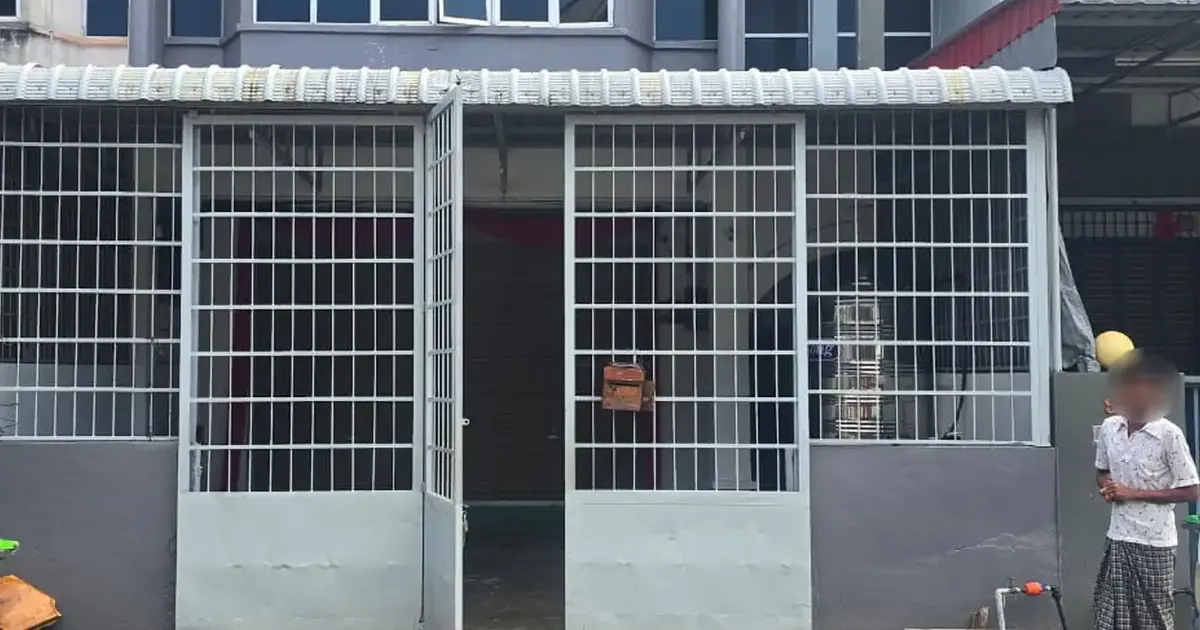
Authorities in Alor Setar have moved against an improvised educational facility operating inside an industrial premises that was serving Rohingya refugee children, marking a significant enforcement action in Malaysia's ongoing handling of the stateless minority community. The municipal council's intervention has initiated investigation into dual regulatory breaches: the misuse of a designated industrial space for classroom activities and the operation of an unlicensed educational institution without proper authorisation from relevant authorities.
The raid underscores the mounting tensions between humanitarian concerns and regulatory compliance in Malaysian municipalities grappling with large displaced populations. While Malaysia hosts one of the world's largest Rohingya populations—officially numbering over 184,000 registered refugees according to UNHCR—formal pathways for educating their children remain severely constrained. The discovery of this clandestine learning centre reveals how desperate circumstances have driven communities to improvised solutions, converting unsuitable spaces into classrooms for young learners who would otherwise go entirely without formal instruction.
The Alor Setar council's decision to initiate investigations signals an increasingly hardline posture on unauthorised structures and operations within municipal boundaries, regardless of the humanitarian dimensions involved. Zoning laws strictly designate industrial zones for manufacturing, warehousing, and commercial operations—not residential or educational activities. Such separation exists ostensibly to protect both industrial operations and neighbouring communities from incompatible land uses. Yet when applied rigidly without consideration for vulnerable populations lacking institutional support, enforcement mechanisms can inadvertently criminalize survival strategies.
Malaysia's treatment of Rohingya education has historically reflected this tension between rule of law and practical reality. While UNHCR operates some learning centres with NGO partners, access remains limited and capacity falls far short of demand. Many Rohingya children in Malaysian cities attend informal community schools or receive no formal education whatsoever, perpetuating cycles of disadvantage that compromise their long-term prospects and integration potential. Parents desperate to provide educational foundations for their children have increasingly organized informal learning arrangements, though such initiatives exist in legal grey zones subject to sudden enforcement action.
The operational status of this particular facility remains unclear—whether it functioned merely as a weekend enrichment programme, a full-time alternative school, or an informal tutoring centre. These distinctions matter significantly for regulatory assessment and the proportionality of enforcement responses. An after-hours language class serves fundamentally different purposes and poses different risks than a fully operational unlicensed school operating throughout the week. Yet municipal enforcement often proceeds categorically without nuance, applying the same remedies to situations of vastly different severity.
The industrial building's use for educational purposes does raise legitimate safety and welfare concerns that deserve serious attention. Industrial premises typically lack child-appropriate facilities—proper ventilation, adequate lighting, appropriate sanitation facilities, and emergency systems designed with young occupants in mind. Children spending extended periods in such environments could face genuine health and safety hazards. These legitimate protective considerations have been subsumed within broader regulatory violations, making it difficult to separate genuine child welfare concerns from bureaucratic rigidity.
From a broader policy perspective, the incident highlights Malaysia's continued struggle to establish coherent frameworks for refugee education. Unlike several Southeast Asian neighbours that have negotiated specific arrangements with UNHCR and international education partners, Malaysia maintains restrictive policies limiting refugee access to national school systems while failing to adequately fund alternative provision. This policy vacuum inevitably produces informal solutions that authorities then penalise, creating cynical cycles where vulnerable children bear the consequences of governmental indecision.
The investigation's outcome will likely influence how other Malaysian municipalities address similar situations. If authorities pursue charges aggressively, more informal Rohingya learning centres may simply go deeper underground, becoming entirely unmonitored and potentially more dangerous. Conversely, if the council demonstrates flexibility and works with community partners to identify safer alternatives, it could establish a pragmatic precedent for other jurisdictions. The enforcement action thus carries implications extending well beyond this single facility.
For the Rohingya community in Kedah, particularly families with school-age children, the raid represents another setback in their precarious situation. Children who were receiving instruction through this facility now face educational interruption. Their parents confront the impossible choice between risking further enforcement action by establishing replacement arrangements or accepting educational discontinuity. These cascading consequences rarely factor into regulatory enforcement decisions, yet they shape long-term developmental outcomes for entire cohorts of young people.
International humanitarian observers monitoring Malaysia's refugee situation will likely scrutinize how authorities handle the investigation and what resolution emerges. Malaysia's obligations under the Convention on the Rights of the Child—which it has ratified—include ensuring that all children within its territory have access to education. While signatories retain discretion regarding implementation, using enforcement mechanisms to prevent stateless children from accessing any available education invites international criticism and undermines Malaysia's stated commitment to human rights principles.
The path forward requires recognizing that technical regulatory violations and humanitarian imperatives need not remain in perpetual conflict. Creative solutions—such as licensing informal education providers, conducting safety audits with remediation support, or facilitating NGO partnerships with proper facilities—could address legitimate concerns while maintaining educational access. Whether Alor Setar authorities will pursue such approaches remains to be determined as the investigation proceeds.

