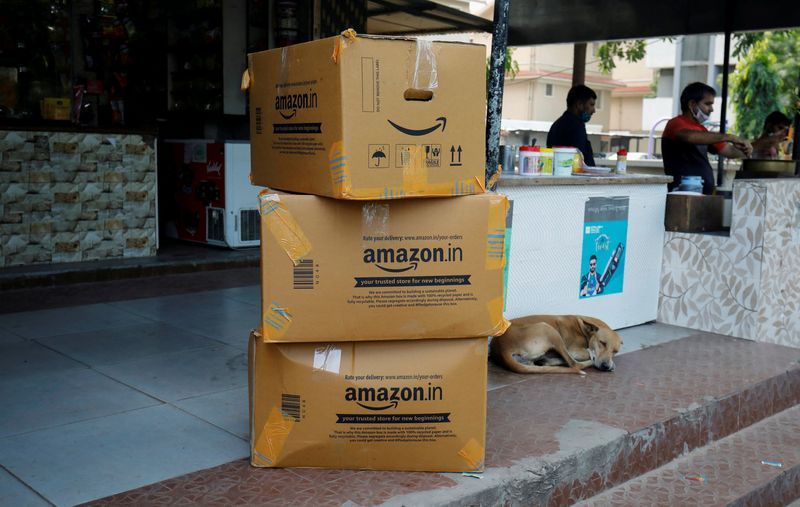
Amazon has committed to taking "appropriate action" against M&M Logistics Solutions, one of its major third-party delivery partners in India, once local authorities conclude their investigation into a devastating warehouse fire that claimed two lives in early June. The e-commerce giant, one of India's largest online retailers, announced the pledge on Thursday through a formal statement while simultaneously launching an independent internal probe into the incident at the Uttarakhand facility.
The fatal fire at M&M Logistics Solutions occurred on June 5 at a warehouse facility in the northern state of Uttarakhand, exposing serious safety lapses at the delivery hub. Police documentation reviewed by Reuters reveals the building operated without essential safety infrastructure, including a valid fire safety clearance certificate, functioning fire alarm systems, smoke detection equipment, and compliant emergency exit routes. These omissions represent fundamental breaches of workplace safety standards and raise questions about how such a facility could continue operating as part of Amazon's supply chain network.
Amazon's public commitment to "appropriate action" carries weight given the company's published supplier code of conduct, which explicitly prohibits unsafe working environments and includes provisions for suspending or terminating third-party contractors who violate safety standards. M&M Logistics Solutions operates an extensive network of 45 delivery centres across 21 cities in northern India, handling a substantial portion of Amazon's package deliveries in the region. The scale of this operation underscores the significant reach and responsibility Amazon holds over its third-party partners' operations and worker safety practices.
The tragedy at M&M Logistics comes amid growing scrutiny of Amazon's labour practices in India. Earlier in 2024, India's National Human Rights Commission launched an investigation into allegations that Amazon violated labour laws during an intense heatwave at a warehouse facility near New Delhi. Following that intervention, the state government reportedly initiated legal proceedings against Amazon under India's labour protection statutes, signalling official concern about working conditions within the company's supply chain. These incidents collectively paint a picture of systemic challenges in maintaining adequate worker protections across Amazon's operations in the country.
The Amazon India Workers Union has seized on the June 5 incident as evidence of broader workplace safety failures, demanding an independent judicial inquiry into the deaths rather than relying solely on internal company investigations or police procedures. The union characterised the fire as a stark example of corporate negligence, arguing that it represents "a grave failure of workplace safety and protection of human dignity." This demand reflects growing pressure from labour advocates who question whether companies like Amazon can adequately investigate themselves when worker deaths occur at their contracted facilities.
The incident raises important questions about the oversight mechanisms governing India's rapid e-commerce expansion and the working conditions of the hundreds of thousands employed in delivery networks. As online shopping accelerates across Southeast Asia, including Malaysia, the safety standards maintained by regional delivery partners become increasingly consequential. Amazon's response will likely influence how other major e-commerce platforms approach accountability for their third-party logistics contractors throughout the region.
For Malaysian readers following developments in regional corporate accountability, the Uttarakhand case illustrates the risks that emerge when rapid business growth outpaces safety infrastructure. India's scale and growth trajectory mean it often serves as a testing ground for labour and safety standards that subsequently shape operations across South and Southeast Asia. The regulatory pressure Amazon faces in India today may well foreshadow similar scrutiny in Malaysia and neighbouring countries as worker protection advocates and authorities increasingly demand transparency from e-commerce giants.
Amazon has maintained that worker safety and wellbeing are among its highest priorities, a statement that rings hollow to many observers given the June 5 casualties and earlier labour law violations. The company's willingness to take measurable action against M&M Logistics Solutions—beyond public statements—will determine whether such assurances carry genuine weight. Industry observers note that meaningful consequences for safety violations at third-party facilities remain rare, with companies often imposing token penalties rather than substantive operational changes.
M&M Logistics Solutions itself has not responded to inquiries regarding the incident or the investigation. The silence from both the delivery partner and Uttarakhand state police suggests potential complications in the investigation process or deliberate avoidance of public accountability. This lack of transparency from key stakeholders makes independent verification of safety improvements difficult and reinforces concerns among worker advocates about the adequacy of existing oversight structures. As the police investigation progresses, attention will focus on whether authorities pursue vigorous accountability or whether corporate pressure and economic considerations ultimately limit consequences.

