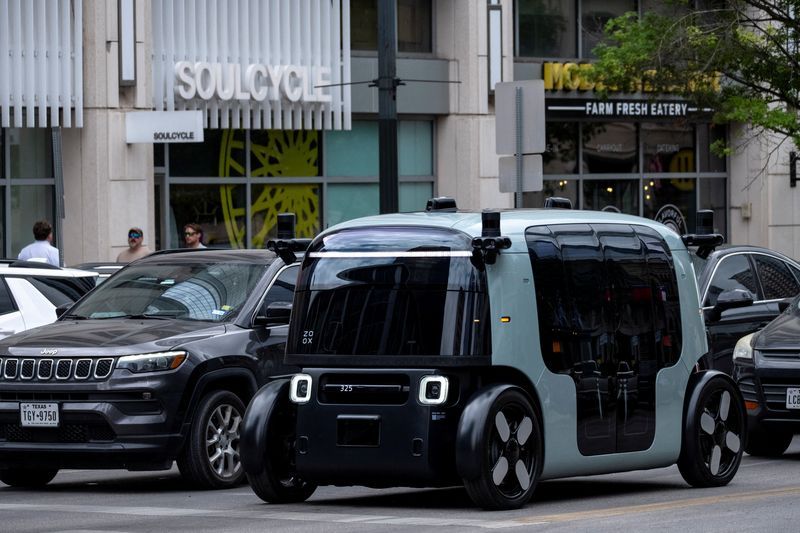
Amazon's autonomous vehicle subsidiary Zoox has taken a major step forward in commercialising self-driving technology by launching paid robotaxi rides in Las Vegas from Monday, following clearance from the U.S. National Highway Traffic Safety Administration. The milestone represents a watershed moment for the global autonomous vehicle industry, signalling that driverless transportation is transitioning from prolonged testing phases into revenue-generating operations on American roads.
The electric carriage-style vehicles, which feature two rows of inward-facing seats arranged in a unique configuration, will charge fares comparable to premium ride-hailing tiers, typically commanding premiums of 20 to 40 percent above standard services. This positioning reflects Zoox's strategy to target passengers valuing convenience and newer vehicle amenities rather than competing on price alone. The company has been operating its fleet without charge across Las Vegas, San Francisco, Austin and Miami for months, accumulating real-world driving data and refining operational systems before monetising the service.
Zoox's regulatory approval carries particular significance because it marks the first instance of a company purpose-built around autonomous ride-hailing receiving exemption from federal safety standards that traditionally mandate human driver controls. This distinction separates Zoox's achievement from competitors modifying existing vehicles for autonomous operation. The NHTSA clearance permits deployment of up to 2,500 vehicles annually for the next two years, establishing a framework that acknowledges the company's safety protocols while establishing guardrails for expansion. The regulatory pathway Zoox navigates could influence how other autonomous vehicle developers approach compliance with American safety authorities.
The Las Vegas deployment intensifies an increasingly crowded competitive landscape in the American robotaxi sector. Alphabet's Waymo has already established paid driverless services across multiple metropolitan areas, accumulating millions of autonomous miles and building operational infrastructure. Tesla has begun rolling out its autonomous ride-hailing ambitions more recently, leveraging its existing vehicle fleet and technological capabilities. Zoox's entry into commercial operations adds another significant competitor to this market consolidation, with implications for pricing, service availability, and technological standards across the emerging autonomous transportation industry.
Zoox's pricing model reflects careful consideration of consumer expectations and cost structures. The company will charge passengers using a base fare augmented by time and distance calculations routed via optimal pathways, with destination-specific surcharges disclosed upfront to prevent customer surprise. Notably, passengers will not incur additional fees if the robotaxi selects a route longer than initially anticipated, addressing a common concern about autonomous navigation efficiency. This transparency-focused approach distinguishes Zoox's commercial strategy from traditional ride-hailing models, potentially enhancing customer confidence in driverless services.
Regulatory approval, however, arrived with substantial conditions reflecting persistent safety concerns within the autonomous vehicle domain. The NHTSA imposed additional reporting requirements on Zoox, mandating disclosure of incidents including crashes and inappropriate road stopping. This heightened scrutiny reflects industry-wide questions about how autonomous systems perform during unpredictable emergency scenarios, interact with human drivers, and respond to non-standard traffic situations. These conditions essentially establish Zoox as a real-world testing laboratory for autonomous vehicle safety metrics, with each incident potentially influencing future regulatory frameworks.
Zoox's safety track record has been inconsistent, raising questions about operational readiness for paid commercial service. The company issued multiple software recalls during the preceding two years, culminating in July when one vehicle failed to detect substantial smoke at an emergency scene. These incidents highlight the gap between controlled testing environments and the genuine complexity of urban driving, where autonomous systems must interpret ambiguous visual information, prioritise passenger safety amid chaos, and make split-second decisions without human oversight. Each recall demonstrates that even when vehicles appear operationally ready, edge cases and unexpected scenarios continue challenging autonomous technologies.
For Southeast Asian markets including Malaysia, Zoox's Las Vegas launch carries strategic implications despite the immediate absence of regional operations. The company's regulatory approval pathway provides a template for how autonomous vehicle developers might eventually approach Southeast Asian regulators, many of whom currently lack comprehensive autonomous vehicle frameworks. The pricing model and operational structure Zoox implements in Las Vegas will likely inform future commercial strategies should the company expand internationally. Additionally, Zoox's safety record and regulatory conditions establish cautionary precedents that Malaysian policymakers should monitor when considering autonomous vehicle regulations.
The broader autonomous vehicle industry continues advancing despite persistent safety challenges and regulatory hesitation. Zoox's commercialisation demonstrates investor and corporate confidence that autonomous ride-hailing represents a viable business model, despite technological limitations. The company's willingness to deploy paid services before achieving perfect safety records reflects industry assumptions that autonomous systems will gradually improve through operational experience. However, this approach carries risks, as public incidents or accidents could generate backlash against driverless technology adoption, potentially delaying industry-wide commercialisation timelines across developed and developing markets.
Competitive dynamics in the American robotaxi market will likely intensify as Zoox, Waymo and Tesla expand service areas and refine commercial operations. Pricing pressure may emerge as multiple operators compete for passengers, potentially forcing companies to expand coverage areas and operational hours to achieve profitability. The regulatory pathway established through Zoox's NHTSA approval will probably facilitate faster approvals for competitors with comparable safety systems, potentially accelerating the shift toward autonomous ride-hailing dominance in American urban transportation.
For the global autonomous vehicle ecosystem, Zoox's paid launch represents psychological validation that self-driving technology has matured sufficiently for commercial deployment, even with acknowledged limitations. This momentum may influence investment flows toward autonomous vehicle developers, accelerate timelines for international expansion among leading companies, and pressure regulators in other jurisdictions to establish clearer autonomous vehicle frameworks. Malaysia and other Southeast Asian nations should closely monitor these developments, given the eventual likelihood that autonomous ride-hailing services will emerge as transportation solutions once local regulatory and infrastructure readiness aligns with technological capabilities.

