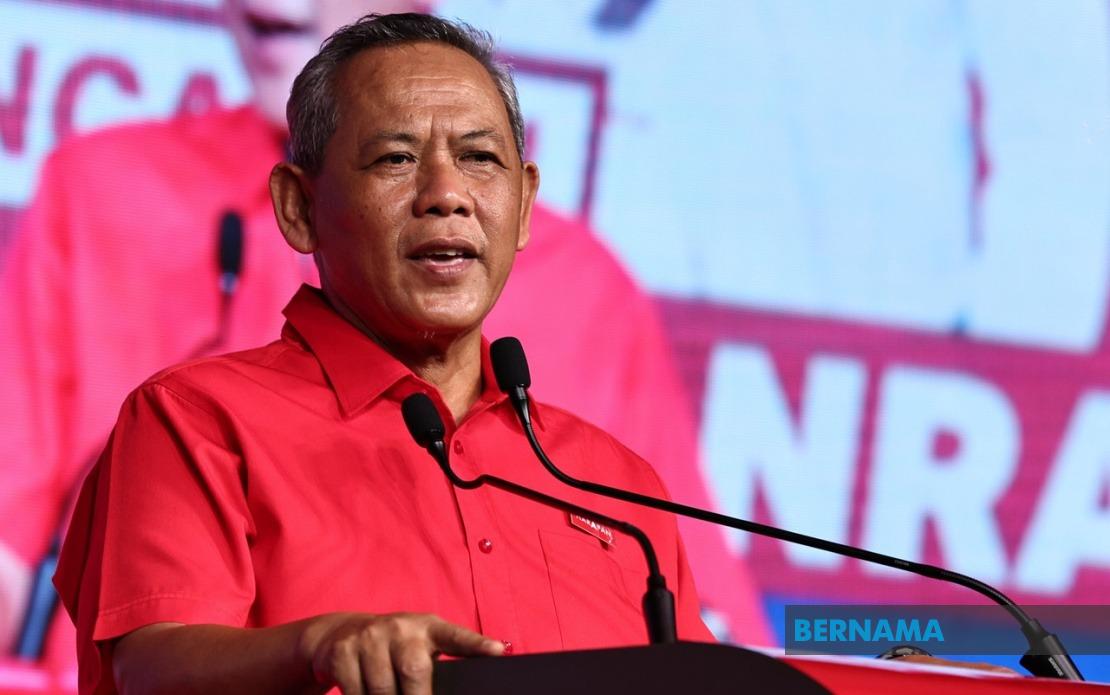
Negeri Sembilan Menteri Besar Datuk Seri Aminuddin Harun has firmly rejected suggestions that his decision to contest the Linggi state seat in the forthcoming Negeri Sembilan state election signals an attempt to sidestep defending his long-held Sikamat constituency. The move, Aminuddin insists, reflects his personal choice to pursue fresh political ground rather than a strategic manoeuvre driven by electoral concerns.
Among the state's most durable politicians, Aminuddin has held Sikamat for four consecutive terms, building a formidable political foundation in the constituency through steady grassroots work. His announcement to shift to Linggi, however, prompted speculation among political observers that the change represented a calculated repositioning—possibly to avoid facing a potentially stronger challenge in his traditional stronghold. The Negeri Sembilan Pakatan Harapan chairman moved swiftly to quash such interpretations, framing his relocation as an opportunity to expand his sphere of influence across the state.
In a Facebook statement, Aminuddin articulated his vision for Linggi, expressing confidence that continued dedication would yield electoral success. The messaging emphasised continuity and commitment rather than departure, with Aminuddin pledging to apply the same work ethic that characterised his Sikamat tenure to his new constituency. This framing attempts to recast the move from a potentially defensive posture into a proactive expansion of his political reach within Negeri Sembilan.
Aminuddin's account of his Sikamat years underscores the humble origins of his political operation. Operating from cramped quarters above a shophouse and labouring under severe budget constraints while the coalition languished in opposition, Aminuddin and his team constructed the infrastructure that eventually secured electoral dominance. This narrative of struggle and communal fundraising serves multiple purposes—it establishes his credentials as a committed grassroots operator while subtly reinforcing that Sikamat's transformation reflects his personal agency rather than systemic advantages.
The timing and context of his shift carry significance for Malaysian political observers. The transition signals generational renewal within Pakatan Harapan's Negeri Sembilan apparatus, as Aminuddin positions himself as a builder of the next generation of party leadership. Nor Azman Mohamad, designated as Aminuddin's successor in Sikamat, now carries the responsibility of maintaining the seat under the coalition banner—a test of the organisational machinery Aminuddin constructed over sixteen years of electoral competition.
From an electoral standpoint, Aminuddin faces a formidable challenger in Linggi. Incumbent assemblyman Datuk Mohd Faizal Ramli, representing Barisan Nasional, holds the advantage of incumbency and established constituency networks. The contest shapes up as a significant battleground within the broader Negeri Sembilan state election, with implications extending beyond the constituency itself. A victory would reinforce Aminuddin's standing as a key coalition asset, while a defeat could undermine his authority within the state apparatus.
The broader Negeri Sembilan electoral calendar reflects standard competitive rhythms. Nominations occur on Saturday, with early voting scheduled for July 28 and general polling day set for August 1. These dates compress the campaign period, requiring all contestants to mobilise resources and messaging with considerable urgency. For both major coalitions, the state election represents an opportunity to test organisational capacity and gauge public sentiment in this bellwether state.
Aminduddin's gratitude toward Sikamat voters carries emotional resonance while serving tactical purposes. By emphasising the partnership between representative and constituents throughout his tenure, he attempts to establish goodwill that could translate into voter retention even as he departs. This approach acknowledges Sikamat residents as integral to his political success while validating their choices across four election cycles. Simultaneously, it establishes an implicit expectation that community loyalty should extend to backing his successor.
The succession arrangement itself merits examination. Nor Azman Mohamad inherits not merely a constituency but a political legacy and established machinery. Whether the transition succeeds depends substantially on whether Nor Azman can replicate Aminuddin's personal connection with voters while adapting to their evolving priorities. For Malaysian political dynamics generally, such transitions frequently determine coalition longevity in particular constituencies—often more significantly than national trends.
For broader Southeast Asian observers, the Negeri Sembilan contest reflects Malaysia's continuing political volatility and the premium placed on individual politician brands. Coalition stability depends heavily on managing such transitions successfully, ensuring that departing figures do not create vacuums that rival parties can exploit. Aminuddin's personal charisma and organisational legacy will face their ultimate test in his new constituency while his successors must prove capable of defending ground he methodically built.

