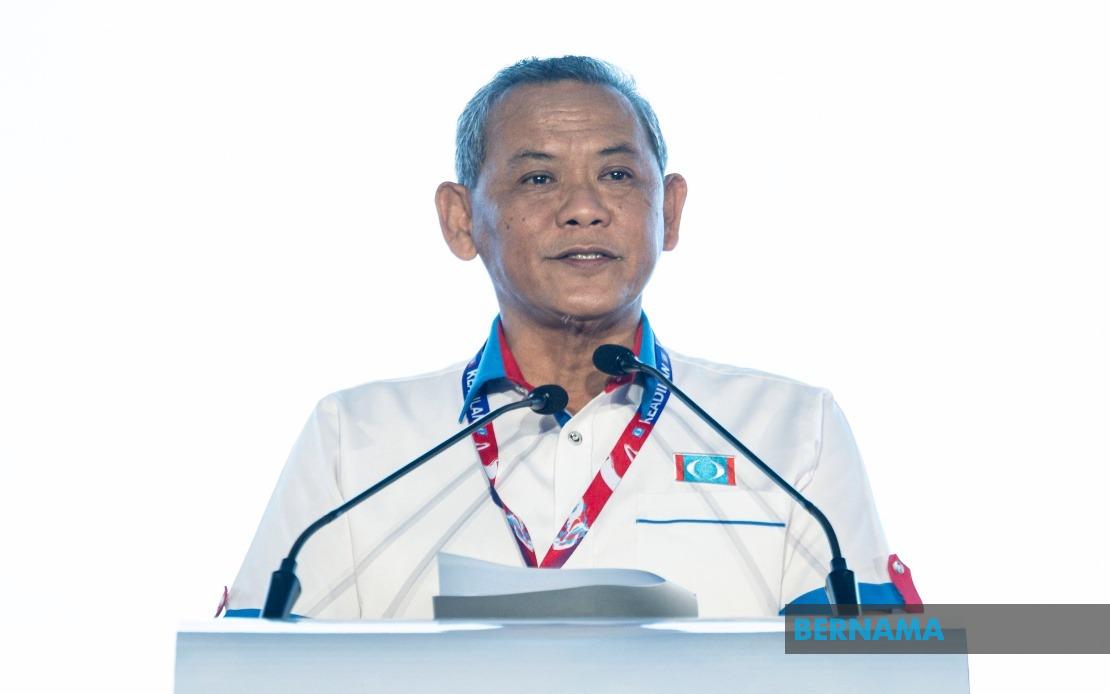
Datuk Seri Aminuddin Harun, who previously held the office of Menteri Besar in Negeri Sembilan, has signalled his readiness to step aside from his position as chairman of the Negeri Sembilan State Leadership Council of Parti Keadilan Rakyat, bowing to mounting pressure from party divisions following a bruising state election result. His announcement came during closing remarks at the PKR National Congress held at Melaka International Trade Centre, underscoring the mounting accountability that party leadership faces in the aftermath of electoral losses across multiple states.
The decision to make way represents a significant moment within PKR's internal governance structure, coming on the heels of demands from six state-level party branch leaders who have publicly called for a comprehensive reassessment of party direction and strategy. These six branch leaders have explicitly asked for Aminuddin to bear responsibility for the outcome, a pressure that has apparently resonated with him sufficiently to compel this public concession. Rather than adopting a defensive posture, Aminuddin chose to acknowledge the legitimacy of their concerns while declining to deflect blame through alternative narratives.
The context for this resignation offer lies in PKR's disappointing performance during the Negeri Sembilan state election held on 1 August. The party, which had hoped to demonstrate electoral viability in a state where it once held the chief executive position, could only secure two of the fifteen seats it contested. This represents a significant setback and validates the criticism that party divisions had been levelling at state-level leadership. The two retained seats were Chuah and Sri Tanjung, indicating that whatever organisational capacity PKR retained was confined to specific constituencies rather than distributed across the state.
Aminuddin's own electoral misfortune compounded the party's troubles. Standing as the PKR candidate in the Linggi state constituency, he came third in a three-way contest, accumulating 6,163 votes. This placed him 2,976 votes behind the Barisan Nasional incumbent Datuk Mohd Faizal Ramli, who polled 9,139 votes. The third-placed finisher, Datuk Zamri Md Said representing Bersatu, received only 391 votes, suggesting that the real contest was between Aminuddin and Faizal. For a figure of Aminuddin's previous stature to lose his own seat understandably intensified internal party frustration and questions about leadership capability.
In his address to the national party congress, Aminuddin emphasised that he was not seeking to evade culpability but rather accepting it as an integral part of his position. He explicitly stated that he would not resort to excuses or attempt to obscure the reasons for the electoral performance. This language indicates a conscious choice to adopt accountability, whether motivated by genuine acceptance of responsibility or by pragmatic recognition that resisting party demands would further damage his standing and that of PKR in Negeri Sembilan.
Critically, however, Aminuddin framed the defeat not as a terminal moment but as a foundation upon which the party could rebuild. He articulated the position that electoral setbacks, whilst clearly undesirable, should serve as catalysts for institutional renewal rather than triggers for demoralisation or defensive retrenchment. This messaging attempts to navigate a difficult terrain: acknowledging failure whilst simultaneously maintaining that the party retains the capacity and resolve to recover, a delicate balance that will determine whether party members view his leadership transition as a prelude to reinvigoration or continued decline.
Aminuddin left the formal decision regarding his resignation to the higher echelons of PKR's central leadership, suggesting that whilst he has signalled his willingness to step down, the party machinery must formally process and approve such a transition. This procedural approach protects both his dignity and allows the party to manage the narrative around leadership changes. The emphasis on party authority over personal decision-making also reflects broader norms within PKR regarding the primacy of institutional structures over individual preference.
The implications for Negeri Sembilan PKR are substantial. The state party has undergone significant upheaval since losing state government in 2018. With Aminuddin stepping back from the chairmanship, the party will need to identify a replacement figure capable of arresting organisational decay and rebuilding electoral appeal. This succession process occurs in a context where PKR faces competitive pressures not only from the long-entrenched Barisan Nasional but also from internal coalition partners and competitor parties such as Bersatu, which fielded candidates in Negeri Sembilan.
For Malaysian observers, this episode illustrates the mechanisms through which opposition parties manage internal accountability and leadership transitions. Unlike the more opaque processes sometimes associated with ruling coalition parties, PKR's approach of allowing branch leaders to publicly articulate dissatisfaction and compelling senior figures to acknowledge such criticism reflects democratic norms within opposition structures. However, the challenge remains whether such accountability translates into improved electoral performance or whether it merely represents symbolic gestures accompanying deeper organisational weakness.
The Negeri Sembilan outcome also reflects broader patterns evident in recent Malaysian elections, where the opposition coalition anchored by PKR has struggled to translate national narratives of reform into consistent electoral gains at state level. The loss of all but two seats in a state where PKR had previously governed suggests that previous incumbent advantages or governance record did not translate into sufficient voter loyalty, raising questions about the party's organisational effectiveness and communication strategies at grassroots level.
Moving forward, Aminuddin's willingness to relinquish his position may provide PKR with an opportunity to recalibrate its approach in Negeri Sembilan. The appointment of fresh leadership untainted by the recent electoral loss could potentially energise party workers and signal to voters that the party is undertaking serious introspection. However, without broader systemic improvements in party organisation, candidate selection, and grassroots engagement, leadership changes alone are unlikely to reverse electoral fortunes in a state where Barisan Nasional retains significant structural advantages.

