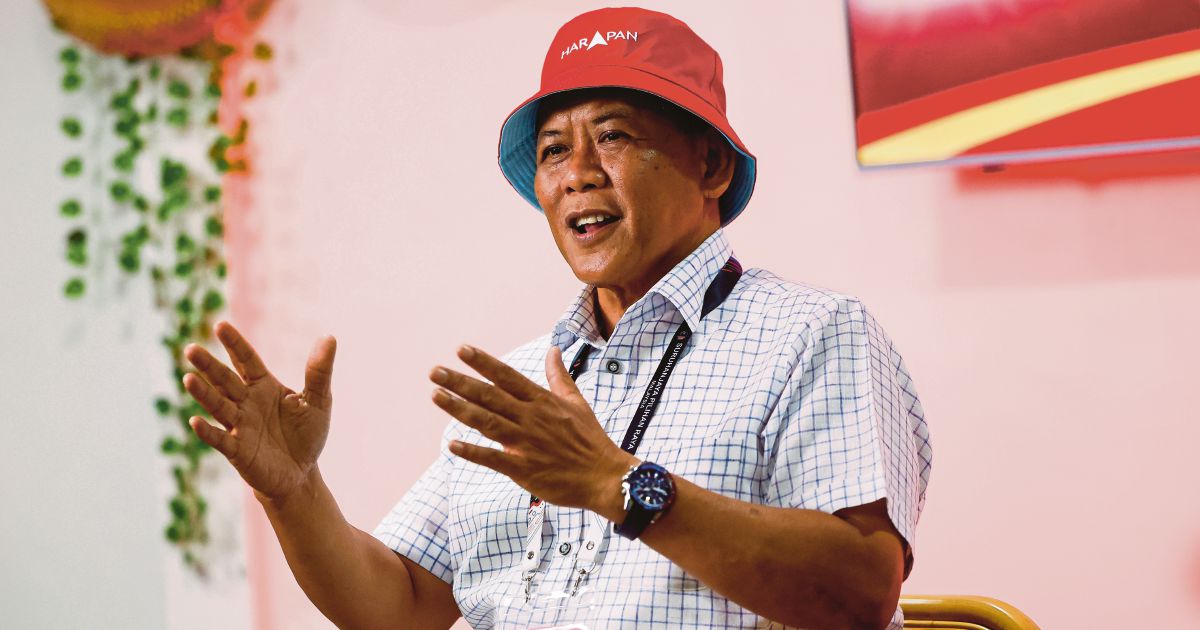
Caretaker Negri Sembilan Menteri Besar Datuk Seri Aminuddin Harun is approaching the 16th state election with confidence rooted in his administration's performance over the past term, betting that the electorate in Linggi will recognise and reward the government's policy achievements when they head to the polls. Speaking in Port Dickson, Aminuddin outlined a strategy centred on demonstrating tangible results rather than making unfounded promises, a posture that reflects the increasingly results-oriented expectations of Malaysian voters in both urban and semi-urban constituencies.
The Linggi seat holds particular significance as both a barometer of sentiment in the Selangor-adjacent district and a key battleground that could influence the overall composition of the state assembly. As the sitting Menteri Besar and the face of continuity in Negri Sembilan governance, Aminuddin's personal performance in the constituency carries outsized weight in determining whether the ruling coalition can consolidate control or faces a challenge from opposition forces seeking to make inroads into the state.
The strategy of leveraging governmental track record represents a calculated gamble in an electoral environment where voter expectations have shifted markedly. Malaysians have become increasingly demanding of concrete evidence of development and service delivery, particularly in matters affecting daily life such as infrastructure maintenance, public services efficiency, and cost of living initiatives. By focusing on what his administration has delivered rather than what it promises to deliver, Aminuddin is attempting to appeal to pragmatism and reduce the perception of empty political rhetoric that often characterises election campaigns across the region.
Negri Sembilan's governance landscape has evolved considerably over recent years, with successive administrations seeking to position the state as a modern, efficiently run jurisdiction that balances development with environmental stewardship. The current government's emphasis on this narrative suggests that Aminuddin intends to frame the election as a choice between proven competence and untested alternatives, a framing that typically resonates with swing voters in constituencies like Linggi where the electorate tends toward deliberative decision-making rather than ideological allegiance.
The Port Dickson setting for Aminuddin's remarks is itself instructive, as it underscores the interconnected nature of Negri Sembilan politics with broader Klang Valley dynamics. Port Dickson, located within the state, serves as a window into how sentiment in more urbanised sections of Negri Sembilan is evolving, and the Menteri Besar's confidence expressed there suggests internal polling or grassroots feedback that indicates receptiveness to his message among the constituency's key demographic segments.
Voters in Linggi encompass a diverse cross-section typical of semi-urban Malaysia, including young professionals, established families, retirees, and small business operators. Each of these groups has distinct concerns regarding governance quality, economic opportunity, and social provision. Aminuddin's invocation of track record appeals implicitly to all these constituencies by suggesting that the government has balanced multiple priorities and will continue to do so, a particularly effective argument when opponents lack an established record of their own.
The confidence Aminuddin has expressed publicly carries both electoral and political implications. Electorally, confident messaging can generate momentum and encourage supporters to turn out, while signalling to wavering voters that the ruling coalition expects to win, which can have a bandwagon effect. Politically, such statements commit the Menteri Besar to delivering a clear victory in his own seat, as anything less would undermine both his personal mandate and his authority to lead the state government in the term ahead.
Negri Sembilan's role within Malaysia's broader political economy cannot be overlooked when assessing the significance of the Linggi contest. As a state positioned between the industrial heartland of Selangor and the more rural areas to its south, Negri Sembilan serves as a testing ground for governing philosophies that blend development ambitions with quality-of-life considerations. The state's recent trajectory in attracting investment, particularly in technology and light manufacturing sectors, forms part of the narrative that Aminuddin can point to when justifying his government's claim to competent stewardship.
The opposition's counter-narrative in Linggi remains less clearly defined in public discourse, though typically such campaigns emphasise either that the incumbents have not delivered sufficiently to disadvantaged segments of the population or that fresh leadership would bring renewed energy and innovation. The extent to which Aminuddin's emphasis on proven track record successfully neutralises such arguments will largely determine the election's outcome in this seat and potentially shape perceptions of momentum heading into counting day across the broader state.
As election day approached, the strategic clarity Aminuddin has brought to his campaign messaging—focusing on achievements rather than promises—reflected a broader maturation in how Malaysian politicians address voters. This approach acknowledges that electorates have become more information-rich and sceptical of hyperbole, preferring instead to evaluate parties and leaders on demonstrable evidence of competent governance. For Negri Sembilan voters in Linggi, Aminuddin's wager was that this pragmatic emphasis would outweigh any desire for change, allowing him to secure both personal re-election and continued leadership of the state.

