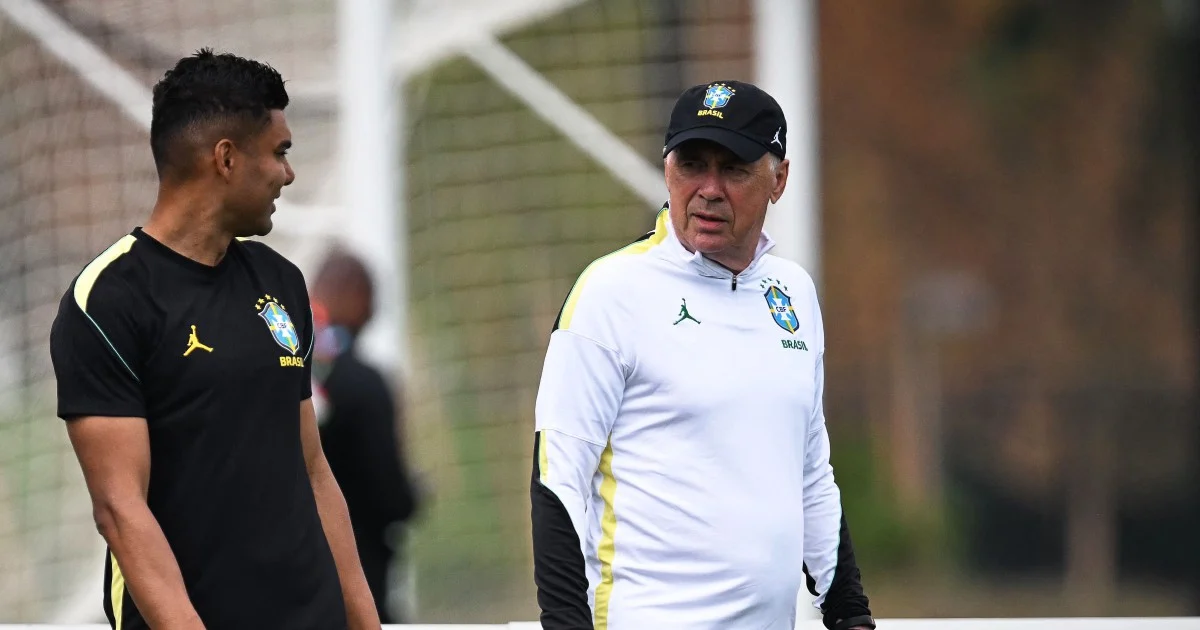
Brazil's World Cup campaign began with considerable fanfare but delivered underwhelming results when they drew 1-1 with Morocco in their opening Group C fixture, creating immediate questions about the squad's ability to convert their status as tournament favourites into dominant displays. However, coach Carlo Ancelotti has refused to allow the result to cast a shadow over his team's prospects, projecting calm confidence as the five-time world champions prepare for Friday's clash with Haiti in Philadelphia.
Ancelotti's measured approach to the Morocco stalemate reflects the experienced coach's understanding of tournament football, where opening matches frequently present unexpected obstacles and technical challenges that teams must navigate strategically. Rather than descending into crisis management, the Italian tactician has framed the Haiti encounter as a genuine opportunity to dissect what went wrong against Morocco and implement corrective measures that allow Brazil to play closer to their established standards of technical excellence and attacking flair.
The draw against Morocco exposed several vulnerabilities within Brazil's structure, particularly in how they managed midfield transitions and responded to Morocco's aggressive pressing during certain phases of play. These defensive lapses in organisation were uncharacteristic of a team assembled with considerable depth in every position, suggesting that the issue was less about individual quality and more about collective understanding and tactical cohesion during the early stages of their tournament.
Haiti, by comparison, presents a markedly different challenge from Morocco's disciplined defensive setup. The Caribbean nation typically operates with fewer resources and technical sophistication than European or North African opposition, meaning Brazil will have greater space and possession opportunities to develop their attacking patterns. This context makes the Haiti fixture ideal for restoring confidence through dominant performance and building the momentum that proved elusive against Morocco.
Ancelotti's calmness amid the early setback carries particular significance given Brazil's historical expectations and the intense scrutiny surrounding the team from media and supporters across South America. The coach's refusal to overreact offers reassurance to his players that one uneven performance does not constitute a systemic crisis, thereby allowing them to approach the Haiti match with focus rather than desperation. This psychological management is often as important as tactical adjustment in tournament football, where tension and pressure can corrode concentration.
The Morocco result also provides Brazil with valuable diagnostic information about their squad's current state and which combinations of players function most effectively together. Ancelotti has the luxury of extensive rotation options, allowing him to refresh certain positions while maintaining tactical continuity, a flexibility that teams lacking comparable depth cannot enjoy. Against Haiti, expect to see potentially different personnel or positioning aimed at solving the specific problems that emerged during the opening encounter.
Geographically and culturally, Brazil's presence in Philadelphia represents the continued global expansion of World Cup hosting beyond traditional strongholds, with significant Brazilian diaspora communities throughout the United States providing additional motivation for enhanced performances on American soil. The venue choice also means Brazil carries particular responsibility to showcase the quality and entertainment value that justifies the tournament's expansion into new markets.
Group C contains several sides whose fortunes depend heavily on how Brazil performs, as the Seleção's dominance within the group was largely assumed before the tournament commenced. The Morocco draw has already fractured those assumptions, creating genuine uncertainty about qualification dynamics and intensity levels within the group. Haiti will approach their fixture with zero pressure but considerable hunger, as teams without genuine medal aspirations often play their most inspired football.
Ancelotti's track record across multiple elite clubs and international competitions demonstrates his capacity to navigate early tournament turbulence without losing sight of longer-term objectives. His experience managing during pressure situations at Real Madrid, Bayern Munich, and Liverpool provides template experience for steadying squads through choppy early passages. Maintaining this equilibrium remains crucial as Brazil seeks to pivot from defensive frustration to attacking dominance.
The Haiti fixture represents a reset button for Brazil's campaign, an opportunity to erase the tactical uncertainty of the Morocco match through superior control, cleaner execution, and convincing scoreline. Ancelotti's measured approach suggests he views this encounter as stepping stone rather than crisis point, positioning his team to learn from early exposure to tournament conditions while building the destructive form required for later stages. Success against Haiti will restore the narrative of inevitability surrounding Brazil's title credentials.
%22%2F%3E%3C%2Fpattern%3E%3C%2Fdefs%3E%3Crect%20width%3D%22100%25%22%20height%3D%22100%25%22%20fill%3D%22url(%23phly23g)%22%2F%3E%3Crect%20width%3D%22100%25%22%20height%3D%22100%25%22%20fill%3D%22url(%23phly23p)%22%2F%3E%3Ctext%20x%3D%2250%25%22%20y%3D%2250%25%22%20text-anchor%3D%22middle%22%20dominant-baseline%3D%22central%22%20fill%3D%22rgba(255%2C255%2C255%2C0.95)%22%20font-family%3D%22Georgia%2C%20'Times%20New%20Roman'%2C%20serif%22%20font-weight%3D%22700%22%20font-size%3D%22194%22%20letter-spacing%3D%22-0.02em%22%3ECabinet%3C%2Ftext%3E%3C%2Fsvg%3E)