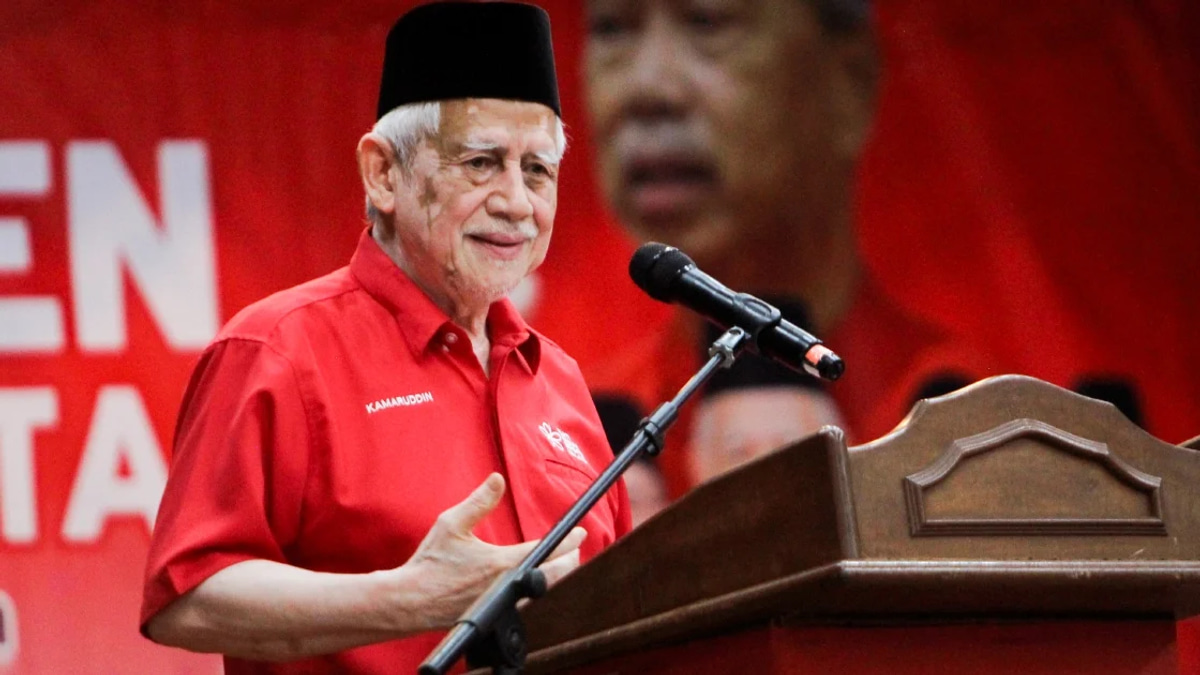
Perikatan Nasional information chief Annuar Musa has stepped in to mediate tensions within the coalition, publicly urging Bersatu leadership to exercise restraint and avoid speaking hastily on contentious matters. His intervention underscores the delicate balance required to maintain cohesion within a political alliance where both PAS and Bersatu wield significant influence, yet neither can dictate terms independently. The cautionary remarks reflect deeper structural challenges within the coalition as it continues to navigate competing interests and policy disagreements.
Annuar's emphasis that neither PAS nor Bersatu can act unilaterally represents a fundamental principle governing the Perikatan Nasional partnership. This stipulation prevents any single component party from leveraging its parliamentary strength or grassroots support to override collective decisions. Such constraints are essential for coalition stability, particularly in Malaysia's fractious political environment where opportunistic realignments can upend governments overnight. Yet this very interdependence also creates friction when parties feel constrained by consensus requirements or believe their concerns are being sidelined.
The timing of Annuar's intervention suggests recent statements from Bersatu figures have triggered concern among senior coalition coordinators. While the specific flashpoint remains somewhat veiled in public discourse, the pattern indicates ongoing disagreements over policy direction, ministerial positions, or campaign strategy. Such friction is not uncommon in Malaysian coalition politics, where parties maintain distinct organisational identities and grassroots bases even while sharing government. However, allowing tensions to spill into public view risks eroding confidence among both coalition partners and the electorate.
Bersatu's position within Perikatan Nasional carries particular weight and complexity. As the party of Prime Minister Anwar Ibrahim, Bersatu commands substantial parliamentary numbers and public profile. Yet Bersatu remains the junior partner in the broader governmental structure, requiring PAS support and cooperation to advance its agenda. This asymmetry occasionally generates frustration, particularly when Bersatu leaders perceive that their contributions to coalition stability are undervalued or when PAS asserts influence over matters Bersatu considers within its domain. Public statements that circumvent consensus-building mechanisms can quickly escalate such grievances.
PAS, meanwhile, operates from a position of considerable strength within Perikatan Nasional, having consolidated control over several state governments and commanding a loyal electoral base. The Islamic party's religious messaging and organisational discipline provide Perikatan with a distinctive identity within Malaysia's political landscape. Yet PAS leaders also understand that their partnership with Bersatu remains essential for maintaining federal government control and advancing shared objectives. This mutual dependence, while creating stability, also generates resentment when either party feels the other is accumulating disproportionate benefits or influence.
For Malaysian observers, the coalition's internal dynamics carry consequences extending far beyond leadership personalities or bureaucratic turf wars. Perikatan Nasional governs with a tenuous parliamentary majority, requiring discipline and unity to pass legislation and withstand opposition manoeuvres. Coalition fragmentation or public acrimony between PAS and Bersatu would create opportunities for opposition forces to exploit, potentially destabilising the government. Furthermore, the coalition's ability to implement its policy agenda—ranging from economic reform to institutional strengthening—depends on sustained cooperative effort across party lines. Public bickering signals weakness and invites scrutiny of the government's competence and strategic vision.
Annuar Musa's intervention also reflects his role as keeper of coalition messaging and strategic communications. As information chief, he bears responsibility for crafting narratives that reinforce coalition unity while managing diverse party interests. His public appeal for restraint serves multiple purposes: it acknowledges tension without escalating it, reaffirms coalition principles, and establishes an expectation that future disagreements will be resolved through proper channels rather than through media posturing. This diplomatic approach prioritises stability over confrontation, accepting that coalition politics inherently involves friction that must be managed rather than eliminated.
The broader context includes Southeast Asia's experience with coalition governance, where several nations have witnessed the dramatic collapse of ostensibly stable governments due to partner defections or irreconcilable internal disputes. Thailand's repeated political instability and Indonesia's periodic coalition tensions offer cautionary examples. Malaysia's own history demonstrates both successful coalition management under previous administrations and the catastrophic breakdown that preceded Perikatan Nasional's formation. These precedents inform contemporary leaders' awareness that coalition cohesion requires constant attention and skilled management.
For international observers and investors, coalition stability signals governance capacity and predictability. Malaysia's economic recovery and regional standing depend partly on the perception that the government possesses sufficient stability to execute long-term plans and navigate external challenges. Public displays of coalition unity—while masking inevitable internal disagreements—reassure stakeholders that policymaking will continue without disruption. Conversely, visible coalition friction generates uncertainty about the government's durability, potentially affecting investment decisions and international relations.
Moving forward, Annuar's cautionary approach suggests Perikatan Nasional leadership will likely intensify behind-the-scenes coordination mechanisms to resolve disputes before they become public spectacles. This might involve formalising consultation procedures, establishing conflict resolution committees, or developing clearer protocols for public statements on contentious issues. Such institutional refinements represent normal evolution in coalition governance, reflecting lessons learned from earlier tensions.
The challenge for both PAS and Bersatu involves balancing legitimate pursuit of distinct party interests with the collective responsibility to maintain governmental functionality. This requires leaders who understand that short-term factional victories achieved through public confrontation often carry long-term costs to coalition stability. Annuar's message—to calm nerves and speak judiciously—essentially asks both parties to prioritise the coalition's viability over immediate tactical gains, a calculation that should favour their long-term strategic positioning in Malaysian politics.