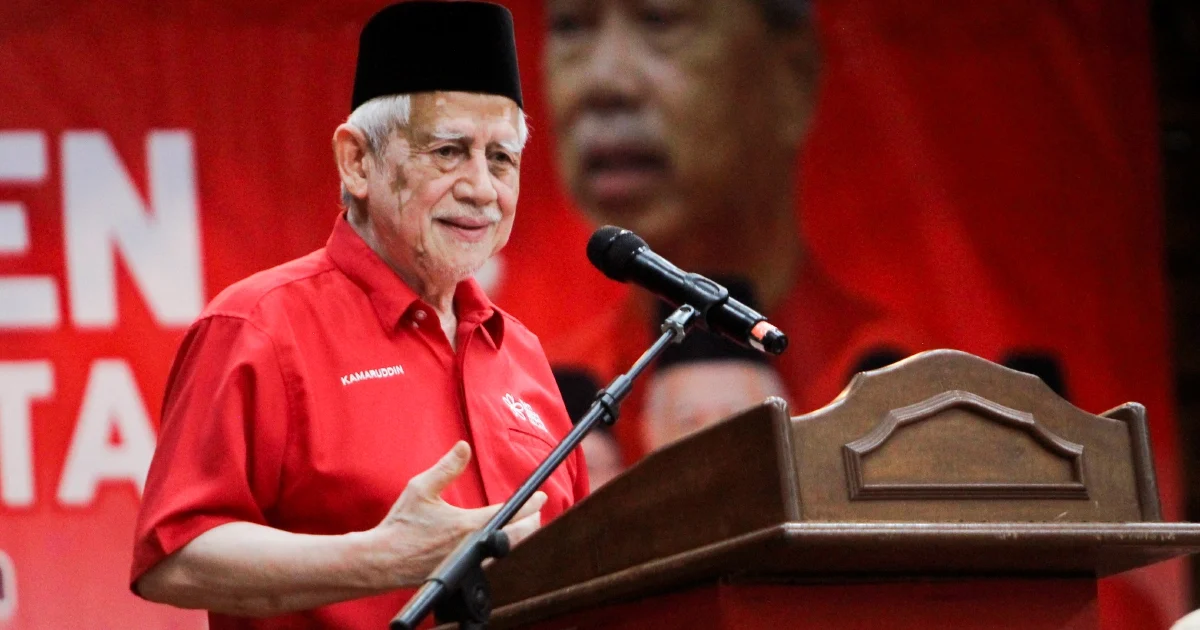
Perikatan Nasional has announced significant changes to its upper echelon, dropping Datuk Seri Mohamed Azmin Ali and Datuk Dr Mohd Radzi Md Jidin from its leadership configuration. Yet the decision appears to have created barely a ripple in Kelantan, where the state chapter of Bersatu has greeted the reshuffle with equanimity and a steady hand, suggesting the move carries limited internal friction within the coalition's Kelantan machinery.
The removal of both figures represents a recalibration of the coalition's power structure at the national level. Azmin Ali, a prominent political operator who has navigated between parties and held significant roles, and Radzi, who carried substantial administrative responsibilities, had occupied central positions within PN's hierarchy. Their departure signals either a strategic repositioning to consolidate remaining leadership or a response to internal pressures within the wider coalition framework that binds together parties with sometimes competing interests.
Kelantan's measured response reflects deeper dynamics within Malaysia's coalition politics. The state chapter, operating within a largely homogeneous political landscape where Bersatu forms part of a broader Malay-Muslim political alliance, may perceive national leadership changes as distant from immediate state concerns. Kelantan Bersatu's calm demeanour suggests either confidence in existing state structures or an assessment that the national shuffle does not materially threaten local operations or representation.
This dynamic highlights a recurring pattern in Malaysian federal politics where coalition adjustments at the top rarely translate into immediate grassroots disruption. State-level parties often maintain their organisational integrity and voter coalitions even when national hierarchies undergo significant alterations. Kelantan, as a state with particular political characteristics and long-established support bases, may operate with sufficient autonomy to weather leadership changes that occupy national news cycles without destabilising local party machinery.
The broader context involves Perikatan Nasional's ongoing evolution since its formation as a political alliance. The coalition originally emerged as an alternative formation and has since sought to establish itself as a consequential political force. National leadership decisions typically respond to parliamentary arithmetic, intra-coalition negotiations, or assessments about public positioning. The removal of Azmin and Radzi likely reflects calculations about effectiveness, coalition dynamics, or strategic repositioning ahead of future political contests.
For Kelantan specifically, the state has historically maintained distinct political characteristics within larger federal coalitions. The state's political economy, religious considerations, and established voting patterns create conditions where national restructuring may have limited immediate consequence. Bersatu's presence in Kelantan, within a coalition that includes other major components, means that leadership changes at one level need not cascade through state operations or voter allegiances.
The measured reaction from Kelantan Bersatu also suggests institutional maturity within the party's state structures. Rather than fracturing or expressing alarm, the state chapter appears to be proceeding with established operations, implying either that party structures exist independently of individual leaders or that state leadership perceives no existential threat from the national reorganisation. This stability can be valuable in Malaysian politics, where volatility often creates openings for political opponents.
National leadership changes within coalitions frequently generate speculation about broader realignments, but their actual impact depends heavily on specific circumstances. In Kelantan's case, factors including the state government's composition, the relative strength of coalition partners, and existing voter preferences will ultimately determine whether the PN leadership reshuffle produces consequential effects. The unperturbed response suggests state leadership believes current arrangements remain sound.
Looking forward, the significance of this episode may lie less in dramatic upheaval and more in demonstrating how Malaysian political coalitions compartmentalise change. National adjustments occur within frameworks where state chapters, local constituencies, and existing political arrangements maintain substantial continuity. Kelantan Bersatu's composure in face of the reshuffle illustrates this reality, showing that even significant leadership transitions at coalition level need not destabilise the intricate structures through which Malaysian political parties maintain power and representation across the country's diverse states.

%22%2F%3E%3C%2Fpattern%3E%3C%2Fdefs%3E%3Crect%20width%3D%22100%25%22%20height%3D%22100%25%22%20fill%3D%22url(%23ph1fu7wg)%22%2F%3E%3Crect%20width%3D%22100%25%22%20height%3D%22100%25%22%20fill%3D%22url(%23ph1fu7wp)%22%2F%3E%3Ctext%20x%3D%2250%25%22%20y%3D%2250%25%22%20text-anchor%3D%22middle%22%20dominant-baseline%3D%22central%22%20fill%3D%22rgba(255%2C255%2C255%2C0.95)%22%20font-family%3D%22Georgia%2C%20'Times%20New%20Roman'%2C%20serif%22%20font-weight%3D%22700%22%20font-size%3D%22170%22%20letter-spacing%3D%22-0.02em%22%3EGabungan%3C%2Ftext%3E%3C%2Fsvg%3E)