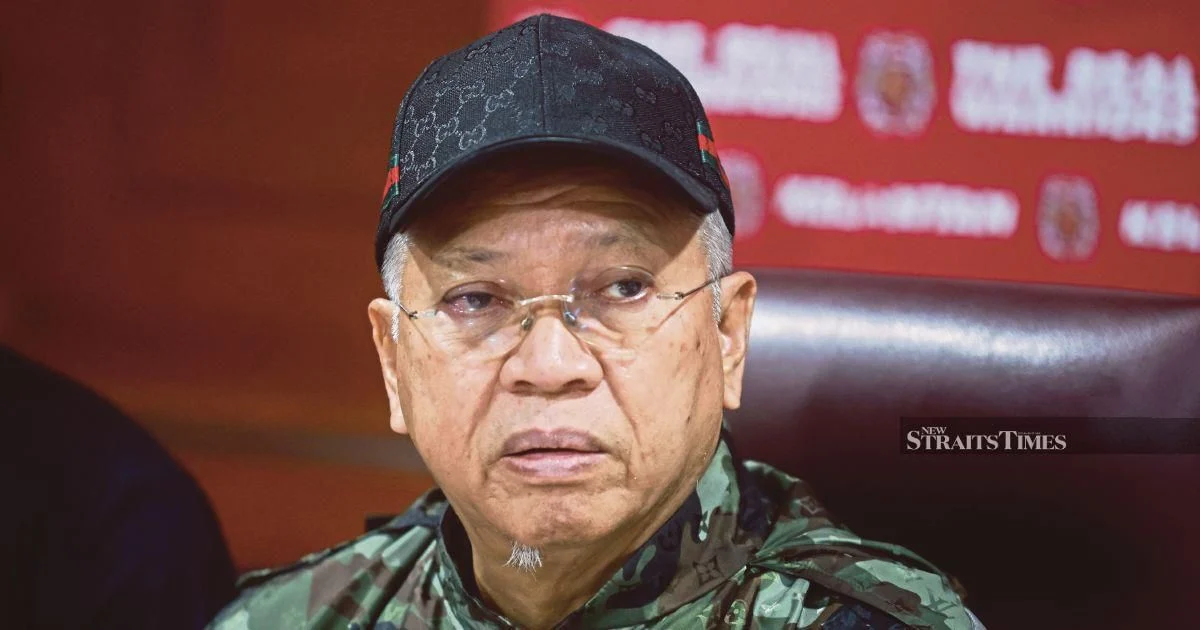
The Perikatan Nasional coalition continues to grapple with internal tensions as Tan Sri Annuar Musa publicly acknowledged his inability to bridge the widening gap between PAS and fractious elements within Bersatu. The Finance Minister's candid admission, made in Kota Baru, underscores the mounting challenges confronting the supposedly unified political bloc that has formed the backbone of Malaysia's federal administration since the 2022 general election.
Annuar's disclosure represents a significant moment of transparency regarding the coalition's struggles, coming at a time when observers have increasingly noted the fragility of the partnership binding these parties together. His personal intervention attempts suggest the fractures run deeper than public statements from party leadership have previously indicated, touching on fundamental disagreements that resist conventional political problem-solving. The revelation that a senior figure of Annuar's stature and political influence found his efforts ineffective raises troubling questions about the mechanism through which coalition disputes are typically resolved in Malaysia.
The relationship between PAS and Bersatu has historically carried inherent tensions, rooted in competing ideological orientations and divergent regional power bases. While both parties claim to champion Malay-Muslim interests, their approach to governance and coalition strategy has frequently diverged. PAS maintains a stronger emphasis on religious governance principles, whereas Bersatu under Muhyiddin Yassin's leadership positions itself as a more technocratic, multiethnic alternative. These philosophical differences have created fault lines that intensified during periods of political uncertainty.
The internal divisions within Bersatu itself have grown increasingly conspicuous, particularly following the defection of prominent members and disagreements over party direction. Multiple factions within Bersatu advocate conflicting positions regarding coalition priorities and policy emphasis, effectively rendering the party a contested ground rather than a cohesive political force. This internal fragmentation has complicated efforts by other coalition members to negotiate coherent party positions, forcing figures like Annuar to navigate multiple competing leadership claims simultaneously.
For Malaysian political stability, coalition dysfunction carries immediate practical consequences. The government's legislative agenda depends on maintaining sufficient parliamentary backing to pass budgets, pass legislation, and navigate confidence votes. When constituent parties of a coalition lose internal discipline or fragment into competing camps, the government's ability to execute its programme becomes uncertain. This uncertainty cascades through the bureaucracy, complicates long-term policy planning, and weakens Malaysia's negotiating position on issues requiring sustained government commitment and credibility.
Regionally, the instability within Perikatan Nasional carries broader implications for Southeast Asian political dynamics. Malaysia's internal political developments influence the broader trajectory of ASEAN's geopolitical positioning and intra-regional relations. Coalition governments that prove internally unstable struggle to project consistent foreign policies or maintain stable bilateral relationships with regional neighbours. Governments consumed by internal management crises cannot effectively advocate for Southeast Asian interests in global forums or engage confidently with strategic partners.
Annuar's admission also signals potential divisions among Perikatan's leadership regarding the diagnosis of and solution to coalition problems. If senior figures disagree fundamentally about the source of tensions or the appropriate remedies, then technical mediation becomes insufficient. Coalition management ultimately requires underlying agreement about coalition objectives and mutual commitment to preserving the partnership. When that foundation weakens, even experienced political operators face insurmountable obstacles in their reconciliation efforts.
The public nature of Annuar's acknowledgment carries political messaging implications that warrant careful analysis. By openly admitting failure to reconcile differences, Annuar positions himself as having attempted good faith solutions while delegating responsibility for failure to other actors. This rhetorical move protects his personal political standing whilst simultaneously flagging to observers that the problems underlying PN tensions exceed the capacity of conventional coalition management to resolve. It represents a subtle signal that structural incompatibility may exist between partner parties.
Looking forward, the coalition faces a critical decision regarding its operational framework. It can attempt to proceed as a governing arrangement despite unresolved internal tensions, relying on bare parliamentary majorities and accepting the inherent fragility this entails. Alternatively, senior coalition figures could establish more formal dispute resolution mechanisms with established procedures for addressing inter-party disagreements and protecting the coalition's integrity. Malaysia's history with coalition governments suggests that ambiguity regarding crisis management procedures often precipitates the crises that those procedures were meant to prevent.
The broader electorate watching these developments will interpret Annuar's candour through competing lenses. Supporters of Perikatan may view his transparency as encouraging, demonstrating that leadership recognises problems and is taking them seriously. Critics may view the same admission as confirmation that the coalition lacks the fundamental cohesion necessary for effective governance. Either interpretation carries implications for public confidence in government and political participation in upcoming electoral contests at state and federal levels.
Annuar's failed reconciliation attempts highlight the distinction between political coalition formation and coalition maintenance. Building coalitions requires agreement on relatively narrow matters—typically cabinet distribution and broad policy direction. Maintaining coalitions over extended periods demands deeper compatibility and shared commitment to coalition survival. When that deeper compatibility erodes or fails to materialise, maintaining coalition discipline becomes a zero-sum exercise in political leverage rather than an exercise in consensus-building. Perikatan Nasional's experience suggests the coalition may have reached that testing point.