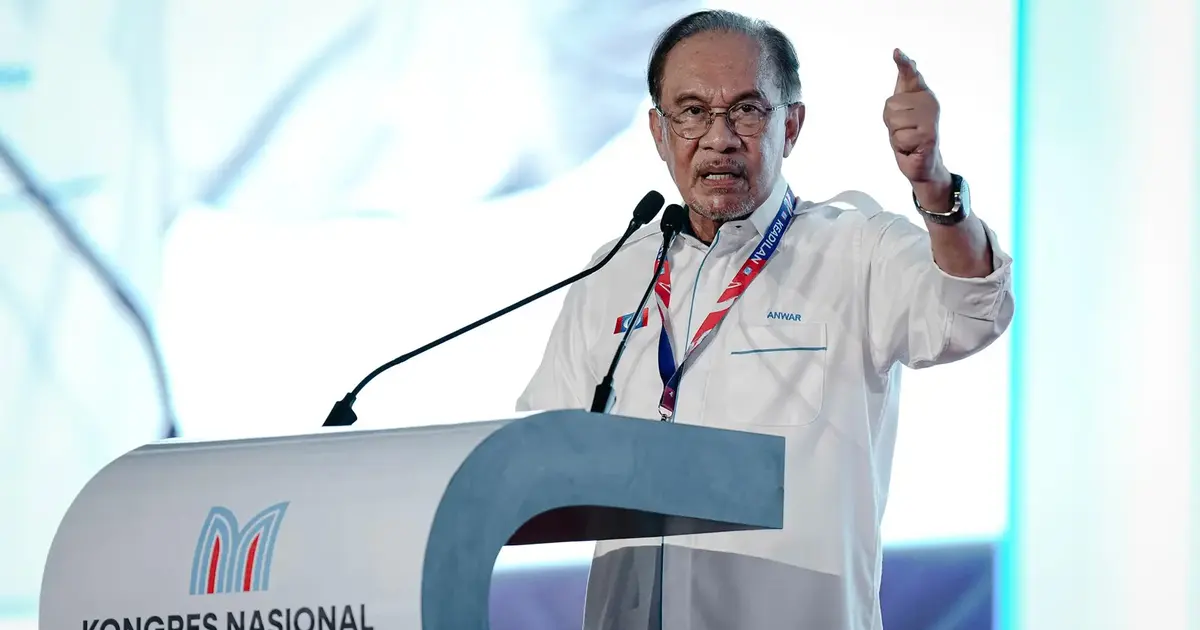
Prime Minister Anwar Ibrahim has unveiled a fresh round of development funding aimed at bolstering parliamentary constituencies across Malaysia, with each of the country's 222 constituencies set to receive an additional RM1 million. The announcement comes as the premier directly confronted persistent allegations that his administration has been strategically starving opposition-held states of crucial infrastructure and development resources—a charge Anwar firmly rejected as both inaccurate and politically motivated.
The distribution of these extra funds represents a significant fiscal commitment extending beyond the government's routine development allocation mechanisms. By directing resources to every constituency regardless of political affiliation, the announcement appears designed to demonstrate equitable governance principles and counter narratives that suggest partisan discrimination in development spending. This move reflects broader efforts within Anwar's administration to rebuild trust with voters in areas where the opposition holds sway, particularly in states such as Perak, Kelantan, and Terengganu, where suspicions of funding inequality have persisted.
Anwar's categorical rejection of claims concerning preferential treatment carries particular weight given Malaysia's history of contentious federal-state relations over resource allocation. In past political cycles, opposition-controlled administrations have frequently complained of insufficient development funding and infrastructural investment, arguing that the federal government has deliberately constrained budgets to weakening opposition strongholds. These grievances have become deeply embedded in Malaysian political discourse, shaping voter perceptions of fairness and institutional impartiality.
The timing of this announcement reflects the government's recognition that developmental equity remains a critical political vulnerability. As Malaysia navigates a complex political landscape characterized by coalition dynamics and shifting alliances, demonstrating tangible commitment to nationwide development becomes essential for maintaining legitimacy. The RM1 million per constituency initiative, while not dramatically transforming individual allocations compared to state budgets, nonetheless carries symbolic importance by visibly affirming that opposition areas receive comparable investments.
For constituency-level representatives across Malaysia, this additional funding opens new possibilities for local infrastructure projects, community programmes, and public amenities. Members of Parliament from both government and opposition benches will have discretionary capacity to address grassroots priorities identified by their constituents, whether in urban centres or rural localities. The flexibility afforded by this allocation allows for responsive governance attuned to specific constituency needs rather than top-down prescriptive spending.
Opposition politicians have historically scrutinized development funding distributions with particular intensity, viewing budgetary allocations as indicators of government commitment to equitable treatment. By announcing universal per-constituency disbursement, Anwar's government removes much of the discretion previously available for targeted deprioritization of opposition areas. This structural change constrains political actors' ability to weaponize development funding as a partisan tool, though questions about qualitative differences in project implementation and timeliness may persist.
The announcement also occurs within Malaysia's broader fiscal consolidation efforts and economic management frameworks. As the government balances competing budgetary demands spanning defence, healthcare, education, and infrastructure, securing RM222 million for constituency-wide distribution reflects prioritization of political stability and voter satisfaction alongside macroeconomic considerations. This allocation, while substantial, represents a manageable proportion of Malaysia's overall federal budget and development expenditure.
Regional implications deserve consideration as well. Southeast Asian governments broadly face questions about development equity between ruling-party and opposition areas, making Malaysia's approach instructive for other democracies in the region navigating similar political tensions. Thailand, Indonesia, and the Philippines have each grappled with accusations of partisan development spending, rendering Malaysia's explicit commitment to universal per-constituency funding potentially noteworthy within the regional governance context.
Anwar's forceful denial of withholding allegations signals his administration's sensitivity to perceptions of institutional bias. In Malaysian politics, where voter calculations increasingly factor in perceived fairness and meritocratic governance, such denials carry strategic importance beyond mere public relations. By pairing the denial with concrete fiscal commitment, Anwar attempts to transform rhetorical claims into material reality that opposition constituencies can observe and measure.
Looking ahead, the practical implementation of these allocations will substantially determine their political effectiveness. Rapid, transparent disbursement to opposition constituencies may substantially improve perceptions of governmental fairness, whilst delays or complications could reinforce suspicions of selective treatment. The administrative mechanisms through which these funds flow—parliamentary representation channels, federal-state coordination frameworks, or direct constituency allocations—will merit close scrutiny from both opposition monitors and civil society observers.
This funding announcement ultimately reflects the maturation of Malaysian electoral politics toward greater institutionalized fairness mechanisms. Rather than relying entirely on informal agreements or ad-hoc negotiations, the government has chosen to establish standardized, universal allocation criteria. Whether this approach successfully neutralizes accusations of partisan development spending will become evident as constituencies across the political spectrum implement their allocations and communities experience tangible outcomes from enhanced funding availability.

