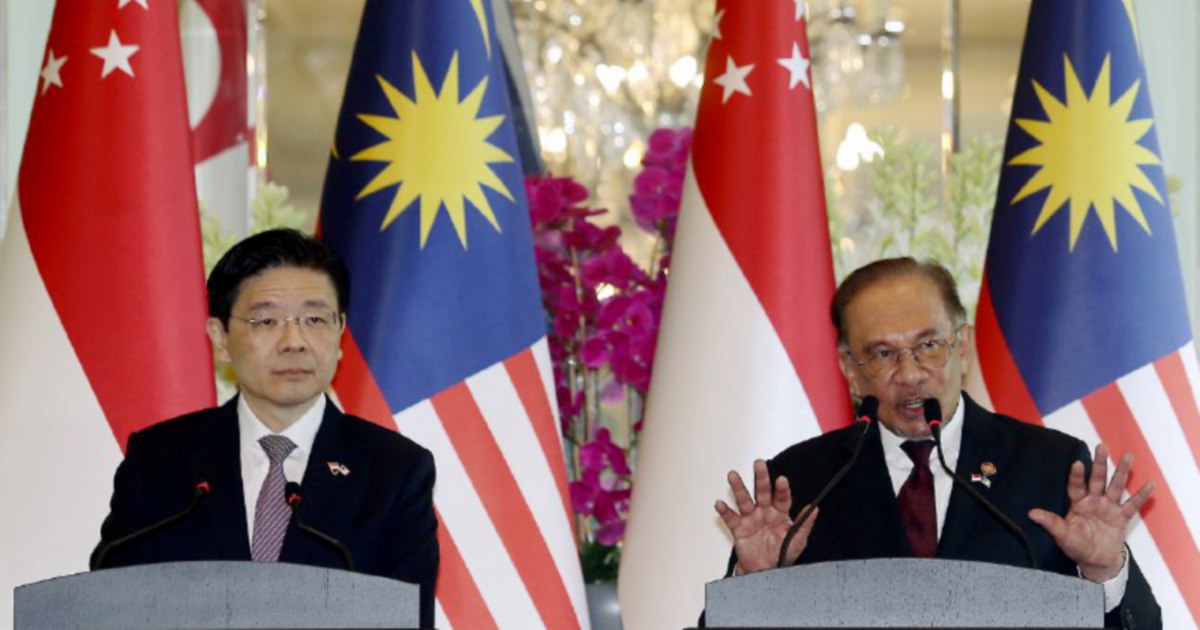
Malaysia's Prime Minister Datuk Seri Anwar Ibrahim and Singapore's Prime Minister Lawrence Wong are set to publicly present the master plan for the Johor-Singapore Special Economic Zone (JS-SEZ) at the Annual Leaders' Retreat scheduled for December. The announcement, expected to take place in Batu Pahat, signals an important breakthrough in one of Southeast Asia's most strategically significant cross-border economic initiatives, ending months of speculation about the framework that will govern this ambitious venture.
The JS-SEZ has long been anticipated as a transformative project for both nations, representing a rare opportunity for such large-scale bilateral infrastructure and economic integration. The special economic zone is envisioned as a mechanism to harness complementarities between Johor's labour resources and industrial capacity on one side, and Singapore's capital, expertise, and global financial networks on the other. The December unveiling of the master plan will provide the first comprehensive public details on how the two governments intend to structure investment incentives, labour regulations, taxation frameworks, and land allocation within the designated zone.
The timing of the announcement at the Annual Leaders' Retreat underscores the political weight both governments are attaching to the project. These retreats typically serve as settings for addressing major bilateral matters and setting strategic direction for the year ahead. Choosing this high-profile forum suggests that Malaysia and Singapore view the JS-SEZ master plan as foundational to their medium and long-term economic relationship, and wish to signal stability and progress to international investors, financial markets, and regional partners.
For Malaysia, particularly Johor, the special economic zone represents an opportunity to accelerate state-level development and position the region as a primary industrial and logistics hub in the region. Johor's geographic proximity to Singapore and its existing manufacturing base make it an obvious location for such collaboration. The master plan is expected to address critical questions about whether the zone will prioritize semiconductor manufacturing, petrochemicals, advanced logistics, digital services, or a diversified portfolio of sectors. The resolution of these sectoral priorities will shape investment flows and employment creation across the state for the next decade.
Singapore's participation in the JS-SEZ reflects its ongoing strategy to maintain economic dynamism despite physical space constraints and elevated domestic costs. By anchoring manufacturing and processing activities in nearby Johor while retaining high-value design, finance, and research functions domestically, Singapore can reduce regional economic disparities while deepening the integration of both economies. The arrangement also allows Singapore to serve as a gateway for Johor-based production into global supply chains, leveraging the city-state's extensive trade agreements and established presence in international markets.
The master plan's contents will likely address governance structures, specifying which Malaysian and Singaporean agencies will oversee investment approvals, dispute resolution, and compliance monitoring. One critical element will be the fiscal terms offered to investors—corporate tax rates, import-export duties, and land lease pricing will heavily influence whether multinational corporations choose to establish operations in the JS-SEZ rather than competing locations. The regulatory framework, particularly regarding labour standards and environmental compliance, will also be crucial in determining the zone's appeal to environmentally and socially conscious investors.
Investor expectations have been building since preliminary discussions about the JS-SEZ began several years ago. The master plan will need to address longstanding uncertainties about land acquisition mechanisms, whether existing Johor residents will be displaced, and what consultation processes affected communities can expect. Transparency on these issues will be essential to preventing backlash that could undermine the project's legitimacy or timeline. Companies evaluating substantial capital commitments will want certainty about these foundational issues before making final investment decisions.
The December announcement also carries implications for Malaysia's broader economic positioning in Southeast Asia. Deepening integration with Singapore through the JS-SEZ demonstrates Malaysia's commitment to pragmatic, market-oriented development even amid periodic bilateral tensions over historical issues. This signals to other regional economies that Malaysia can compartmentalize diplomatic friction and maintain cooperation on mutually beneficial economic projects. Such a posture strengthens Malaysia's standing as a reliable partner in regional economic initiatives and makes it attractive to multinational investors seeking stable, predictable operating environments.
The success of the JS-SEZ will partly depend on how effectively it navigates the competing interests of multiple stakeholders. Malaysian workers and businesses in Johor will need genuine benefit from the zone's operations, not merely observe wealth accruing to foreign firms and shareholders. Singapore will need assurance that its investments and expertise are appropriately protected and compensated. The national governments must balance the appetite of multinational corporations for maximum flexibility with legitimate public interest in environmental protection and labour rights. The master plan will signal whether these tensions have been adequately addressed.
Regional observers across Southeast Asia will scrutinize the JS-SEZ framework as a model for future cross-border special economic zones. Success could inspire similar ventures between Indonesia and Thailand, or between Cambodia and Vietnam, demonstrating that deepening economic integration can occur even among neighbours with historical grievances. Conversely, a poorly designed or implemented master plan could discredit the special economic zone concept in Southeast Asia for years, making governments more hesitant to pursue bold regional integration initiatives.
The December unveiling represents a crucial juncture where the JS-SEZ transitions from strategic concept to operational reality. The quality of the master plan's design, the credibility of commitments made by both governments, and the economic incentives embedded within it will determine whether the zone becomes a genuine engine of growth or a modest initiative that fails to achieve its transformative potential. Investors, workers, and regional observers will be watching closely as Anwar and Wong present the details that will govern one of Southeast Asia's most significant bilateral economic projects.

