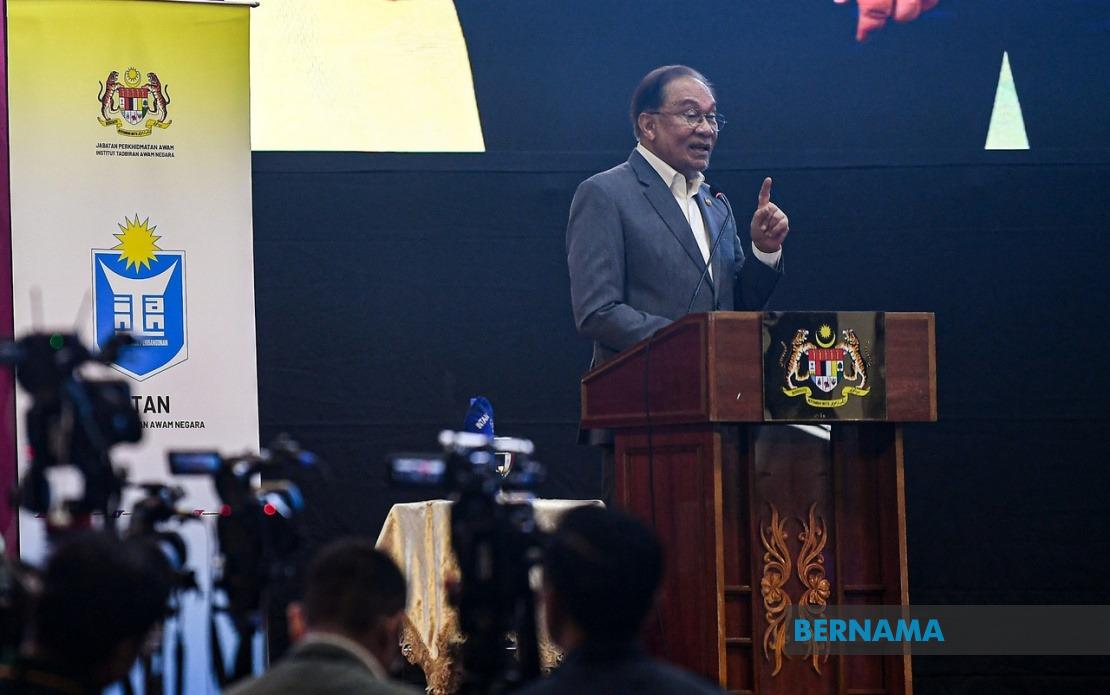
Prime Minister Datuk Seri Anwar Ibrahim has offered an apology if the firm and direct tone he adopts when addressing civil servants has been interpreted as inappropriately harsh or unbecoming of his office. Speaking during an engagement with Central Zone civil servants at Universiti Islam Selangor, accompanied by Chief Secretary to the Government Tan Sri Shamsul Azri Abu Bakar, Anwar acknowledged that multiple individuals have counselled him to moderate his vocal delivery and adopt a softer demeanour when communicating with public audiences and officials.
The Prime Minister's candid reflection came via a video message subsequently circulated through Facebook, in which he articulated the tension between his natural communicative style and the expectations surrounding his elevated position. Anwar noted that colleagues and observers have repeatedly advised him that his current role demands a more measured, diplomatic approach—one characterised by restraint in volume, warmth in tone, and genuine engagement with the concerns of those he addresses. He conceded that he is making conscious efforts to align his presentation with these standards, recognising the symbolism and influence embedded in prime ministerial communication.
Yet Anwar's apology was conditional, grounded in his assertion that certain issues trigger an emotional response that compels him to speak with conviction and urgency. He explained that when matters penetrate to the core of his principles and values, maintaining a perpetually calm demeanour becomes psychologically difficult. Rather than characterising his intensity as a deliberate choice, he presented it as an authentic expression of genuine feeling—a manifestation of sincere investment in the outcomes he seeks to achieve. This framing suggests that while Anwar is willing to accommodate feedback about his presentation, he believes the substance of his passionate engagement carries legitimacy and purpose.
Central to Anwar's defence of his communicative approach is the contention that his firm tone underscores the criticality of the civil service's institutional role. The public sector apparatus, in his view, constitutes the machinery through which government policies are operationalised and national development programmes are advanced. Anwar's intensity when addressing civil servants, from this perspective, reflects his conviction that their performance directly determines whether the administration's agenda succeeds or falters. By speaking with emphasis and directness to this constituency, he positions himself as someone who understands the weight of their responsibilities and refuses to minimise the stakes involved.
This incident illuminates ongoing tensions within Malaysia's political culture regarding leadership style and institutional formality. Anwar's background—marked by decades in parliament, activism, imprisonment, and return to high office—has shaped a communicative persona distinct from more conventionally reserved predecessors. His willingness to express emotion, raise his voice, and engage in pointed dialogue reflects both his personal temperament and his political evolution. For many supporters, this authenticity and directness represent refreshing alternatives to perceived bureaucratic detachment. For critics or those accustomed to more formal leadership presentations, the intensity may signal a departure from established decorum.
The civil service represents a particularly sensitive audience for any Prime Minister's messaging, given the sector's scale, influence, and institutional conservatism. With hundreds of thousands of employees dispersed across federal and state agencies, the public sector shapes daily interactions between government and citizens across health, education, taxation, licensing, infrastructure, and countless other domains. Anwar's emphasis on the importance of direct, forceful communication to this group reflects his belief that administrative performance requires not merely compliance but genuine commitment and energy. In addressing Central Zone officials, he was speaking to leaders and practitioners responsible for translating ministerial directives into tangible outcomes affecting millions of Malaysians.
The broader Malaysian context for this exchange involves ongoing discussions about governance standards and public sector accountability. Since assuming office, Anwar has prioritised anti-corruption measures, efficiency improvements, and alignment of government operations with developmental priorities. His firm communications to civil servants can be understood as attempts to galvanise the bureaucracy toward these objectives, signalling that complacency or mediocrity are incompatible with his administration's expectations. Whether this approach proves more or less effective than alternative styles remains an open question for observers and academic analysts of institutional dynamics.
Anwar's apology also reflects a degree of political self-awareness regarding the constraints of his position. Despite his substantial influence as Prime Minister, he operates within frameworks of institutional expectation, media scrutiny, and public perception that shape how his actions and utterances are interpreted. By acknowledging the feedback he has received and apologising conditionally, he demonstrates responsiveness to public sentiment while maintaining the principled stance that authentic leadership occasionally requires passionate expression. This balancing act—acknowledging legitimate concerns about decorum while defending the substance of his engagement—represents a common challenge for political leaders seeking to maintain both effectiveness and appropriate gravitas.
The incident carries implications extending beyond interpersonal dynamics between the Prime Minister and the civil service. It touches upon fundamental questions about how Malaysian governance will evolve under Anwar's stewardship, what standards of communication and interaction will characterise his administration, and how the public sector will respond to leadership that prioritises directness and accountability. These questions resonate throughout Southeast Asia's broader political landscape, where tensions between traditional hierarchical and bureaucratic conventions and newer demands for transparency, responsiveness, and performance-based governance create ongoing friction.

