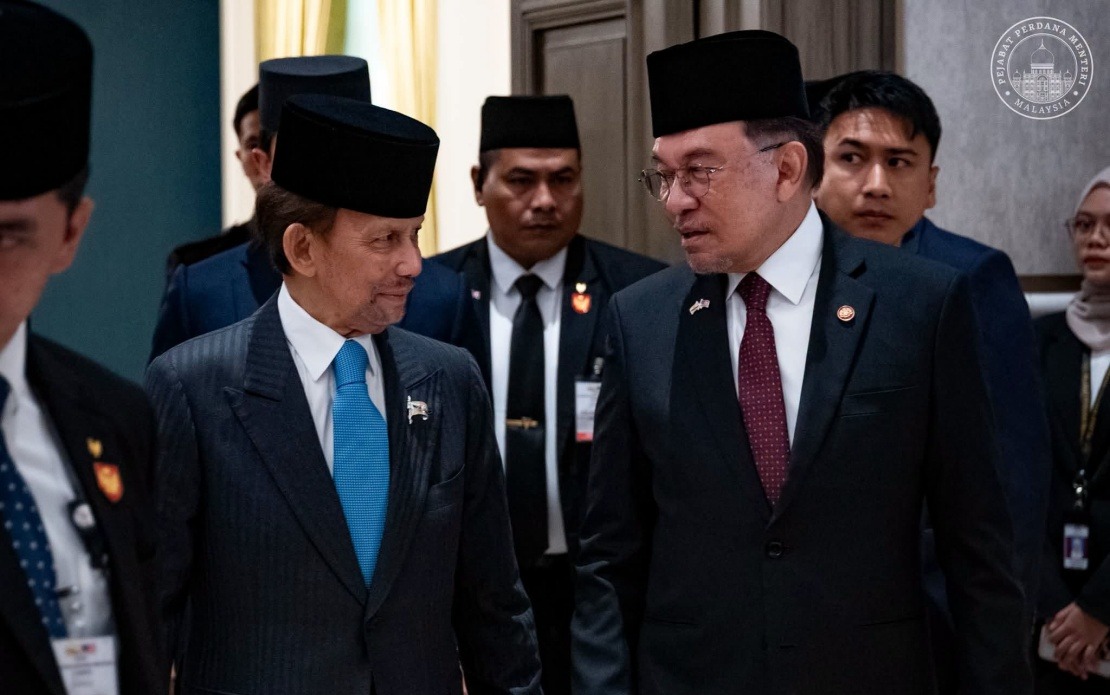
Prime Minister Datuk Seri Anwar Ibrahim received a personal call from Sultan Hassanal Bolkiah of Brunei Darussalam on Monday, with the Brunei monarch enquiring directly about the Malaysian leader's health and extending his prayers for a speedy recovery. The gesture, conveyed through a Facebook post by Anwar, underscores the close working relationship maintained between the two neighbouring Southeast Asian nations and their respective leadership, reflecting the strong bilateral ties that have been cultivated over decades of diplomatic engagement.
Anwar responded to the Sultan's expression of concern with his own heartfelt wishes, stating that he reciprocated the goodwill by praying for Sultan Hassanal Bolkiah's continued good health and for him to remain under divine protection and mercy. Such exchanges of courtesies between heads of state are customary in the region and often serve as important affirmations of solidarity and mutual respect, particularly when one leader faces a period of temporary medical vulnerability.
The timing of the Sultan's call comes shortly after Anwar underwent an elective laparoscopic surgical procedure performed last Monday to address a para-umbilical hernia condition. The minimally invasive nature of the operation meant that the Prime Minister's recovery was expected to be relatively swift, though he has remained under the close supervision of a dedicated team of medical specialists to ensure proper healing and to monitor for any post-operative complications. The decision to proceed with the procedure was taken as part of routine medical management rather than in response to an acute emergency.
Despite undergoing surgery, Anwar's schedule continues with important diplomatic commitments. The Malaysian leader confirmed that he would travel to Bandar Seri Begawan within the coming week to hold a formal audience with Sultan Hassanal Bolkiah. This visit forms part of the broader framework of bilateral engagement between Malaysia and Brunei, demonstrating that neither medical circumstances nor routine health matters disrupt the momentum of high-level political dialogue between the two countries.
The occasion for this meeting is the 27th Annual Leaders' Consultation, a regular fixture in the Malaysia-Brunei bilateral calendar that brings together senior government officials and decision-makers from both nations. These consultations serve as crucial forums for addressing matters of mutual interest, from economic cooperation and trade facilitation to security coordination and regional political affairs. The consistency and regularity with which these meetings are held underscores the institutional strength of the bilateral relationship, which has weathered various regional challenges and economic cycles over the past quarter-century.
Malaysia and Brunei share extensive historical, cultural, and economic bonds rooted in their shared Islamic heritage and Malay linguistic commonalities. Both nations are members of ASEAN and have collaborated closely on regional security matters, maritime issues, and economic integration initiatives. The Sultan's personal concern for Anwar's health reflects not merely a polite diplomatic gesture but demonstrates the personal dimension of interstate relations at the highest levels, where leaders' individual wellbeing becomes a matter of collective concern within the regional community.
The medical procedure that Anwar underwent, while routine in nature, briefly raised questions about governmental continuity and the mechanics of power during any period when a national leader is temporarily indisposed. Malaysia's constitutional framework provides for succession arrangements, though in this case the elective nature of the surgery and its relatively minor character meant that state business proceeded without significant interruption. The prompt communication from Brunei's leadership, along with what were undoubtedly other expressions of concern from regional and international partners, demonstrated the extent to which a prime minister's health status is a matter of regional interest.
The laparoscopic approach to hernia repair represents modern surgical practice, minimising recovery time and complications compared to traditional open surgery methods. Such procedures have become increasingly routine across the region, reflecting the advancement of medical facilities and expertise in Southeast Asian countries. Anwar's willingness to undergo and publicly acknowledge the procedure also sends a reassuring message about the quality of Malaysian healthcare infrastructure and the transparency with which government leaders address health matters.
Looking ahead, the planned meeting in Bandar Seri Begawan will provide an opportunity to strengthen existing cooperation frameworks and address any emerging challenges in the bilateral relationship. The timing, occurring shortly after Anwar's recovery from surgery, will demonstrate the resilience of Malaysian leadership and the continuity of engagement with key regional partners. Such high-level visits and consultations are essential components of ASEAN's diplomatic architecture, helping to maintain stability and trust among member states during periods of rapid regional change and geopolitical flux.

