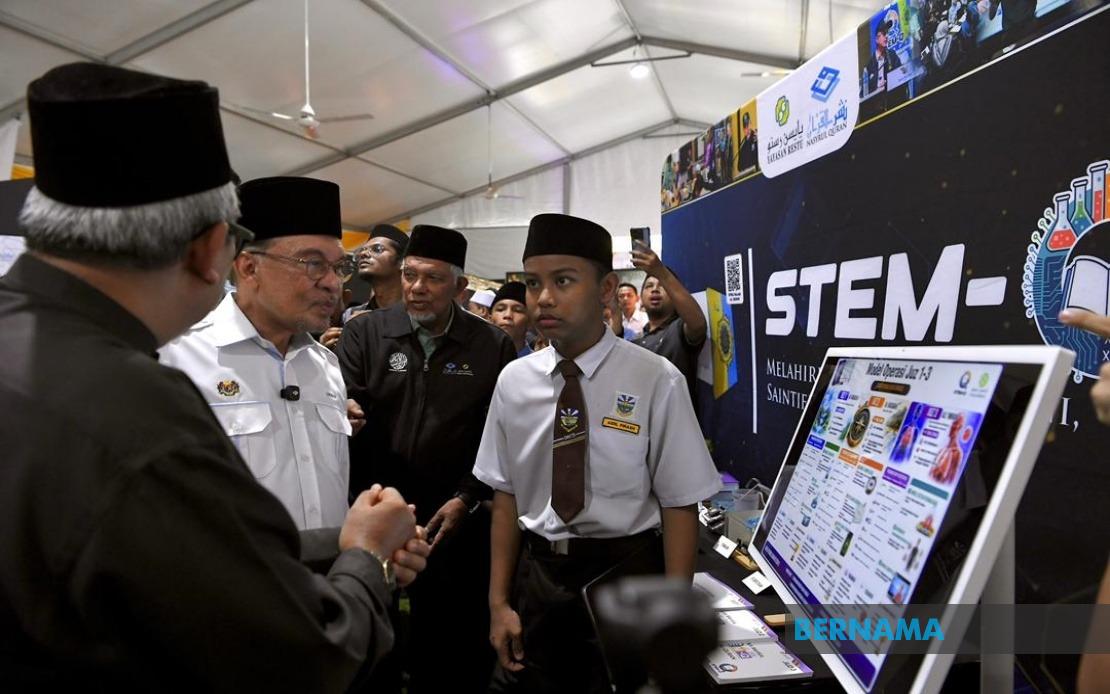
Prime Minister Datuk Seri Anwar Ibrahim has greenlit RM4.6 million in fresh funding to strengthen the physical infrastructure of 27 Islamic educational institutions scattered across Penang, marking a significant expansion in the government's commitment to religious education facilities in the state. Speaking during the National Tadabbur Perdana and Maidah Wanita MADANI Permatang Pauh programmes at Masjid Muhajirin in Butterworth, Anwar underscored his administration's determination to bolster facilities that serve as anchors for Islamic learning at the grassroots level.
The latest injection represents a substantial leap from the previous financial year, when the government channelled RM2.11 million towards upgrading works at just 11 Islamic educational institutions in Penang. This year's allocation nearly doubles the funding pool and expands the scope to encompass more than twice as many facilities, reflecting a deliberate strategy to cast a wider net across the state's religious education landscape. The expansion suggests growing recognition of demand for improved facilities and a desire to distribute resources more equitably among institutions that often operate on tight budgets.
Anwar, who holds the dual portfolio of Prime Minister and Finance Minister, elaborated on the intended use of these funds during his address. The RM4.6 million will finance diverse upgrading initiatives that address both foundational and contemporary needs within these institutions. Infrastructure projects include reinforcing perimeter walls and fences, enhancing madrasah facilities, improving school buildings, constructing new kindergarten structures, and expanding tahfiz academy spaces dedicated to Quran memorisation programmes. Each category of work reflects identified gaps in the physical spaces where religious education occurs across Penang.
The allocation carries particular significance for Malaysia's ongoing efforts to modernise religious education infrastructure while maintaining traditional Islamic teachings. Penang, with its diverse population and established network of Islamic institutions, serves as a test case for how federal funding can support grassroots religious education. The state hosts a varied ecosystem of religious schools, from traditional madrasahs to contemporary Islamic kindergartens, many of which have struggled with maintenance and expansion due to limited budgets.
Beyond bricks and mortar, Anwar emphasised that strengthening Islamic education must evolve in tandem with technological advancement. He articulated a vision wherein artificial intelligence and digital tools become integrated into Quranic and Islamic studies curricula, positioning Malaysia's religious education sector as forward-thinking rather than backward-looking. This approach acknowledges that younger generations expect modern pedagogical methods while studying classical texts, a tension that religious institutions across Southeast Asia must navigate.
Yet the Prime Minister struck a cautionary note regarding technology's role in religious contexts. He stressed that artificial intelligence must be anchored in robust moral and ethical frameworks rather than deployed merely as a efficiency tool. Without values guiding its application, Anwar warned, AI could become a mechanism for transmitting information divorced from the spiritual and moral dimensions that constitute the essence of Islamic education. This caveat addresses a broader anxiety across religious communities about technology threatening to instrumentalise sacred knowledge.
Anwar's remarks extend beyond infrastructure to encompassing a philosophy of religious engagement. He encouraged Malaysians to harness the constitutional freedoms available in the country to organise religious programmes that deepen collective understanding of Islam. By positioning religious activities as a civic good enabled by national freedoms, he frames Islamic education not as sectarian but as part of the shared project of national development. This framing carries implications for how Malaysia positions itself amid regional and global conversations about religion and modernity.
The Prime Minister specifically highlighted three categories of programmes deserving continuous investment: Quran classes, tadabbur sessions involving reflective study of Quranic verses, and religious lectures. These represent structured, ongoing engagement mechanisms rather than ad-hoc activities, suggesting institutional stability and long-term commitment. Implicit in this taxonomy is recognition that religious literacy requires sustained effort and that institutions must provide consistent platforms for learning rather than sporadic events.
The timing of this announcement during the Permatang Pauh gathering holds political significance for Penang, where Islamic education constitutes both a social service and a political priority. The incremental yet meaningful funding increases signal governmental attention to constituencies that value strong Islamic institutional presence. For religious school administrators and communities, the funding boost provides tangible resources for deferred maintenance and expansion, potentially easing operational pressures that often constrain quality.
For Malaysia more broadly, this allocation exemplifies how federal budgeting addresses the infrastructure needs of religious education without centralising control over curricula or theological direction. The funding approach respects the autonomy of Islamic institutions while ensuring they operate from adequately maintained facilities. This balance reflects the constitutional accommodation of Islam in Malaysian governance, whereby the state supports Islamic institutions whilst respecting their relative independence.
The announcement also carries implications for regional discussions about Islamic education modernisation. Neighbouring countries grapple with similar questions about how to enhance religious education without diluting traditional content, a challenge Anwar's dual emphasis on infrastructure and ethical technology use attempts to address. Malaysia's approach—combining physical facility improvement with technological integration guided by moral principles—offers a model for other Southeast Asian nations developing their own religious education strategies.
Moving forward, the success of this initiative will depend partly on execution and partly on whether institutions can effectively absorb and deploy these resources. The doubling of funding and expansion to 27 institutions represents opportunity but also demands that administrators prioritise genuinely impactful upgrades. Should these funds translate into measurable improvements in learning environments and educational quality, they may justify larger future allocations and establish a precedent for sustained federal investment in Islamic educational infrastructure across other Malaysian states.

