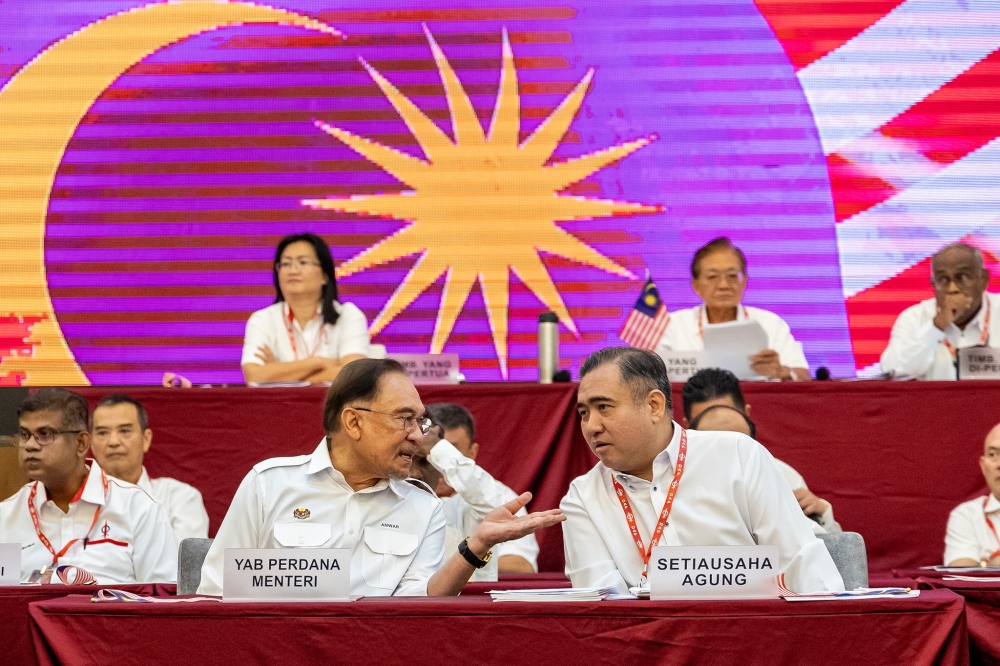
Prime Minister Datuk Seri Anwar Ibrahim has made a direct appeal to the Democratic Action Party's Melaka chapter to reconsider its announced withdrawal from the state government, arguing that the party should honour its electoral commitment by remaining active in governance until the next state election takes place.
Anwar's intervention reflects broader concerns within the ruling coalition about the stability of state-level administrations and the political messaging sent when coalition partners abandon their responsibilities mid-term. The Prime Minister's comments come as the DAP faces internal tensions over its role in Melaka's government structure and its effectiveness in influencing state policies. His statement underscores the delicate balancing act required to maintain unity across Malaysia's complex multi-ethnic political landscape, where coalition partners often have competing interests and differing assessments of their political standing.
The DAP's proposed exit represents a significant development for Melaka's political configuration. The party has cited concerns about its influence and effectiveness within the current state administration, signalling frustration with what it perceives as marginalisation in decision-making processes. For Anwar, however, such departures undermine the broader coalitional arrangements that enabled his own rise to the Prime Minister's office and continue to sustain his government's parliamentary majority. The timing of the DAP's announcement has created tension that Anwar evidently felt compelled to address personally rather than through intermediaries.
Melaka has emerged as a particularly contentious battleground within coalition politics. The state government's composition and performance directly affect the fortunes of all participating parties ahead of state elections, which typically occur once every five years. By withdrawing prematurely, the DAP risks accusations of abandoning constituents and breaking faith with voters who elected coalition candidates on joint manifestos. Conversely, remaining in an administration where the party feels sidelined presents its own political costs, particularly if the government's performance disappoints or if other parties capture disproportionate credit for popular initiatives.
Anwar's personal plea carries significant weight within party hierarchies, though it remains uncertain whether Melaka DAP leadership will reverse their decision. The party's state leadership has apparently concluded that continued participation offers diminishing returns, a calculation that the Prime Minister fundamentally disputes. This disagreement highlights the tensions inherent in Malaysian coalition governance, where national-level interests and state-level realities do not always align neatly. For the DAP nationally, which maintains considerable influence at federal level, balancing cooperation with the Prime Minister's ambitions against protecting its state-level autonomy creates ongoing strategic dilemmas.
The broader implications extend beyond Melaka's administration. If the DAP withdraws and the state government continues functioning effectively without it, the precedent could embolden other coalition partners to reassess their own participation in arrangements they find constraining. Conversely, if the DAP's exit precipitates governmental instability or electoral setbacks, it might deter future withdrawals. Anwar's intervention suggests he views the stakes as sufficiently high to warrant direct engagement, rather than allowing coalition mechanics to play out independently.
Melaka's political significance within Malaysia's overall coalition architecture should not be underestimated. The state represents a manageable testing ground for coalition governance, with a population that spans the multicultural spectrum. How the DAP and other coalition partners navigate their roles here will influence perceptions of the government's stability and competence heading toward national elections. Malaysia's voters watch state-level governance closely as an indicator of federal performance, making Melaka's political health consequential for national calculations.
The DAP faces competing pressures that explain its consideration of withdrawal. Within Melaka specifically, the party may believe that its continued association with an administration it views as undervaluing its contributions damages its brand and electoral prospects. State party leaders answer ultimately to their own grassroots members and Melaka voters, not exclusively to federal party machinery. This creates inevitable friction when national and state priorities diverge, a recurring challenge in Malaysia's federalised political system.
Anwar's appeal notably emphasised the concept of following through on electoral mandates through to their natural conclusion. This framing positions the DAP's potential withdrawal as a breach of democratic contract with voters, rather than as a legitimate reassessment of political viability. The Prime Minister's rhetorical approach seeks to activate the party's sense of responsibility toward constituents and coalition partners alike. Whether this moral suasion proves effective will depend partly on how convinced Melaka DAP activists are that continued participation serves their electoral interests.
The situation underscores the inherent fragility of multi-party coalitions in maintaining cohesion over extended periods. Initial electoral victory and the euphoria of forming government often give way to disillusionment when the realities of power-sharing require compromise and restraint. The DAP's willingness to consider withdrawal suggests that this transition from euphoria to frustration has occurred relatively rapidly in Melaka. Anwar's intervention represents an attempt to interrupt that trajectory before it solidifies into irreversible decisions that might destabilise the broader coalition apparatus.

