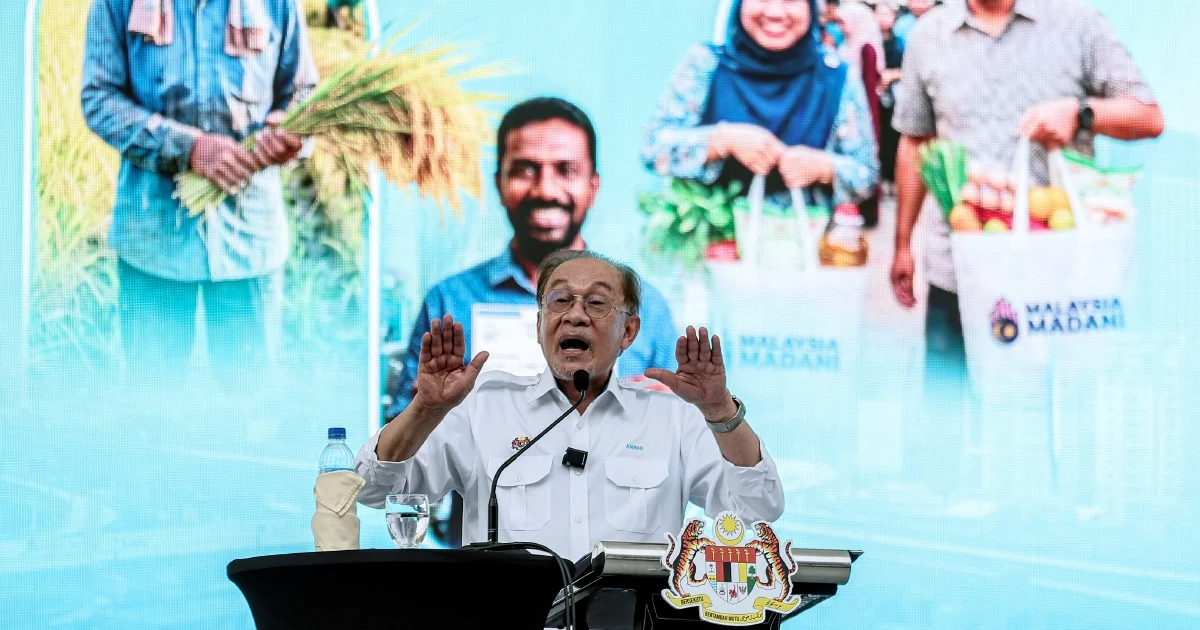
Prime Minister Anwar Ibrahim has announced a substantial increase in government support for grassroots community safety networks, raising the annual grant for Neighbourhood Watch Areas to RM10,000 nationwide, a marked elevation from the RM6,000 previously allocated to these volunteer-led initiatives. The enhanced funding arrangement will take effect from January 1, 2027, signalling a renewed commitment to strengthening local policing capacity alongside formal law enforcement structures.
The announcement, made in Segamat, underscores the administration's recognition that community-based crime prevention remains a cornerstone of Malaysia's broader security strategy. Neighbourhood Watch Areas, or KRT as they are known locally, function as civilian extensions of official policing efforts, engaging residents in collaborative crime deterrence and neighbourhood patrols. By substantially increasing the per-unit grant, the government aims to enable these grassroots organisations to expand their operational capacity, purchase better safety equipment, and sustain regular community engagement activities throughout the year.
For neighbourhood associations across the country, this represents material relief in their budgetary constraints. Many community watch groups operate on shoestring budgets, relying heavily on volunteer labour and modest government support to maintain their presence and visibility in residential areas. The additional RM4,000 annually—equivalent to a 67% increase—translates into meaningful purchasing power for items such as communication devices, reflective clothing, signage, and training materials. This injection of resources will likely enable more frequent night patrols, expanded membership drives, and enhanced coordination with police liaison officers.
The timing of this announcement carries particular significance as Malaysia navigates ongoing concerns about residential security and public confidence in crime prevention. Neighbourhood Watch programmes have demonstrated measurable effectiveness in reducing petty theft, vehicle-related crimes, and anti-social behaviour in participating communities. By investing more substantially in these networks, the government signals that it views community participation not as supplementary to official policing but as integral to the overall crime prevention ecosystem. This perspective aligns with evidence from other Southeast Asian jurisdictions where such grassroots initiatives have proven cost-effective additions to formal law enforcement strategies.
For residents and homeowners in neighbourhoods with active KRT units, the increased funding may translate into more visible presence and coordinated responses to security concerns. Well-resourced neighbourhood watch groups tend to establish stronger communication networks with residents, maintain more consistent patrol schedules, and facilitate faster information sharing during incidents. Enhanced grant levels also enable these organisations to invest in training for their volunteers, ensuring that community monitors operate according to best practices and maintain appropriate boundaries between civilian watch activities and official police responsibilities.
The expansion of KRT funding reflects broader governmental priorities regarding decentralised security governance. Rather than concentrating security resources exclusively within the formal police apparatus, the administration is channelling support towards distributed networks of community vigilance. This approach acknowledges both the limitations of centralised policing—particularly in terms of geographic coverage and response times in sprawling residential areas—and the potential of empowered communities to function as preventive safeguards. The model has gained renewed attention across the region as countries seek cost-effective mechanisms to enhance public safety perception and actual security outcomes.
Financially, the increased grant regime will require enhanced budget allocation at federal and state levels. Implementation from January 1, 2027 provides the government and local authorities with a reasonable transition period to incorporate the expanded commitment into their financial planning cycles. The rollout must also address practical questions regarding eligibility verification, fund disbursement mechanisms, and accountability measures to ensure that grants reach active, properly constituted KRT units and are deployed for intended community safety purposes.
Regional implications extend beyond Malaysia's borders. Neighbouring countries and ASEAN neighbours monitoring Malaysian community policing initiatives may consider similar approaches to enhance grassroots security participation. The demonstration that democratic governments can sustainably fund volunteer-based crime prevention networks offers valuable lessons for other nations grappling with security challenges amid resource constraints. Malaysia's willingness to substantially increase KRT funding may inspire comparable investments in community watch infrastructure throughout Southeast Asia.
Looking forward, the success of this expanded funding initiative will depend significantly on how effectively neighbourhood associations translate increased financial resources into tangible community safety improvements. Organisational capacity, volunteer engagement levels, and cooperation between KRT units and formal police structures will determine whether the funding boost generates proportional security dividends. The government's allocation of RM10,000 annually per neighbourhood watch area represents an investment in distributed security governance—a recognition that modern crime prevention requires active partnership between state institutions and empowered citizens working collaboratively toward shared safety objectives.