%22%2F%3E%3C%2Fpattern%3E%3C%2Fdefs%3E%3Crect%20width%3D%22100%25%22%20height%3D%22100%25%22%20fill%3D%22url(%23ph4ybd8g)%22%2F%3E%3Crect%20width%3D%22100%25%22%20height%3D%22100%25%22%20fill%3D%22url(%23ph4ybd8p)%22%2F%3E%3Ctext%20x%3D%2250%25%22%20y%3D%2250%25%22%20text-anchor%3D%22middle%22%20dominant-baseline%3D%22central%22%20fill%3D%22rgba(255%2C255%2C255%2C0.95)%22%20font-family%3D%22Georgia%2C%20'Times%20New%20Roman'%2C%20serif%22%20font-weight%3D%22700%22%20font-size%3D%22272%22%20letter-spacing%3D%22-0.02em%22%3EAnwar%3C%2Ftext%3E%3C%2Fsvg%3E)
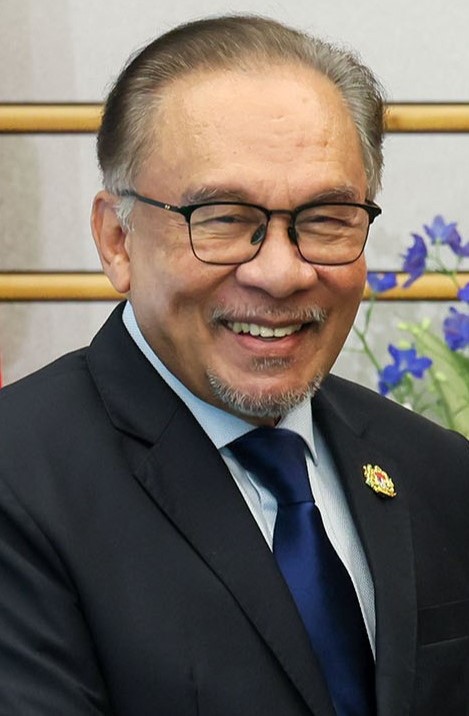
Prime Minister Datuk Seri Anwar Ibrahim has articulated a vision for Malaysian electoral politics in which the monarchy remains deliberately insulated from campaign activity and party competition. Speaking in Kuala Lumpur on June 24, Anwar drew a firm distinction between the operational sphere of democratic contests and the constitutional role of the royal institution, arguing that elections ought to unfold as contests between political organisations rather than involving the Crown in any capacity.
This statement carries particular weight within Malaysia's political architecture, where the Yang di-Pertuan Agong holds significant constitutional powers including the appointment of the Prime Minister following legislative elections. The distinction Anwar proposes centres on maintaining the perceived neutrality and dignity of the monarchy by preventing it from becoming entangled in the competitive dynamics of party politics. His remarks suggest an interpretation of constitutional monarchy that emphasises formal separation between electoral machinery and royal engagement, even as royal prerogatives remain central to government formation.
The timing of Anwar's remarks reflects ongoing debates within Malaysian political circles about institutional roles and democratic practice. As the nation prepares for electoral cycles at federal and state levels, questions surrounding the appropriate boundaries between various institutions have gained prominence. Anwar's position implicitly acknowledges historical instances where questions have arisen about royal neutrality in political matters, and his call seeks to establish clearer protocols for future contests.
For Malaysian governance, the principle Anwar articulates represents a commitment to procedural clarity. By suggesting that parties, rather than royal figures, should be the primary protagonists in electoral narratives, he frames elections as civilian-led democratic exercises. This resonates with conventions observed in established Westminster-model democracies, where monarchs remain above the partisan fray. However, Malaysia's constitutional framework differs in important respects, given the Yang di-Pertuan Agong's active role in government formation rather than merely ceremonial functions.
The statement also carries implications for how political actors conduct campaigns and seek support. If elections are to be purely inter-party affairs, the logic suggests that campaign appeals should focus on policy platforms, track records, and party leadership rather than invoking royal patronage or endorsement. This could reshape campaign discourse by placing greater emphasis on substantive political competition and less on institutional prestige or royal proximity.
Within Southeast Asia's broader democratic context, Anwar's position aligns with regional trends toward strengthening civilian democratic institutions while preserving constitutional monarchies. Countries across the region have grappled with defining the optimal relationship between traditional institutions and modern electoral democracy. His remarks position Malaysia within this evolution, suggesting an institutional maturation wherein electoral legitimacy derives from voters and parties rather than royal sanction of the process itself.
The distinction Anwar proposes between electoral contests and royal involvement also relates to questions of democratic accountability. If political parties bear full responsibility for electoral outcomes and campaign conduct, without royal mediation or involvement, then party leadership becomes more directly answerable to voters for political choices and consequences. This framework potentially strengthens party discipline and voter-party relationships by eliminating pathways for circumventing electoral accountability through royal channels.
Practical implications for election management emerge from this principle as well. Electoral commissions, civil service bodies, and other administrative institutions would operate with clearer mandates if elections are understood as purely partisan affairs. It suggests that these bodies should maintain strict neutrality not merely between parties but also in relation to the monarchy itself, treating electoral processes as technically and administratively separate from royal institutional operations.
Anwar's comments also reflect consideration of how younger, increasingly digitally-connected Malaysian voters perceive democratic legitimacy. Generations exposed to global democratic discourse may view electoral legitimacy as flowing primarily from competitive party platforms and voter choice rather than institutional blessing. By framing elections as party-to-party contests, Anwar addresses modern conceptions of democratic authenticity alongside constitutional tradition.
The statement warrants attention to how different political actors may interpret and implement Anwar's principle. While the logic appears straightforward, political practice often presents complexities. Parties seeking electoral advantage might attempt to invoke royal imagery or prestige subtly, while royal actors might feel entitled to participate in political dialogue. Anwar's articulation establishes an ideational framework against which such deviations could be measured and critiqued.
Looking forward, Anwar's position establishes a benchmark for institutional conduct during upcoming electoral cycles at both federal and state levels. As Malaysia navigates successive elections in coming years, whether political actors honour this principle of separation will become evident. His statement essentially calls for a self-enforced covenant among political elites regarding institutional boundaries, relying on collective commitment rather than formal legal mechanisms to maintain the distinction.
Ultimately, Anwar's call reflects a mature vision of democratic governance in which institutional separation enhances rather than diminishes the legitimacy of both electoral processes and the monarchy itself. By keeping these spheres distinct, he suggests that each institution functions most effectively and commands greatest respect when operating within its designated domain. Elections gain legitimacy through competitive fairness and voter participation, while the monarchy retains public regard through principled distance from factional politics.