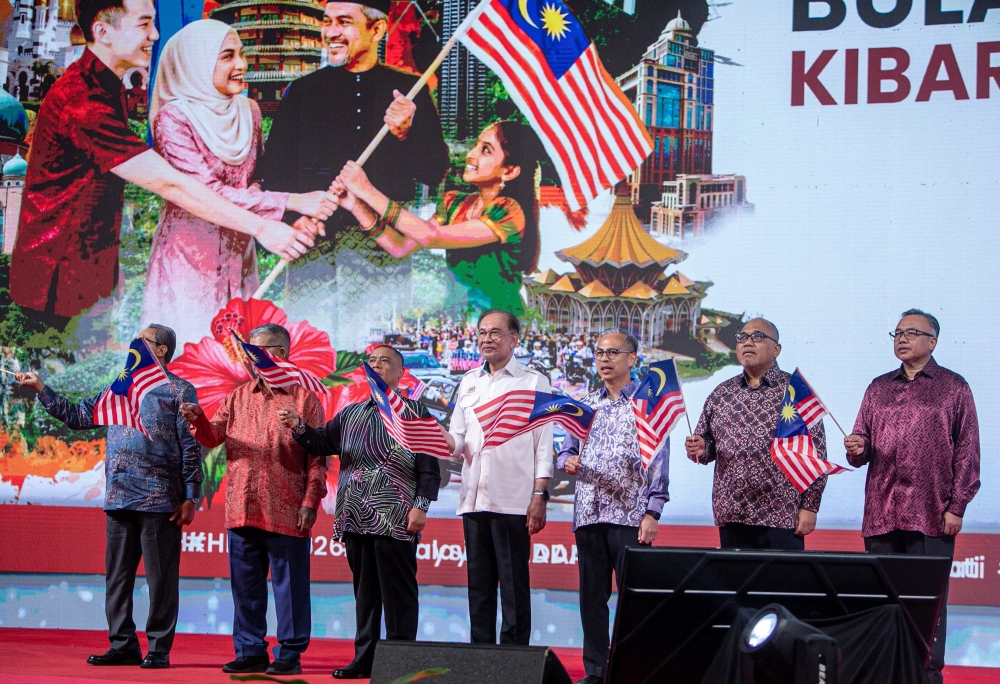
Prime Minister Datuk Seri Anwar Ibrahim has called on Malaysia's younger generation to maintain a deep connection with the country's independence heritage, warning against allowing historical memory to fade into indifference. Speaking in Ipoh on July 19, Anwar emphasised that understanding the nation's formative struggle remains vital for contemporary Malaysians who have never lived through the colonial period or the early years of nationhood.
The Prime Minister's remarks reflect growing concern among senior political figures that successive generations, particularly those born well after 1957, may lack appreciation for the sacrifices and compromises that shaped modern Malaysia. Anwar framed his message around the notion that national identity is not inherited passively but must be consciously cultivated through remembrance and education. His call resonates with periodic political discourse in Malaysia about generational gaps in patriotic consciousness and understanding of foundational national values.
Anwar's intervention touches on a perennial challenge facing postcolonial nations across Southeast Asia: maintaining institutional memory and emotional connection to independence narratives as living witnesses age and direct experience fades. In Malaysia's case, the independence movement involved complex political negotiations, the Merdeka Constitution's delicate arrangements among diverse communities, and the contributions of figures from multiple ethnic backgrounds. These nuances are sometimes flattened in contemporary political debate or overshadowed by more immediate concerns affecting younger voters.
The Prime Minister's emphasis on remembrance also carries implications for how Malaysia positions itself within the region. Other Southeast Asian nations have grappled with similar questions about how to transmit foundational narratives to youth who view independence as historical rather than transformative. Thailand, Indonesia, and Vietnam have invested significantly in education curricula and public commemoration precisely because leadership recognises that national cohesion depends partly on shared understanding of origin stories.
For Malaysian policymakers, Anwar's message implicitly addresses curriculum design and educational priorities. History teaching in Malaysian schools has alternated between emphasis on colonial exploitation, nationalist heroism, and inclusive narratives acknowledging multiple communities' roles. Youth engagement with these narratives directly influences their commitment to national institutions and willingness to accept constitutional settlements like the bargain between Malay-Muslim majority privileges and non-Malay citizenship rights that underpins the social contract.
The timing of Anwar's appeal merits consideration within Malaysia's broader political context. The Prime Minister has positioned himself as a bridge figure capable of uniting diverse constituencies, and invoking shared independence heritage serves that agenda by elevating common national experience above contemporary partisan divisions. By urging youth not to forget, he implicitly suggests that neglecting this history weakens national resilience and makes populations vulnerable to divisive rhetoric or external pressures.
Younger Malaysians face distinct challenges in relating to independence narratives. Most were born into a fully formed nation-state with established institutions, global trade relationships, and internet connectivity that offers alternative worldviews to traditional national histories. International migration, diaspora networks, and digital culture mean some youth inhabit transnational frameworks that may seem more relevant than mid-twentieth-century decolonisation struggles. Anwar's intervention suggests recognition that appeals to patriotic duty alone prove insufficient without conscious efforts to make historical memory meaningful to contemporary concerns.
The independence struggle itself provides substantive lessons applicable to current debates. The negotiated transfer of power, the creation of federal structures accommodating diverse states, and the constitutional protection of minority rights all emerged from independence-era political bargaining. Understanding these origins helps younger generations appreciate why institutional arrangements exist and what alternatives were debated. This knowledge becomes particularly valuable when discussing reforms or changes to Malaysia's constitutional framework, ensuring that modifications occur with awareness of their historical foundations.
Anwar's call also reflects concern about potential erosion of the nationalist consensus that once united Malaysians across communal lines. As Malaysia develops and becomes more affluent, materialistic concerns may increasingly dominate political consciousness at the expense of grander historical narratives. Yet crises—whether internal disputes or external economic shocks—have repeatedly demonstrated that shared national identity serves as crucial ballast. Political leaders fear that a generation disconnected from independence memory may lack emotional investment in national institutions or collective problem-solving.
Educational institutions bear particular responsibility for transmitting this knowledge effectively. Malaysian universities, schools, and public broadcasters must present independence history not as dusty archival material but as living legacy with contemporary relevance. Effective transmission requires engaging youth through multiple media and connecting historical struggles to present-day aspirations for equity, development, and regional standing. Simply commanding youth to remember carries limited force; providing contexts and narratives that resonate requires sustained institutional effort.
Anwar's remarks also implicitly address concerns about misinformation and alternative narratives circulating online. In an era when social media algorithms amplify divisive content and can distort historical understanding, official reminders about foundational narratives serve as counterweight. By emphasising the inclusive aspects of independence struggle—the cooperation among communities and leaders—Anwar positions himself against accounts that reduce Malaysia's formation to single-community narratives or ethnic conflict frameworks.
The Prime Minister's intervention signals that senior Malaysian leadership continues viewing national memory as politically significant and worth active cultivation. This stands in contrast to societies that treat history as settled academic matter rather than living political concern. Whether such appeals succeed depends partly on whether institutional actors follow through with education programmes, public commemoration, and policy frameworks that demonstrate how independence-era lessons remain relevant to contemporary Malaysian challenges and aspirations.

