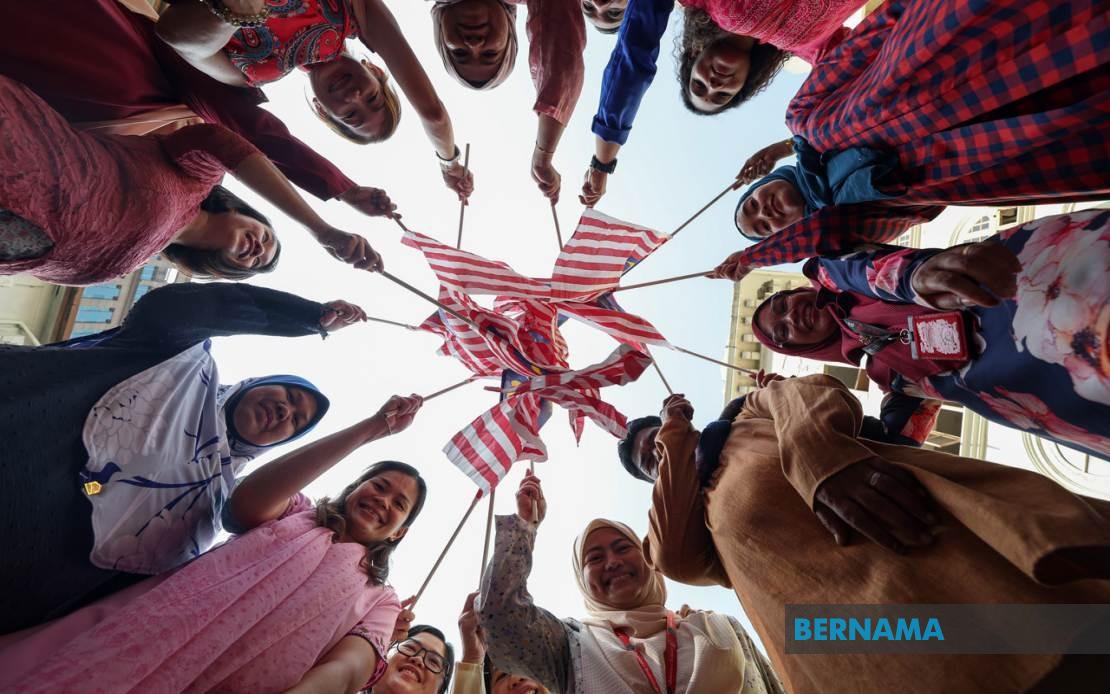
Prime Minister Datuk Seri Anwar Ibrahim has issued a clarion call to Malaysians to protect their country with unwavering commitment and preserve the bonds of unity that define the nation's identity. Speaking on the eve of Malaysia's 69th National Day, Anwar emphasised that the fabric of national strength rests upon the collective solidarity of citizens across ethnic and regional lines, urging the population to place the country's interests above all other considerations.
In messages shared across social media and through video, Anwar articulated a vision of independence rooted in self-determination and collective confidence. He stressed that true sovereignty requires not merely the absence of foreign rule but the active exercise of agency by a people conscious of their shared dignity. The Prime Minister's remarks carried an implicit reminder that freedom carries responsibility—a principle particularly relevant in a nation navigating evolving social and political dynamics.
Anwar's emphasis on honouring past sacrifices served as a historical anchor for his contemporary message. He reflected on how Malaysia's achievements have been built upon the considerable efforts of preceding generations, whose struggles through hardship and sacrifice established the foundations upon which modern Malaysia operates. This backward gaze toward the nation's founding struggles implicitly invited contemporary Malaysians to view themselves as custodians of a legacy they must actively preserve and enhance.
The Prime Minister specifically highlighted the diversity of Malaysia's population as a source of strength rather than division. His invocation of the Malay, Chinese, Indian, Iban, Kadazan, Murut, Bidayuh and Orang Ulu communities reflected an expansive vision of Malaysian identity that encompasses both peninsular and East Malaysian perspectives. By naming these communities explicitly, Anwar sought to acknowledge each group's contribution to the national enterprise and underscore that pluralism represents a distinctive advantage in an increasingly competitive region.
Crucially, Anwar framed justice as central to the national project, declaring that Malaysia must be recognised internationally and domestically as a nation committed to equitable treatment across all segments of society. His specific reference to protecting marginalised and sidelined communities suggested an acknowledgment of persistent inequalities and the necessity for inclusive governance. This positioning aligned with the broader Malaysia MADANI framework, which prioritises shared prosperity as a governing philosophy.
The timing of these remarks—delivered immediately before National Day—carried symbolic weight. National Day celebrations typically function as moments for political leaders to articulate their vision of national identity and purpose. Anwar's invocation of collective effort and mutual responsibility suggested an attempt to reframe recent political divisions within a larger narrative of national unity and common purpose. This rhetorical strategy seeks to transcend the particularistic concerns that have dominated recent Malaysian politics.
Anwar's insistence that Malaysia gained independence through collective strength represents a deliberate historical framing with contemporary relevance. By emphasising the collaborative nature of Malaysia's independence struggle, he implicitly challenged notions of dominance by any single group or ideology. This framing becomes particularly significant given ongoing debates about the role of various communities in Malaysia's foundational history and present governance structures.
The concept of defending the nation with collective might, as articulated by the Prime Minister, extends beyond military or security considerations. In the Malaysian context, it encompasses defending social cohesion, institutional integrity, and the constitutional framework that governs inter-communal relations. Anwar's repeated emphasis on working as a unified team suggested recognition that Malaysia's stability depends upon maintaining mechanisms of cooperation even amid disagreement on specific policies.
The 69th National Day celebration, conducted under the theme Malaysia MADANI: Kesejahteraan Dinikmati (Malaysia MADANI: Shared Prosperity Enjoyed), provided context for Anwar's messaging. The MADANI framework represents the government's broader vision for national development centred on equitable distribution of benefits and inclusive growth. National Day provides an annual platform for reinforcing this vision and reconnecting the population to shared national objectives.
For Malaysian readers and regional observers, Anwar's statements merit attention as indicators of how the current government intends to navigate persistent challenges to national cohesion. In a region where other nations grapple with communal tensions and state fragmentation, Malaysia's ability to sustain unity amid diversity remains strategically significant. The Prime Minister's rhetoric, while celebrating existing achievements, simultaneously acknowledges that such unity requires continuous active maintenance and renewed commitment from all segments of society.
The emphasis on upholding unity as the pillar of strength, while placing national interest above ethnic sentiment, reflects a particular vision of citizenship and national loyalty. This vision does not deny the reality of ethnic identity or regional difference but subordinates these to a broader Malaysian interest. Whether such calls resonate meaningfully depends substantially on whether government policies demonstrably advance the inclusive prosperity the MADANI framework promises.
Anwar's appeal ultimately functions as both celebration and exhortation—acknowledging what Malaysians have collectively achieved whilst simultaneously summoning them to renewed dedication to preservation and improvement of their nation. The success of such messaging in addressing contemporary challenges will depend upon whether government action meaningfully addresses the concerns of diverse communities and whether the distribution of resources and opportunity genuinely reflects the inclusive vision articulated on National Day.

