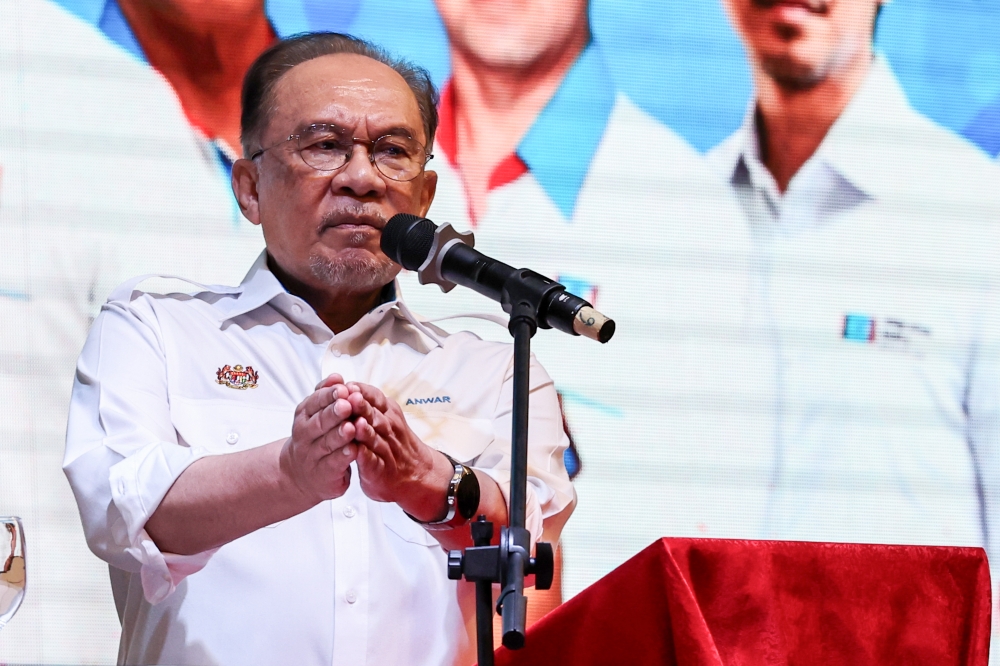
Prime Minister Datuk Seri Anwar Ibrahim has reacted strongly to the Royal Commission of Inquiry's findings on Tabung Haji, using colloquial language to underscore what he views as the gravity of the financial losses. Speaking in Melaka on August 15, Anwar characterised the disappearance of RM12 billion in pilgrim funds as an act of "sakau"—a Malay term denoting the siphoning or misappropriation of money—and posed a pointed rhetorical question to observers questioning whether such losses represented anything less than deliberate wrongdoing.
The Tabung Haji crisis has emerged as one of the most significant financial scandals affecting Malaysian institutional integrity in recent years. Established as a savings scheme to help Muslim Malaysians finance their hajj pilgrimage to Mecca, the organisation had accumulated substantial funds from millions of contributors over decades. The RCI's investigation uncovered how this substantial reservoir of public trust and savings deteriorated dramatically, with RM12 billion in losses documented through the inquiry process. For Anwar, the sheer scale of the missing funds pointed unmistakably to systematic mismanagement or outright misconduct rather than administrative error or market volatility.
Anwar's use of the term "sakau" carries particular weight in Malaysian political discourse. The word conveys intent and culpability in ways that clinical financial terminology cannot, and by employing it, the Prime Minister signalled that he views the Tabung Haji situation through a lens of criminal accountability rather than mere corporate governance failure. This rhetorical choice framed the issue for the Malaysian public as one demanding not just administrative reform but potentially legal consequences for those implicated in the losses.
The RCI's work had consumed considerable time and resources, reflecting the complexity of the Tabung Haji case and the multiple layers of financial transactions involved. The commission examined investment strategies, internal controls, board oversight, and management decisions spanning several years. Its findings provided detailed documentation of how funds meant for pilgrims had been deployed in ways that generated substantial losses, raising questions about due diligence, risk management, and the adequacy of checks and balances within the organisation's structure.
For Malaysian pilgrims and their families, the revelation of RM12 billion in missing funds represented more than a financial loss—it signified a betrayal of trust by an institution they had entrusted with their life savings. Many Malaysians contribute to Tabung Haji from modest incomes, viewing it as a secure vehicle for accumulating funds specifically designated for fulfilling one of Islam's Five Pillars. The magnitude of the loss thus carried profound implications for individuals' ability to undertake the hajj pilgrimage, forcing some to reconsider their travel plans or timing.
Anwar's emphasis on the need for accountability reflected broader governance concerns within Malaysia's institutional landscape. The Prime Minister's comments indicated that his administration viewed the Tabung Haji affair as symptomatic of deeper problems requiring systematic solutions. Beyond the immediate crisis of the RM12 billion loss, the case illustrated vulnerabilities in how large organisations holding public funds operated, the effectiveness of regulatory oversight, and the consequences when governance structures failed to prevent substantial value destruction.
The political dimensions of Anwar's response also warrant consideration. As Prime Minister leading a coalition government, Anwar needed to demonstrate resolve in addressing a crisis that had accumulated over the tenure of previous administrations. His forceful language—characterising the losses as "sakau"—served to position his government as taking the matter with appropriate seriousness and distinguishing his approach from what he implicitly critiqued as inadequate previous responses.
The RCI's work raised critical questions about internal processes within Tabung Haji that had permitted such substantial losses to accumulate. These questions extended to the board of trustees, senior management, investment committees, and external auditors who might have been expected to identify and prevent deterioration in the fund's value. Understanding where oversight failed became essential for implementing corrective measures to protect future contributions.
Looking forward, Anwar's framing of the issue suggested his administration intended to pursue not merely administrative remedies but potentially legal action against individuals found responsible. The characterisation as "sakau" rather than mismanagement implied that investigation and prosecution might follow the RCI's findings. Such an approach carried significant symbolic importance for restoring public confidence in Malaysian institutions and signalling that substantial breaches of fiduciary duty would face genuine consequences.
The Tabung Haji case also held broader significance for Malaysia's financial sector and institutional governance more generally. The scandal prompted reflection on whether similar vulnerabilities existed in other government-linked organisations or major funds holding public assets. Policymakers faced pressure to evaluate governance frameworks across the institutional landscape and identify where additional safeguards might strengthen protection of public assets.
Anwar's response reflected an understanding that managing public expectations and maintaining institutional legitimacy required clear acknowledgment of wrongdoing and commitment to accountability. By refusing to minimise the RM12 billion loss through euphemistic language and instead characterising it directly as siphoning of funds, the Prime Minister sent a signal that his administration would not tolerate or obscure financial impropriety. For Malaysian citizens, particularly hajj contributors, this rhetorical stance offered some assurance that the government recognised the severity of what had occurred and intended serious action in response.

