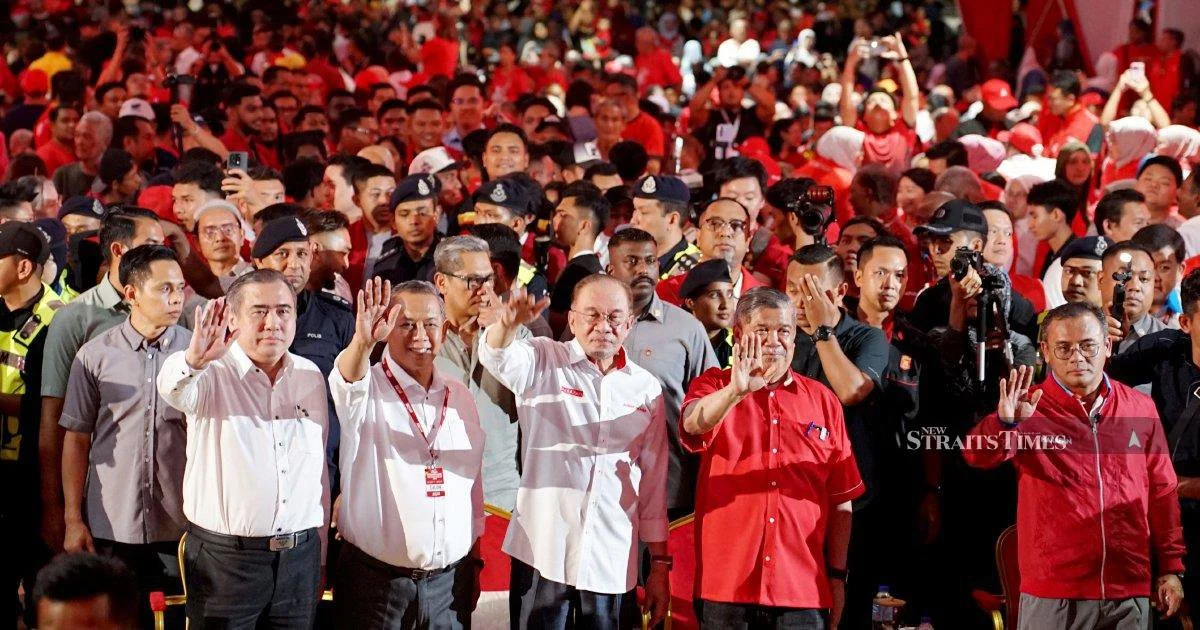
Prime Minister Datuk Seri Anwar Ibrahim has issued a stern reminder to all stakeholders, particularly political leaders, that the royal institution must remain insulated from the partisan battles surrounding the Negri Sembilan state election. Speaking in Kuala Pilah, the Prime Minister emphasised the critical importance of maintaining the constitutional and ceremonial integrity of the monarchy during campaign activities, underscoring the need for political restraint when discussing matters touching on royal authority and prerogatives.
The warning reflects growing concerns within Malaysia's political establishment about the instrumentalisation of constitutional institutions for electoral advantage. The monarchy occupies a uniquely protected position in Malaysian governance, serving as a stabilising force above partisan divides and embodying national unity. When political actors invoke or reference royal institutions during election campaigns, they risk undermining the institutional neutrality that underpins the constitutional monarchy system. Such actions, even when unintentional, can erode public confidence in the independence of these vital bodies.
Anwar's intervention demonstrates the government's commitment to upholding established norms of political conduct. The Prime Minister's caution was particularly timely given that state elections often witness intensified competition between rival factions seeking to mobilise support through various means. The temptation to leverage royal imagery, patronage relationships, or constitutional prerogatives can become acute when electoral stakes are high, making clear guidance from the highest levels of government essential.
The Negri Sembilan election represents a significant moment in Malaysian political dynamics, with multiple parties vying for control of the state assembly. The contest is expected to showcase diverse campaign strategies, messaging approaches, and attempts to broaden electoral coalitions. Against this backdrop, Anwar's reminder serves as a guardrail against potential transgressions that could strain relationships between the political establishment and the institution of constitutional monarchy.
Malaysia's experience demonstrates that maintaining boundaries between electoral politics and venerable institutions requires constant vigilance. The kingdom has witnessed instances where political actors attempted to invoke royal authority or references to influence campaign outcomes, occasionally generating public discomfort and concerns about institutional integrity. By addressing this matter proactively, the Prime Minister aims to forestall such developments during the Negri Sembilan campaign.
The royal institution's role in Malaysian federalism extends beyond ceremonial functions; state rulers exercise significant constitutional authority within their respective jurisdictions. Negri Sembilan, with its unique Minangkabau-influenced governance structure where the Yang di-Pertuan Besar holds particular significance, may be especially susceptible to political invocations of royal authority. The state's constitutional arrangements give its ruler distinctive powers, making clarity about campaign boundaries particularly important.
Political discipline surrounding such matters reflects the maturity of Malaysia's democratic institutions. By voluntarily adhering to norms that insulate the monarchy from electoral competition, political parties demonstrate respect for constitutional frameworks and contribute to broader political stability. This self-regulation is preferable to external constraints, as it reflects genuine commitment to institutional values rather than enforced compliance.
The timing of Anwar's remarks also carries implications for the broader regional context. Southeast Asia's democracies frequently grapple with tensions between electoral competition and institutional preservation. Malaysia's approach to managing such dynamics, particularly its efforts to maintain the monarchy's constitutional neutrality amid partisan activity, offers lessons for neighbouring democracies navigating similar challenges.
For Malaysian voters, the Prime Minister's intervention signals that political campaigns should focus on policy platforms, track records, and visions for state development rather than attempts to leverage royal institutions for partisan advantage. This approach ultimately serves democratic discourse by encouraging substantive debate about governance priorities and electoral alternatives.
Anwar's warning equally addresses the media ecosystem surrounding elections. News organisations, social media platforms, and political communicators hold responsibility for avoiding amplification of campaigns that inappropriately reference royal institutions. By establishing clear expectations, the Prime Minister encourages all stakeholders—not merely candidates and party leaders—to maintain institutional boundaries.
The effectiveness of such warnings depends significantly on voluntary compliance from political actors across the spectrum. Negri Sembilan's election will serve as an early test of whether major parties have internalised and will respect the Prime Minister's guidance. Should violations occur, subsequent enforcement mechanisms and public reaction will likely shape how future campaigns approach similar boundaries.
Looking ahead, the Negri Sembilan election offers an opportunity for Malaysian politics to demonstrate its capacity for self-regulation regarding institutions that transcend electoral competition. Anwar's statement reflects recognition that preserving constitutional monarchy's position requires ongoing attention, even during periods when democratic competition is at its most intense. The coming weeks will reveal whether this message resonates throughout the political system.

